Horseshoe Crab

وصف

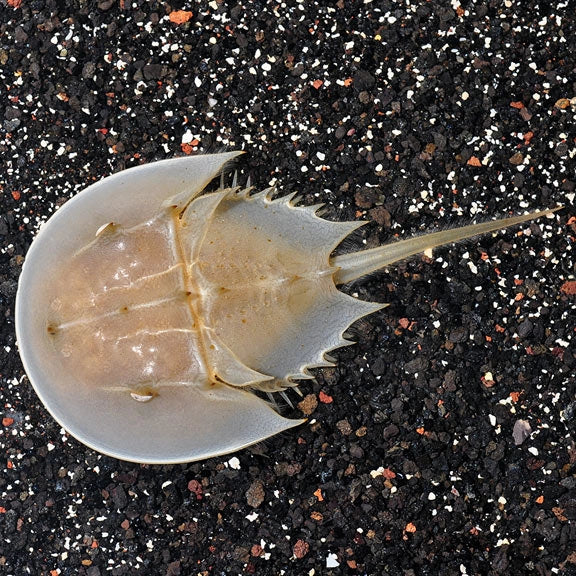
The Horseshoe Crab is greenish brown to light tan in color. The dorsal part of the body is rounded, and it has a long spike for a tail. The Horseshoe Crab is really not a crab, but more closely related to spiders and mites, belonging to a group of animals called chelicerates. Horseshoe Crabs can grow quite large. The female horseshoe crabs usually grow larger than the males, with their body reaching a maximum size of 12 inches in diameter. When small, they are very efficient scavengers and are great for aerating and maintaining sand beds.

The Horseshoe Crabs dig through sand and gravel in search of worms and any organic debris. It will move the substrate around almost nonstop in its search for food. They are reef safe, but when they attain a large size, can be harmful to fish and invertebrates, especially worms and clams.

Although it may find some food scavenging, its diet should be supplemented with meaty items such as pieces of squid and shrimp.
شكل المنتج

رمز المنتج: I-CRB-008

Limulus polyphemus

The Horseshoe Crab is greenish brown to light tan in color. The dorsal part of the body is rounded, and... اقرأ المزيد

غير متوفر

35.000 JD

    • مستوى العناية: سهل
    • التوافق مع المرجان: غير أمن على المرجان
    • الطباع: مسالم

      لا يمكن شحن هذا المنتج دوليًا

    لا يمكن شحن الحيوانات المائية، بما في ذلك الأسماك والمرجان وأنواع أخرى من الكائنات المائية، دوليًا بسبب قيود الشحن والتنظيمات القانونية.
    اقرأ المزيد

    وصف

    The Horseshoe Crab is greenish brown to light tan in color. The dorsal part of the body is rounded, and it has a long spike for a tail. The Horseshoe Crab is really not a crab, but more closely related to spiders and mites, belonging to a group of animals called chelicerates. Horseshoe Crabs can grow quite large. The female horseshoe crabs usually grow larger than the males, with their body reaching a maximum size of 12 inches in diameter. When small, they are very efficient scavengers and are great for aerating and maintaining sand beds.

    The Horseshoe Crabs dig through sand and gravel in search of worms and any organic debris. It will move the substrate around almost nonstop in its search for food. They are reef safe, but when they attain a large size, can be harmful to fish and invertebrates, especially worms and clams.

    Although it may find some food scavenging, its diet should be supplemented with meaty items such as pieces of squid and shrimp.

    ملاحظة هامة
    تُعد عملية التكيّف السليم مهمة للغاية نظرًا للإجهاد الذي تتعرض له الكائنات أثناء عملية الشحن. يُرجى تخصيص بعض الوقت للاطلاع على دليل التكيّف الخاص بنا.


    المنتجات التي تم عرضها مؤخرًا

      تسجيل الدخول

      نسيت كلمة السر؟

      ليس لديك حساب بعد؟
      إنشاء حساب