Anemone

12 products

  • New Ultra Rock Flower Anemone

    - Ultra Rock Flower Anemone

    Sold Out

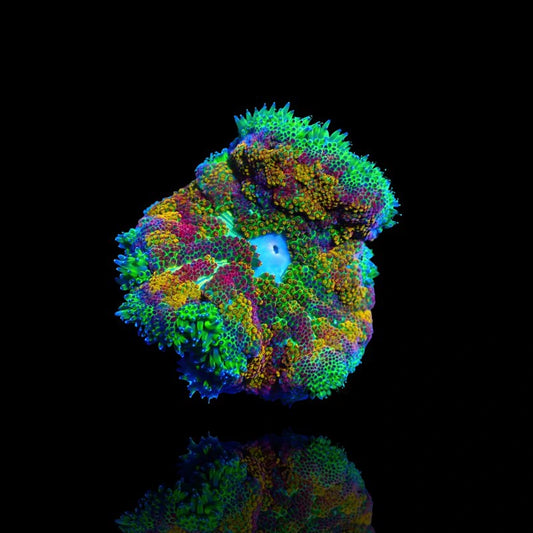
    The Rock Flower Anemone, also known as the Rock Anemone, is a member of the Phymanthidae family. Originating from the Caribbean, these anemones are found in a wide array of colors, with the oral disc often being a different color than the rest of the anemone. The oral disc lacks tentacles, and the tentacles are often beaded in appearance. The Flower Anemone can live singly or in groups. They prefer to live on shaded, vertical rock walls, or within the substrate. They will bury most of their body in the sand, with only the oral disc and tentacles showing. These are fairly hardy anemones that will adapt to a wide variety of lighting conditions. These anemones tend not to wander about the aquarium and are a great addition to a reef aquarium. The Flower Anemone is a carnivore and requires meaty foods to survive. Offer mussels and freshly chopped fish meat, as well as high quality frozen foods. Adding iodine and trace elements to the aquarium will help the Flower Anemone thrive.

    Sold Out

    90.000 JD

  • New Premium Rock Flower Anemone

    - Premium Rock Flower Anemone

    Sold Out

    The Rock Flower Anemone, also known as the Rock Anemone, is a member of the Phymanthidae family. Originating from the Caribbean, these anemones are found in a wide array of colors, with the oral disc often being a different color than the rest of the anemone. The oral disc lacks tentacles, and the tentacles are often beaded in appearance. The Flower Anemone can live singly or in groups. They prefer to live on shaded, vertical rock walls, or within the substrate. They will bury most of their body in the sand, with only the oral disc and tentacles showing. These are fairly hardy anemones that will adapt to a wide variety of lighting conditions. These anemones tend not to wander about the aquarium and are a great addition to a reef aquarium. The Flower Anemone is a carnivore and requires meaty foods to survive. Offer mussels and freshly chopped fish meat, as well as high quality frozen foods. Adding iodine and trace elements to the aquarium will help the Flower Anemone thrive.

    Sold Out

    75.000 JD

  • New Green Rock Flower Anemone

    - Green Rock Flower Anemone

    Sold Out

    The Rock Flower Anemone, also known as the Rock Anemone, is a member of the Phymanthidae family. Originating from the Caribbean, these anemones are found in a wide array of colors, with the oral disc often being a different color than the rest of the anemone. The oral disc lacks tentacles, and the tentacles are often beaded in appearance. The Flower Anemone can live singly or in groups. They prefer to live on shaded, vertical rock walls, or within the substrate. They will bury most of their body in the sand, with only the oral disc and tentacles showing. These are fairly hardy anemones that will adapt to a wide variety of lighting conditions. These anemones tend not to wander about the aquarium and are a great addition to a reef aquarium. The Flower Anemone is a carnivore and requires meaty foods to survive. Offer mussels and freshly chopped fish meat, as well as high quality frozen foods. Adding iodine and trace elements to the aquarium will help the Flower Anemone thrive.

    Sold Out

    55.000 JD

  • New Metallic Green Haddon's Carpet Anemone

    - Metallic Green Haddon's Carpet Anemone

    Sold Out

    The Haddon's Carpet Anemone lives singly, in the shallow waters of the Indo Pacific and Red Sea. Found outside of the reef it resides in soft muddy or sandy substrate and can attain a size of up to 3 feet in diameter. This colorful Anemone is also referred to as Haddon’s Anemone, Saddle Anemone, Saddle Carpet Anemone, or Saddleback Anemone. Haddon's Carpet Anemone have short, blunt tentacles with a very potent sting, and can be distinguished from their close relatives Stichodactyla gigantea and Stichodactyla mertensii by the lack of any coloration, spots or markings on the underside of the anemone and down its column. This anemone serves as a "host" for many types of Clownfish in the wild including: Amphiprion clarkii, A. sebae, A. akindynos, A. chrysogaster, A. chrysopterus, and A. polymnus. In the home aquarium, they can also serve as host for Amphiprion ocellaris, A. percula, and A. allardi. The Haddon's Carpet Anemone requires a tank with strong lighting and good water movement. The aquarium should have a variety of sandy and rocky locations as this animal oftentimes can move about and seek refuge in a place it prefers. This species of Haddon's Carpet Anemone prefers to bury its foot into the sandy bottom, and will oftentimes attach itself to the bottom of the aquarium glass, where its column is completely buried in the sand for protection. When first introducing this anemone into the display, it is best to try and dig out an area of the sand bed where you prefer it will reside, while decreasing the flow rate during this time so that its not blown around the display. Doing so will allow the anemone time to settle in and bury its foot completely into the sand bed. Once in place, carefully move some sandy substrate around the column and increase the flow rate back to the normal output. The Haddon's Carpet Anemone has a very potent sting and may harm corals and other anemones as it moves about the aquarium. It is not compatible with other anemones within a 12" diameter, so monitor it when it is first introduced into the tank. This species of Carpet Anemone can eat fish in the display aquarium so use caution when housing a Carpet Anemone in with fish other than clownfish. When healthy, this anemone is very sticky to the touch, and when they grasp something (or someone), it is very difficult to convince it to let go without damaging the animal. It is also one of the few anemones that can cause a severe reaction in humans, so keeping one requires care in handling. Although one of the easiest “Carpet Anemones” to care for this animal is still challenging, and is best left to the seasoned veteran aquarists. For proper care, a fully established aquarium, with perfect water chemistry, adequate flow and strong illumination, along with weekly or even daily feeding is needed. Ideal foods consist of chunks of fresh fish, uncooked shrimp, and other meaty marine foods.

    Sold Out

    75.000 JD

  • New Blue Haddon's Carpet Anemone

    - Blue Haddon's Carpet Anemone

    Sold Out

    The Haddon's Carpet Anemone lives singly, in the shallow waters of the Indo Pacific and Red Sea. Found outside of the reef it resides in soft muddy or sandy substrate and can attain a size of up to 3 feet in diameter. This colorful Anemone is also referred to as Haddon’s Anemone, Saddle Anemone, Saddle Carpet Anemone, or Saddleback Anemone. Haddon's Carpet Anemone have short, blunt tentacles with a very potent sting, and can be distinguished from their close relatives Stichodactyla gigantea and Stichodactyla mertensii by the lack of any coloration, spots or markings on the underside of the anemone and down its column. This anemone serves as a "host" for many types of Clownfish in the wild including: Amphiprion clarkii, A. sebae, A. akindynos, A. chrysogaster, A. chrysopterus, and A. polymnus. In the home aquarium, they can also serve as host for Amphiprion ocellaris, A. percula, and A. allardi. The Haddon's Carpet Anemone requires a tank with strong lighting and good water movement. The aquarium should have a variety of sandy and rocky locations as this animal oftentimes can move about and seek refuge in a place it prefers. This species of Carpet Anemone prefers to bury its foot into the sandy bottom, and will oftentimes attach itself to the bottom of the aquarium glass, where its column is completely buried in the sand for protection. When first introducing this anemone into the display, it is best to try and dig out an area of the sand bed where you prefer it will reside, while decreasing the flow rate during this time so that its not blown around the display. Doing so will allow the anemone time to settle in and bury its foot completely into the sand bed. Once in place, carefully move some sandy substrate around the column and increase the flow rate back to the normal output. The Haddon's Carpet Anemone has a very potent sting and may harm corals and other anemones as it moves about the aquarium. It is not compatible with other anemones within a 12" diameter, so monitor it when it is first introduced into the tank. This species of Carpet Anemone can eat fish in the display aquarium so use caution when housing a Carpet Anemone in with fish other than clownfish. When healthy, this anemone is very sticky to the touch, and when they grasp something (or someone), it is very difficult to convince it to let go without damaging the animal. It is also one of the few anemones that can cause a severe reaction in humans, so keeping one requires care in handling. Although one of the easiest “Carpet Anemones” to care for this animal is still challenging, and is best left to the seasoned veteran aquarists. For proper care, a fully established aquarium, with perfect water chemistry, adequate flow and strong illumination, along with weekly or even daily feeding is needed. Ideal foods consist of chunks of fresh fish, uncooked shrimp, and other meaty marine foods.

    Sold Out

    100.000 JD

  • New Rainbow Red Haddon's Carpet Anemone

    - Rainbow Red Haddon's Carpet Anemone

    Sold Out

    The Haddon's Carpet Anemone lives singly, in the shallow waters of the Indo Pacific and Red Sea. Found outside of the reef it resides in soft muddy or sandy substrate and can attain a size of up to 3 feet in diameter. This colorful Anemone is also referred to as Haddon’s Anemone, Saddle Anemone, Saddle Carpet Anemone, or Saddleback Anemone. Haddon's Carpet Anemone have short, blunt tentacles with a very potent sting, and can be distinguished from their close relatives Stichodactyla gigantea and Stichodactyla mertensii by the lack of any coloration, spots or markings on the underside of the anemone and down its column. This anemone serves as a "host" for many types of Clownfish in the wild including: Amphiprion clarkii, A. sebae, A. akindynos, A. chrysogaster, A. chrysopterus, and A. polymnus. In the home aquarium, they can also serve as host for Amphiprion ocellaris, A. percula, and A. allardi. The Haddon's Carpet Anemone requires a tank with strong lighting and good water movement. The aquarium should have a variety of sandy and rocky locations as this animal oftentimes can move about and seek refuge in a place it prefers. This species of Haddon's Carpet Anemone prefers to bury its foot into the sandy bottom, and will oftentimes attach itself to the bottom of the aquarium glass, where its column is completely buried in the sand for protection. When first introducing this anemone into the display, it is best to try and dig out an area of the sand bed where you prefer it will reside, while decreasing the flow rate during this time so that its not blown around the display. Doing so will allow the anemone time to settle in and bury its foot completely into the sand bed. Once in place, carefully move some sandy substrate around the column and increase the flow rate back to the normal output. The Haddon's Carpet Anemone has a very potent sting and may harm corals and other anemones as it moves about the aquarium. It is not compatible with other anemones within a 12" diameter, so monitor it when it is first introduced into the tank. This species of Carpet Anemone can eat fish in the display aquarium so use caution when housing a Carpet Anemone in with fish other than clownfish. When healthy, this anemone is very sticky to the touch, and when they grasp something (or someone), it is very difficult to convince it to let go without damaging the animal. It is also one of the few anemones that can cause a severe reaction in humans, so keeping one requires care in handling. Although one of the easiest “Carpet Anemones” to care for this animal is still challenging, and is best left to the seasoned veteran aquarists. For proper care, a fully established aquarium, with perfect water chemistry, adequate flow and strong illumination, along with weekly or even daily feeding is needed. Ideal foods consist of chunks of fresh fish, uncooked shrimp, and other meaty marine foods.

    Sold Out

    200.000 JD

  • New Red Haddon's Carpet Anemone

    - Red Haddon's Carpet Anemone

    Sold Out

    The Haddon's Carpet Anemone lives singly, in the shallow waters of the Indo Pacific and Red Sea. Found outside of the reef it resides in soft muddy or sandy substrate and can attain a size of up to 3 feet in diameter. This colorful Anemone is also referred to as Haddon’s Anemone, Saddle Anemone, Saddle Carpet Anemone, or Saddleback Anemone. Haddon's Carpet Anemone have short, blunt tentacles with a very potent sting, and can be distinguished from their close relatives Stichodactyla gigantea and Stichodactyla mertensii by the lack of any coloration, spots or markings on the underside of the anemone and down its column. This anemone serves as a "host" for many types of Clownfish in the wild including: Amphiprion clarkii, A. sebae, A. akindynos, A. chrysogaster, A. chrysopterus, and A. polymnus. In the home aquarium, they can also serve as host for Amphiprion ocellaris, A. percula, and A. allardi. The Haddon's Carpet Anemone requires a tank with strong lighting and good water movement. The aquarium should have a variety of sandy and rocky locations as this animal oftentimes can move about and seek refuge in a place it prefers. This species of Haddon's Carpet Anemone prefers to bury its foot into the sandy bottom, and will oftentimes attach itself to the bottom of the aquarium glass, where its column is completely buried in the sand for protection. When first introducing this anemone into the display, it is best to try and dig out an area of the sand bed where you prefer it will reside, while decreasing the flow rate during this time so that its not blown around the display. Doing so will allow the anemone time to settle in and bury its foot completely into the sand bed. Once in place, carefully move some sandy substrate around the column and increase the flow rate back to the normal output. The Haddon's Carpet Anemone has a very potent sting and may harm corals and other anemones as it moves about the aquarium. It is not compatible with other anemones within a 12" diameter, so monitor it when it is first introduced into the tank. This species of Carpet Anemone can eat fish in the display aquarium so use caution when housing a Carpet Anemone in with fish other than clownfish. When healthy, this anemone is very sticky to the touch, and when they grasp something (or someone), it is very difficult to convince it to let go without damaging the animal. It is also one of the few anemones that can cause a severe reaction in humans, so keeping one requires care in handling. Although one of the easiest “Carpet Anemones” to care for this animal is still challenging, and is best left to the seasoned veteran aquarists. For proper care, a fully established aquarium, with perfect water chemistry, adequate flow and strong illumination, along with weekly or even daily feeding is needed. Ideal foods consist of chunks of fresh fish, uncooked shrimp, and other meaty marine foods.

    Sold Out

    150.000 JD

  • New Green Haddon's Carpet Anemone

    - Green Haddon's Carpet Anemone

    Sold Out

    The Haddon's Carpet Anemone lives singly, in the shallow waters of the Indo Pacific and Red Sea. Found outside of the reef it resides in soft muddy or sandy substrate and can attain a size of up to 3 feet in diameter. This colorful Anemone is also referred to as Haddon’s Anemone, Saddle Anemone, Saddle Carpet Anemone, or Saddleback Anemone. Haddon's Carpet Anemone have short, blunt tentacles with a very potent sting, and can be distinguished from their close relatives Stichodactyla gigantea and Stichodactyla mertensii by the lack of any coloration, spots or markings on the underside of the anemone and down its column. This anemone serves as a "host" for many types of Clownfish in the wild including: Amphiprion clarkii, A. sebae, A. akindynos, A. chrysogaster, A. chrysopterus, and A. polymnus. In the home aquarium, they can also serve as host for Amphiprion ocellaris, A. percula, and A. allardi. The Haddon's Carpet Anemone requires a tank with strong lighting and good water movement. The aquarium should have a variety of sandy and rocky locations as this animal oftentimes can move about and seek refuge in a place it prefers. This species of Haddon's Carpet Anemone prefers to bury its foot into the sandy bottom, and will oftentimes attach itself to the bottom of the aquarium glass, where its column is completely buried in the sand for protection. When first introducing this anemone into the display, it is best to try and dig out an area of the sand bed where you prefer it will reside, while decreasing the flow rate during this time so that its not blown around the display. Doing so will allow the anemone time to settle in and bury its foot completely into the sand bed. Once in place, carefully move some sandy substrate around the column and increase the flow rate back to the normal output. The Haddon's Carpet Anemone has a very potent sting and may harm corals and other anemones as it moves about the aquarium. It is not compatible with other anemones within a 12" diameter, so monitor it when it is first introduced into the tank. This species of Carpet Anemone can eat fish in the display aquarium so use caution when housing a Carpet Anemone in with fish other than clownfish. When healthy, this anemone is very sticky to the touch, and when they grasp something (or someone), it is very difficult to convince it to let go without damaging the animal. It is also one of the few anemones that can cause a severe reaction in humans, so keeping one requires care in handling. Although one of the easiest “Carpet Anemones” to care for this animal is still challenging, and is best left to the seasoned veteran aquarists. For proper care, a fully established aquarium, with perfect water chemistry, adequate flow and strong illumination, along with weekly or even daily feeding is needed. Ideal foods consist of chunks of fresh fish, uncooked shrimp, and other meaty marine foods.

    Sold Out

    55.000 JD

  • New Green Bubble Tip Anemone

    - Green Bubble Tip Anemone

    Sold Out

    The Bubble Tip Anemone is one of the most beautiful ornamental anemones for the home reef. When housed beneath intense aquarium lighting, Entacmaea quadricolor develops a unique bulb tip at the end of its tentacles. When hungry, this member of the Actiniidae family will stretch its sweeper tentacles to grab food from the water column. After feeding, the tentacles then shorten again and take on their bulbous appearance. Though often referred to as the Four-Colored Anemone, coloration can vary greatly from one individual to the next. Red variations may be referred to as Rose Anemones. Generally, Bubble Tip Anemones from Fiji and Tonga are shaded in soft browns, tans, or maroon, though an occasional green specimen is found. By contrast, the Bulb Anemones from Sri Lanka are typically green in color with a deep maroon base. The Bubble Tip Anemone is found in oceans around the world. The Bulb Anemone attaches its pedal disc deep within dead coral amongst rubble or on solid, living reefs. In the home aquarium, the Bubble Tip Anemone requires similar habitat and positioned amongst deeply creviced live rock or branchy corals placed in sandy substrate. Most Bulb Anemones prefer to find their own place to settle and may move about your aquarium until a suitable location is found. For best care, the Bubble Tip Anemone requires strong lighting in aquariums of at least 30 gallons. Under ideal conditions, it can grow up to 1-ft in diameter. However, most typically remain compact in size when kept under bright lighting. If the lighting is insufficient, the Bubble Tip Anemone will expand its body to make the most of the available light. It should be kept with a Clownfish for best care. At times, the tentacles of the Bubble Tip Anemone may appear stringy; this may be due to insufficient light or the need for food. Its diet should include chopped fish, shrimp, or worms if a clownfish is not present. Handle this invertebrate, and all Anemones, with care. The Bubble Tip Anemone can sting other anemones and corals that infringe on its territory.

    Sold Out

    50.000 JD

  • New Grade B Rose Bubble Tip Anemone

    - Grade B Rose Bubble Tip Anemone

    Sold Out

    The Grade B Rose Bubble Tip Anemone is an exceptional color variety of the Bubble Tip Anemone also known as the Four-colored, Bulb Tentacle, Bulb Tip, or Bubble Tip Anemone. The Grade B Rose Bubble Tip Anemone sports an eye-catching combination of red, pink, and green coloration that gives it a fuller, "3-dimensional" appearance sure to make an impressive presentation in your marine aquarium landscape. As its name implies the Grade B Rose Bubble Tip Anemone possesses tentacles with enlarged, bubble-like tips that provides additional visual interest to this colorful anemone. In the wild, Bubble Tip Anemones are typically found in coral rubble, or in solid reefs with their pedal disc attached deep within these rocky structures. When hungry, the Bubble Tip Anemone stretches its tentacles to increase its chances of capturing a meal. When satiated and content, the tentacles shorten and return to its bulbous shape. For best care, the Grade B Rose Bubble Tip Anemone should be housed in a large, established aquarium system with high water quality achieved through strong filtration and efficient protein skimming. Employ powerheads or wavemakers to provide moderate or medium water movement. An aquarium of at least 30 gallons in size is essential as the Grade B Rose Bubble Tip Anemone can grow up to 12" across in diameter. Consider a larger, more spacious system if you are planning to house the Grade B Rose Bubble Tip Anemone with fish or in a mixed reef system. The Grade B Rose Bubble Tip Anemone hosts photosynthetic, symbiotic zooxanthellae algae within its body. Therefore, moderate to high lighting conditions achieved by T-5 fluorescent, powerful LED, or more intense metal halide light fixtures is a must to maintain continued health, bright coloration and its bulbous tips. Under intense lighting conditions, the Grade B Rose Bubble Tip Anemone will typically remain compact, maintaining its bulbous tips. However, if the lighting is insufficient, the Grade B Rose Bubble Tip Anemone will expand its entire body, stretching out to make the most of the available light. At times, the tentacles may appear stringy; this may be due to insufficient light or the need for food. Use gloves and handle this invertebrate, and all Anemones, with care. They can sting other anemones, as well as corals. The diet of the Grade B Rose Bubble Tip Anemone should include chopped fish, shrimp, worms or other meaty items.

    Sold Out

    75.000 JD

  • New Grade A Rose Bubble Tip Anemone

    - Grade A Rose Bubble Tip Anemone

    Sold Out

    The Grade B Rose Bubble Tip Anemone is an exceptional color variety of the Bubble Tip Anemone also known as the Four-colored, Bulb Tentacle, Bulb Tip, or Bubble Tip Anemone. The Grade B Rose Bubble Tip Anemone sports an eye-catching combination of red, pink, and green coloration that gives it a fuller, "3-dimensional" appearance sure to make an impressive presentation in your marine aquarium landscape. As its name implies the Grade B Rose Bubble Tip Anemone possesses tentacles with enlarged, bubble-like tips that provides additional visual interest to this colorful anemone. In the wild, Bubble Tip Anemones are typically found in coral rubble, or in solid reefs with their pedal disc attached deep within these rocky structures. When hungry, the Bubble Tip Anemone stretches its tentacles to increase its chances of capturing a meal. When satiated and content, the tentacles shorten and return to its bulbous shape. For best care, the Grade B Rose Bubble Tip Anemone should be housed in a large, established aquarium system with high water quality achieved through strong filtration and efficient protein skimming. Employ powerheads or wavemakers to provide moderate or medium water movement. An aquarium of at least 30 gallons in size is essential as the Grade B Rose Bubble Tip Anemone can grow up to 12" across in diameter. Consider a larger, more spacious system if you are planning to house the Grade B Rose Bubble Tip Anemone with fish or in a mixed reef system. The Grade B Rose Bubble Tip Anemone hosts photosynthetic, symbiotic zooxanthellae algae within its body. Therefore, moderate to high lighting conditions achieved by T-5 fluorescent, powerful LED, or more intense metal halide light fixtures is a must to maintain continued health, bright coloration and its bulbous tips. Under intense lighting conditions, the Grade B Rose Bubble Tip Anemone will typically remain compact, maintaining its bulbous tips. However, if the lighting is insufficient, the Grade B Rose Bubble Tip Anemone will expand its entire body, stretching out to make the most of the available light. At times, the tentacles may appear stringy; this may be due to insufficient light or the need for food. Use gloves and handle this invertebrate, and all Anemones, with care. They can sting other anemones, as well as corals. The diet of the Grade B Rose Bubble Tip Anemone should include chopped fish, shrimp, worms or other meaty items.

    Sold Out

    90.000 JD

  • Colorado Sunburst Bubble Tip Anemone Colorado Sunburst Bubble Tip Anemone

    - Colorado Sunburst Bubble Tip Anemone

    Sold Out

    The Colorado Sunburst Anemone is a rare and highly sought-after color morph of the Bubble Tip Anemone. Known for its vibrant coloration and relatively easy care level, it is an excellent choice for both beginners and experienced reef keepers. Compared to other anemones, it is more stable in placement and tends to anchor securely to rock structures, making it easier to manage in reef aquariums. Behavior & Compatibility Hosts many clownfish species: Ocellaris Percula Maroon Gold Maroon Clownfish help feed and acclimate the anemone faster Do NOT keep with other Bubble Tip Anemones (chemical warfare risk) Placement Tips Place in a rock crevice, not on sand Turn off flow during placement Allow it to attach before restoring flow Keep 3–5 inches distance from corals Be ready to move corals if it relocates ⚠️ Never forcefully move it once attached — this can tear the foot and lead to death. Feeding Feed 2–3 times per week Suitable foods: Shrimp Squid Silversides Use a feeding stick and gently touch food to tentacles Lighting & Flow Lighting: Moderate to High (PAR 220–350) Spectrum: 14K–20K recommended Flow: Moderate Compatible lighting: LED T5 Metal Halide Water Parameters Temperature: 75–80°F (24–27°C) Salinity: 1.024–1.026 pH: 8.1–8.4 Key Elements: Calcium: 420–440 ppm Alkalinity: 8–9.5 dKH Magnesium: 1260–1350 ppm Nutrients: Nitrates: <10 ppm Phosphates: <0.10 ppm Maintenance Tips Perform water changes if nitrates exceed 10 ppm Replace phosphate media when levels rise Use dosing pumps to maintain stable parameters Avoid sudden parameter changes Handling Safety Always wear gloves Do NOT use tools or tongs Support the anemone from underneath Quick Facts Care Level: Easy Flow: Moderate Lighting: Medium–High Aggression: High Origin: Indo-Pacific

    Sold Out

    90.000 JD

Anemone For Sale in jordan

Sea anemones are among the most fascinating and visually stunning additions to marine and reef aquariums. Known for their flowing tentacles and vibrant colors, anemones create a natural and dynamic environment, especially when paired with clownfish.

Popular species like the Bubble Tip Anemone are widely preferred due to their compatibility with clownfish and adaptability in reef aquariums.

Anemones require stable water conditions, proper lighting, and moderate to strong water flow to thrive. When cared for correctly, they can become a centerpiece in your aquarium and even host clownfish, forming a natural symbiotic relationship.

Popular Types of Anemones

  • Bubble Tip Anemone (BTA) – best for clownfish hosting
  • Long Tentacle Anemone (LTA) – elegant and flowing
  • Carpet Anemone – larger, more advanced care
  • Rock Flower Anemone – colorful and beginner-friendly

Benefits of Keeping Anemones

  • Natural hosting for clownfish
  • Adds movement and color to the tank
  • Enhances reef realism
  • Unique and interactive behavior

Care Requirements

  • Lighting: Medium to high (LED recommended)
  • Flow: Moderate to strong
  • Water Stability: Very important (stable salinity, temperature, nutrients)
  • Tank Maturity: Recommended 6+ months established tank
  • Feeding: Occasional feeding with meaty foods

In Jordan, reef hobbyists value anemones as centerpiece organisms that bring both beauty and biological interaction to their aquariums.

At ReefAmorous, we provide healthy, well-acclimated anemones along with expert advice to ensure success in your reef tank.

Login

Forgot your password?

Don't have an account yet?
Create account