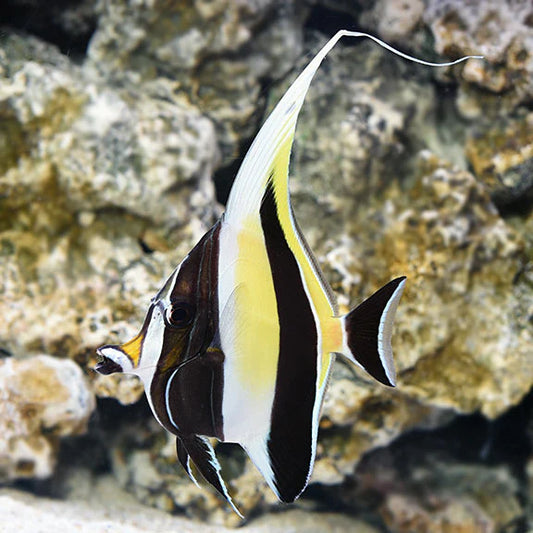
The Moorish Idol is also commonly known in Hawaii as "Kihikihi" which means "curves," "corners," or "zigzags," and refers to its shape and color pattern. It is the only member of the family Zanclidae, and a very close relative of the Tangs or Surgeonfish. One of the most widespread fish, it can be found throughout the Indian Ocean, Red Sea, and all of the tropical Pacific. Wild specimens can attain a length of 7 inches, but 4 inches is more likely in the aquarium.
The Moorish Idol tends to be very peaceful. Due to its size, schooling nature, and need for swimming space, it requires a large aquarium of at least 125 gallons. As its beauty is most evident while swimming, giving it adequate room is well rewarded. It is compatible with most fish and larger invertebrates, but should not be kept with any polyps or corals, which it will eat. Small invertebrates may be threatened as well.
The Moorish Idol is a very difficult fish to feed. Live rock with large amounts of algae and sponges on which it can feed will help it acclimate. Then offer a varied diet of finely chopped meaty items, mysis shrimp, vitamin-enriched brine shrimp, Spirulina, and algae. It should be fed several times a day.
Perhaps the most graceful of all marine fish, for many hobbyists, it is also one of the most difficult fish to keep because it is so difficult to feed. For all but the most expert hobbyist, it is better admired in the ocean or in a public aquarium rather than in a home tank.
The Flounder, also known as Plate Fish or Peacock Flounder, is laterally compressed and lays on its side on the bottom of the ocean or aquarium. Early in development, both eyes migrate to the left or right side, usually the left. The Flounder has a dull color with occasional light blue spotting. This allows it to lay in the sand, where the dull colors blend in making it very hard to see.
It requires a 125 gallon or larger aquarium with a sandy bottom which will allow it to blend in and change positions. It will eat most any invertebrate or small fish that come within its vicinity.
The diet should consist of chopped marine meats.
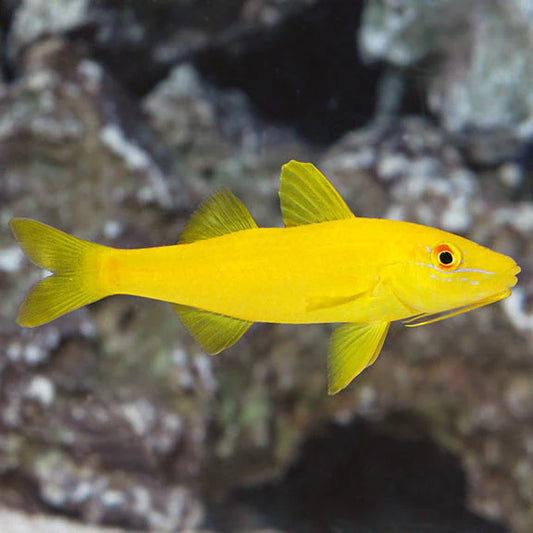
The Yellow Goatfish is also referred to as the Yellowsaddle Goatfish, or Goldsaddle Goatfish. It is a solid golden-yellow color from head to tail. Goatfish are relatively new to the hobby, but fast growing in popularity. If you’re looking for the unexpected, consider the Yellow Goatfish. These hardy characters introduce energetic activity to the aquarium bottom as they actively patrol the sand bed to satisfy their appetites, making them a unique addition to your aquarium.
An established 180 gallon or larger aquarium with large areas to swim, and rockwork with a few hiding places is recommended. The young Yellow Goatfish may sift the sandy bottom of the aquarium in search of invertebrates to eat so a moderate substrate layer is a must. The older Yellow Goatfish may pick at small crustaceans, fish, and worms. Goatfish prefer to be housed with less aggressive tank mates.
The diet should consist of a variety of meaty items. Goatfish have a high metabolism and should be fed four to five times daily.
The Manybar Goatfish is a striking and active bottom-dwelling fish recognized by the numerous vertical bars covering its silver-white body. As it matures, its coloration becomes more vibrant, making it an attractive addition to large marine aquariums. Like other members of the goatfish family, it uses the pair of sensitive barbels beneath its chin to search the sand for food, bringing constant movement and natural behavior to the aquarium.
An established 180 gallon or larger aquarium with plenty of open swimming space, a sandy substrate, and rockwork providing a few hiding places is recommended. Juvenile Manybar Goatfish spend much of their time sifting through the sand in search of small invertebrates, while larger specimens may prey upon small crustaceans, worms, and small fish. Goatfish are best housed with peaceful to semi-aggressive tank mates.
The diet should consist of a variety of meaty foods. Due to their fast metabolism, Manybar Goatfish should be fed four to five times daily.
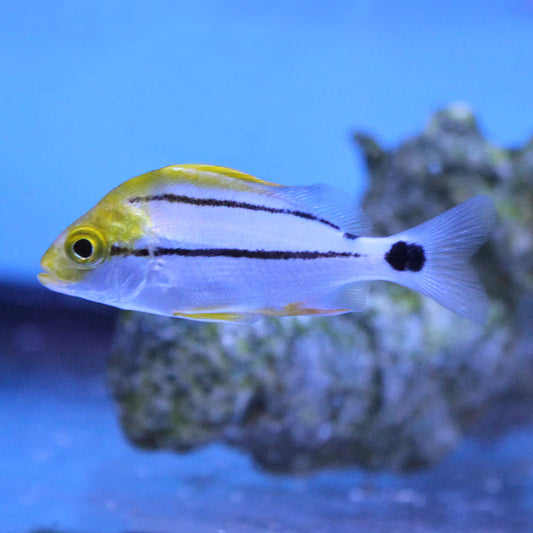
The Porkfish (Anisotremus virginicus) is a hardy and visually striking marine fish known for its bold yellow and silver striped body and peaceful yet active behavior. Juveniles are especially popular in the aquarium hobby due to their unique appearance and adaptability.
Native to the Western Atlantic and Caribbean reefs, the Porkfish is commonly found around coral reefs, rocky areas, and mangroves, where it forages for food in groups.
Key Features:
Distinctive yellow and silver striped pattern
Hardy and beginner-friendly marine fish
Active swimmer with peaceful temperament
Great for adding movement to reef or fish-only tanks
Feeding:
Omnivorous species
Feeds on crustaceans, worms, plankton, and detritus
Accepts flakes, pellets, and frozen foods
Becomes easy to feed once acclimated
Care Requirements:
Minimum tank size: 200L+
Stable marine aquarium conditions
Plenty of live rock for grazing and shelter
Best in established systems
Compatibility:
Not Reef safe
Generally safe with corals
May eat small invertebrates (shrimp, worms)
Best with similarly sized, non-aggressive fish
Pro Tips:
Keep in small groups if tank size allows
Provide a varied diet to maintain health and color
Avoid housing with very small ornamental invertebrates
Introduce early in community setups for better stability