Marine Inverts

7 products

  • New Sally Lightfoot Crab

    - Sally Lightfoot Crab

    In Stock

    The Sally Lightfoot Crab is a fast, active, and highly mobile marine crab commonly found in reef and saltwater aquariums. It is well known for its bright coloration, agility, and constant movement across rocks, glass, and aquarium surfaces. In nature, this species inhabits tropical and subtropical coastal regions, where it plays an important role in controlling algae and consuming organic detritus. Feeding & Behavior: Omnivorous scavenger feeding on algae and leftover food Helps clean live rock and aquarium glass surfaces Extremely active and fast-moving May hide among rocks when stressed or threatened Care Requirements: Stable, mature marine aquarium Plenty of live rock for grazing and shelter Supplemental feeding if algae is insufficient Peaceful tank environment preferred Important Notes: Very fast and can be difficult to catch May occasionally disturb small or weak tank inhabitants if underfed Generally reef safe but should be monitored in delicate setups Best suited for aquariums with compatible tank mates

    In Stock

    10.000 JD

  • New Porcelain Anemone Crab

    - Porcelain Anemone Crab

    In Stock

    The Porcelain Anemone Crab is a beautiful and peaceful reef-safe invertebrate commonly found in marine aquariums. It is best known for its delicate appearance and its unique feeding behavior, where it filters food particles directly from the water using its fan-like front claws. In the wild, this crab is often found living in close association with sea anemones, using them as shelter and protection while benefiting from food carried by water currents. Feeding & Behavior: Filter feeder that consumes fine food particles from the water Uses specialized fan-like claws to capture plankton and suspended foods Typically lives within or near sea anemones Extremely peaceful and non-aggressive Care Requirements: Stable and mature reef aquarium Moderate water flow to carry food particles Optional but beneficial: sea anemone host Supplemental feeding may be needed in low-nutrient systems Important Notes: Fully reef safe and safe with corals Requires clean, stable water conditions May spend most of its time hiding in anemones or rock structures

    In Stock

    30.000 JD

  • New Emerald Crab

    - Emerald Crab

    In Stock

    The Emerald Crab (Mithraculus sculptus) is one of the most popular reef-safe algae-eating crabs in marine aquariums. Known for its striking green color and small size, this crab is highly effective at controlling nuisance algae, especially bubble algae. It spends most of its time picking algae from live rock and hard-to-reach areas, making it a valuable member of any reef tank cleanup crew. Benefits: Eats bubble algae and film algae Helps maintain clean live rock Reef-safe when well-fed Small and active cleaner Care Notes: Provide stable reef environment Feed if algae is limited Avoid aggressive tank mates Keep in mature aquariums

    In Stock

    25.000 JD

  • New Red Tip Hermit Crab Red Tip Hermit Crab

    - Red Tip Hermit Crab

    In Stock

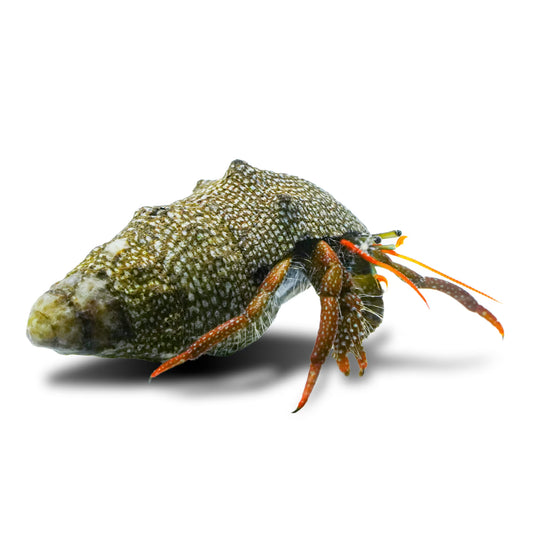
    The Dwarf Red Tip Hermit Crab is a highly active and efficient scavenger, making it an excellent addition to any marine or reef aquarium cleanup crew. Closely related to the Blue Leg Hermit Crab, this small omnivore constantly explores live rock and sand beds, reaching tight spaces to consume algae, detritus, and leftover food. Also known as the Red Tip Hermit Crab, this species is easily recognized by its bright red legs and face. It belongs to a group often called “equal-handed hermit crabs,” as both claws are similar in size and function. Native to the coastal waters of Mexico, this hardy invertebrate thrives in well-established reef or fish-only systems with sandy substrates, where it actively forages and helps maintain a clean and balanced environment. Benefits in the Aquarium: Excellent algae and detritus cleaner Helps aerate and stir the sand bed Supports beneficial bacterial growth Reaches tight spaces other cleanup crew cannot Habitat & Care: The Red Tip Hermit Crab lives in empty snail shells of various sizes, so it is important to provide extra empty shells to support its growth and natural behavior. It should be kept in a mature aquarium with stable conditions and plenty of live rock and algae for grazing. If natural food sources are limited, dried seaweed or algae-based foods can be offered as a supplement. Important Care Notes: Acclimate slowly to avoid pH shock Keep only in copper-free systems Avoid predatory tank mates Ensure a stable, reef-safe environment

    In Stock

    3.000 JD

  • New Colorado Sunburst Bubble Tip Anemone Colorado Sunburst Bubble Tip Anemone

    - Colorado Sunburst Bubble Tip Anemone

    Sold Out

    The Colorado Sunburst Anemone is a rare and highly sought-after color morph of the Bubble Tip Anemone. Known for its vibrant coloration and relatively easy care level, it is an excellent choice for both beginners and experienced reef keepers. Compared to other anemones, it is more stable in placement and tends to anchor securely to rock structures, making it easier to manage in reef aquariums. Behavior & Compatibility Hosts many clownfish species: Ocellaris Percula Maroon Gold Maroon Clownfish help feed and acclimate the anemone faster Do NOT keep with other Bubble Tip Anemones (chemical warfare risk) Placement Tips Place in a rock crevice, not on sand Turn off flow during placement Allow it to attach before restoring flow Keep 3–5 inches distance from corals Be ready to move corals if it relocates ⚠️ Never forcefully move it once attached — this can tear the foot and lead to death. Feeding Feed 2–3 times per week Suitable foods: Shrimp Squid Silversides Use a feeding stick and gently touch food to tentacles Lighting & Flow Lighting: Moderate to High (PAR 220–350) Spectrum: 14K–20K recommended Flow: Moderate Compatible lighting: LED T5 Metal Halide Water Parameters Temperature: 75–80°F (24–27°C) Salinity: 1.024–1.026 pH: 8.1–8.4 Key Elements: Calcium: 420–440 ppm Alkalinity: 8–9.5 dKH Magnesium: 1260–1350 ppm Nutrients: Nitrates: <10 ppm Phosphates: <0.10 ppm Maintenance Tips Perform water changes if nitrates exceed 10 ppm Replace phosphate media when levels rise Use dosing pumps to maintain stable parameters Avoid sudden parameter changes Handling Safety Always wear gloves Do NOT use tools or tongs Support the anemone from underneath Quick Facts Care Level: Easy Flow: Moderate Lighting: Medium–High Aggression: High Origin: Indo-Pacific

    Sold Out

    90.000 JD

  • New Arrow Crab Arrow Crab

    - Arrow Crab

    Sold Out

    The Arrow Crab (Stenorhynchus seticornis) is a unique and eye-catching marine invertebrate known for its extremely long, thin legs and pointed body shape. It is a popular addition to reef aquariums due to its unusual appearance and scavenging behavior. Native to the Western Atlantic and Caribbean reefs, the Arrow Crab spends much of its time hiding among live rock, caves, and coral structures, coming out mainly at night to feed. Behavior & Diet: The Arrow Crab is an opportunistic omnivore and scavenger. It feeds on: Leftover fish food Detritus and organic waste Small worms and bristle worms (in some cases) It can help contribute to tank cleanliness, but it is not a primary cleanup crew member like hermit crabs or snails. Care Requirements: Provide plenty of live rock and hiding spaces Stable reef aquarium conditions Feed if natural food sources are limited Keep with compatible, non-aggressive tank mates Important Notes: Can be semi-aggressive toward small or slow-moving fish and invertebrates May prey on small worms and weak organisms Not fully reef-safe in all setups—monitor behavior carefully Best suited for experienced reef keepers

    Sold Out

    35.000 JD

  • Blue Leg Hermit Crab in Jordan

    - Blue Leg Hermit Crab

    In Stock

    The Blue Leg Hermit Crab is one of the most popular and effective members of any reef aquarium clean-up crew. Known for its striking blue legs and active behavior, this small hermit crab plays an important role in maintaining a clean and balanced marine environment. Blue Leg Hermit Crabs are excellent scavengers that feed on algae, uneaten food, and detritus, helping reduce waste buildup and prevent nuisance algae growth. They are reef-safe and suitable for most marine aquariums, including nano and large reef systems. Key Benefits Controls algae growth in reef tanks Consumes leftover food and waste Reef-safe with corals and most tank mates Active and interesting behavior Care Requirements Tank Type: Marine / Reef Aquarium Temperament: Peaceful (may fight for shells) Diet: Algae, detritus, leftover food Minimum Tank Size: 10 gallons Special Note: Provide extra empty shells to prevent aggression In Jordan, reef hobbyists commonly add Blue Leg Hermit Crabs as part of a balanced clean-up crew to maintain water quality and reduce manual cleaning. At ReefAmorous, we offer healthy Blue Leg Hermit Crabs with guidance on acclimation and care to ensure success in your reef aquarium.

    In Stock

    3.000 JD

Marine invertebrates are an essential part of any saltwater aquarium, especially reef tanks. These organisms include shrimp, crabs, snails, starfish, and other reef-safe species that contribute to the health, cleanliness, and balance of your aquarium.

At Reefamorous, we offer a wide selection of marine invertebrates suitable for reef aquariums, including clean-up crew species that help control algae, detritus, and waste buildup.

Popular marine invertebrates include cleaner shrimp, peppermint shrimp, hermit crabs, turbo snails, nassarius snails, and starfish. Each plays a unique role in maintaining a healthy aquarium ecosystem.

Marine invertebrates provide several benefits, including natural algae control, removal of leftover food and organic waste, improved water quality, and added diversity and movement in the tank.

These inverts are especially important in reef tanks where maintaining stable and clean conditions is critical for coral health.

When selecting marine invertebrates, consider compatibility with fish and corals, tank size, and specific roles such as algae control or sand cleaning. Some species are more sensitive and require stable water conditions.

To ensure their health, maintain stable salinity between 1.023 and 1.026, avoid sudden parameter changes, and provide a suitable environment with proper hiding places and substrate where needed.

Login

Forgot your password?

Don't have an account yet?
Create account