Marine Fish

111 products

  • New Scribbled Angelfish

    - Scribbled Angelfish

    Sold Out

    The Scribbled Angelfish, also known as Duboulay's Angelfish, is a favorite among aquarists and relatively easy to keep. The lips are a dull yellow while the face and body are predominately a dark blue-black. Separating the head from the body is a wide vertical band of yellow and white. A yellow stripe adorns the upper body and the caudal fin is also yellow. The Scribbled Angelfish derives its name from the many scrawls over the body and large dorsal and anal fins. Usually indistinguishable in color variations from male to female, the Scribbled Angelfish male may exhibit a small white patch on the gill cover. The Scribbled Angelfish requires a large area to swim, so it needs a 180 gallon or larger aquarium with many hiding places and live rock for grazing. Not a good candidate for a reef tank, the Scribbled Angelfish is prone to nip at stony and soft corals (sessile invertebrates) and clam mantles. It may be shy at first and should not be placed with aggressive tank mates. Once acclimated, however, it may become more aggressive. A member of the Pomacanthidae family, the Scribbled Angel is hermaphroditic and difficult to breed in an aquarium. The diet for the Scribbled Angelfish should consist of Spirulina, marine algae, mysis or frozen shrimp, and other meaty items

    Sold Out

    350.000 JD

  • New Rock Beauty Angelfish

    - Rock Beauty Angelfish

    Sold Out

    The Rock Beauty Angelfish has a body that is predominately black especially on the back half, as an adult. The head and front half portion of the body, and the caudal fin are a bright yellow. The eyes have striking sapphire-blue accents. Similar in appearance, the juvenile initially has a predominately yellow body with a large caudal black spot that just seems to enlarge, overwhelming the yellow coloration with the exception of head, body area just behind the head, and the caudal fin. The Rock Beauty Angelfish is difficult to sustain in a home aquarium because of its dietary requirement of sponges. The diet in the aquarium should include vegetable matter such as marine algae and Spirulina, finely chopped meaty items, and high-quality angelfish preparations containing sponges.

    Sold Out

    175.000 JD

  • New Regal Angelfish EXPERT ONLY

    - Regal Angelfish EXPERT ONLY

    Sold Out

    With vivid vertical striations of blue, white, yellow, or orange on the body and pelvic fin, the Regal Angelfish deserves this distinctive name. Regal Angelfish from the Maldives and the Red Sea have a distinctive yellow breast, where their Indo-Pacific, Coral Sea, New Caledonia and Tahitian relatives normally have a blue/gray breast. This coloration is more prevalent in specimens that are more mature and are at least 4" in length. Juveniles will have a "False Eye Spot" on their dorsal fins that fades and the fish matures. Regal Angelfish from the Red Sea, Maldives, Coral Sea, Fiji and Tahiti are good shippers and are harvested and handled with care, and normally will adapt more easily than their Indo-Pacific counterparts to the home aquarium. The Regal Angelfish is more difficult to maintain than other species of angels so it should be introduced first so that it may stake out its territory in advance of other fish. A minimum of a 125 gallon tank with plenty of hiding places and live rock for grazing will offer a good environment. The Regal Angelfish may nip at large-polyped stony corals, an occasional soft coral and clam mantles, but may be kept with small-polyped stony corals and somewhat noxious soft corals. To entice a Regal Angelfish to eat, use a diet of fresh shrimp and chopped seafood. The diet should also include herbivore preparations which include Spirulina and marine algae, and angelfish preparations containing sponges.

    Sold Out

    90.000 JD

  • New Queen Angelfish

    - Queen Angelfish

    Sold Out

    The Queen Angelfish is one of the most striking of all angelfish. Vibrant yellow and electric sapphire-blue highlights give the Queen Angelfish an almost iridescent appearance. It has a dark spot on the forehead surrounded by bright blue. The dorsal and pelvic fins are elongated. With the potential of reaching an impressive 18 inches, the Queen Angelfish needs a large tank - at a minimum of 250 gallons, with lots of hiding places and live rock for grazing. Not a good reef dweller, the Queen Angelfish is prone to nip at stony and soft corals (sessile invertebrates) and clam mantles. It can be aggressive, so it must be introduced to the community tank last. A somewhat difficult angelfish to keep, Queen Angelfish often suffer from incorrect water parameters and diet. The diet should include Spirulina, marine algae, high-quality angelfish preparations, mysis or frozen shrimp, and other meaty items. The Queen Angelfish should be fed at least three times daily. The Small Juvenile will contain the Juvenile colorations or may be color shifting to a young adult, while the Medium will be a sub-adult, and the Large will be in Adult coloration.

    Sold Out

    250.000 JD

  • New Passer Angelfish

    - Passer Angelfish

    Sold Out

    The Passer Angelfish is also called the King Angelfish. The adult is predominately dark blue with a white vertical stripe extending down from the dorsal fin about two-thirds of the way to the pelvic fin. The dorsal fin is rimmed in yellow. The caudal and pectoral fins are also yellow, while the ventral fins are yellow on a female, and white on the male. The juvenile is orange with one white and multiple blue stripes. The Passer Angelfish can grow to over a foot in length so it requires at least a 250 gallon aquarium. It is a hardy fish, but can become aggressive, so it should be kept with other semi-aggressive tank mates. It grazes on live rock and will nip at stony and soft corals (sessile invertebrates) and clam mantles, so it is not a good candidate for a reef aquarium. The diet of the Passer Angelfish should include vegetable matter such as Spirulina, marine algae, meaty items, and high-quality angelfish preparations which include sponges. Feed at least three times daily. The Small Juvenile will contain the Juvenile colorations, the Small-Medium will be color shifting to a young adult, while the Medium will be a sub-adult, and the Large will be in Adult coloration.

    Sold Out

    250.000 JD

  • New Masked Swallowtail Angelfish - Male

    - Masked Swallowtail Angelfish - Male

    Sold Out

    The Masked Swallowtail Angelfish is also known as the Japanese Angelfish and reside in the northwest Pacific Ocean from southern Japan to the Philippines. They inhabit rocky reefs and are often seen in small groups or harems consisting of one male and several females. Masked Swallowtail Angelfish, like others of the genus (Genicanthus) exhibit dramatic sexual dimorphism where females differ in coloration from males. Females have a cream to white color chest, which gradually changes to yellow along the top of the dorsal, with a dramatic black band over the eye and at the base and along the caudal fin. Males have a bright yellow-orange face that continues horizontally down the side of the fish, with narrow black vertical bars running the length of the fish to the caudal peduncle. A well-established 125-gallon aquarium or larger will provide enough swimming space to accommodate this species, with lots of hiding places. An exception to most angelfish, the Masked Swallowtail Angelfish will make a good reef dweller, and will not nip at stony and soft corals (sessile invertebrates). The diet of the Masked Swallowtail Angelfish should include meaty foods with supplemental algae in the form of a high-quality angelfish preparations, enriched mysis shrimp, and enriched brine shrimp.

    Sold Out

    350.000 JD

  • New Masked Swallowtail Angelfish - Female

    - Masked Swallowtail Angelfish - Female

    Sold Out

    The Masked Swallowtail Angelfish is also known as the Japanese Angelfish and reside in the northwest Pacific Ocean from southern Japan to the Philippines. They inhabit rocky reefs and are often seen in small groups or harems consisting of one male and several females. Masked Swallowtail Angelfish, like others of the genus (Genicanthus) exhibit dramatic sexual dimorphism where females differ in coloration from males. Females have a cream to white color chest, which gradually changes to yellow along the top of the dorsal, with a dramatic black band over the eye and at the base and along the caudal fin. Males have a bright yellow-orange face that continues horizontally down the side of the fish, with narrow black vertical bars running the length of the fish to the caudal peduncle. A well-established 125-gallon aquarium or larger will provide enough swimming space to accommodate this species, with lots of hiding places. An exception to most angelfish, the Masked Swallowtail Angelfish will make a good reef dweller, and will not nip at stony and soft corals (sessile invertebrates). The diet of the Masked Swallowtail Angelfish should include meaty foods with supplemental algae in the form of a high-quality angelfish preparations, enriched mysis shrimp, and enriched brine shrimp.

    Sold Out

    250.000 JD

  • New Maculosus Angelfish

    - Maculosus Angelfish

    Sold Out

    A good 'first choice' for a large angelfish, the Maculosus Angelfish is also called the Yellowbar Angelfish, Yellow-band Angelfish, Map Angelfish, or Blue Moon Angelfish. In its juvenile form, at 2", it is deep blue with several white vertical bars. The body is surrounded by a metallic blue color and it has a bright As the fish matures and grows, a bright vertical bar will appear, and the white vertical stripes will disappear. A neon blue irregular pattern will start to show when the fish attains a length of 3-4", the center vertical stripe will turn a vivid yellow, and the tail a transparent yellow. As the fish reaches its maximum size, it will eventually turn a gorgeous blue with a large vertical yellow bar midbody. The caudal fin is transparent yellow, which distinguishes it from the Asfur Anger, which has a bold yellow tail and dark purple body. The Maculosus Angelfish is hardy and grows to over a foot in length, so it should be kept in a 250 gallon or larger tank with yellow tail. only one specimen per tank. It is not a good candidate for a reef aquarium since it is prone to nip at stony and soft corals (sessile invertebrates) and clam mantles. As a member of the Pomacanthidae family, the Maculosus Angelfish is hermaphroditic, difficult to breed, and indistinguishable in color variations from male to female. The diet of the Maculosus Angelfish should include Spirulina, marine algae, meaty items, and high-quality angelfish preparations containing sponges.

    Sold Out

    150.000 JD

  • New Lamarck's Angelfish

    - Lamarck's Angelfish

    Sold Out

    The Lamarck's Angelfish (or Lamark Angelfish) is also called the Freckletail Lyretail Angelfish. They have the distinction among angelfish of being sexually dimorphic. Both male and female are a silvery-gray with horizontal black stripes from eye to caudal fin. The female's stripes are bolder with one extending into and covering the length of the caudal fin. In both, the long dorsal fin is black, although larger in the female, and the caudal fin is freckled with black. More easily kept than some other angelfish, the Lamarck's Angelfish requires a well-maintained tank of at least 125 gallons. They may chase small, docile planktivores such as Anthias, Fairy Wrasses, Flasher Wrasses, and Fire Gobies but will usually ignore other fish, including other Angels. Only one male Lamarck's Angelfish should be kept per tank. Fish of the genus Genicanthus are the only zooplanktivores among the angelfish. The diet should consist of Spirulina, marine algae, high-quality angelfish preparations, and mysis or frozen shrimp.

    Sold Out

    45.000 JD

  • New Koran Angelfish

    - Koran Angelfish

    Sold Out

    The Koran Angelfish, also referred to as the Semicircular Angelfish or Halfcircled Angelfish, is an extremely popular and hardy angelfish. As an adult, the body color is a yellow-green that bleeds from light to dark moving front to back along the body. Lighter areas are speckled-blue while darker areas have a more yellow-speckled appearance. The head is a plain yellow-green with sapphire-blue gill margins and eye rings. The fins are also outlined in sapphire blue. The juvenile is black with white and blue stripes. The Koran Angelfish requires a 250 gallon or larger tank with large amounts of live rock for hiding and grazing upon slime algae and cyanobacteria. It is prone to nip at stony and soft corals (sessile invertebrates) and clam mantles so it is not a good candidate for a reef aquarium. A varied diet of Spirulina, marine algae, high-quality angelfish preparations, and mysis or frozen shrimp should be offered at least three times a day.

    Sold Out

    45.000 JD

  • New Griffis Angelfish

    - Griffis Angelfish

    Sold Out

    The Griffis Angelfish is a unique find in the industry, and originates within few locations in the Central Pacific ocean. It is a beautiful angel that reaches a maximum size of 10 inches. As a juvenile, the body is white with a black stripe on the upper half of the fish. As they mature, the coloration on the top half of the fish darkens, and a white stripe takes form. The Griffis Angelfish adapts readily to aquarium life. It requires a minimum of a 100-gallon aquarium or larger, with plenty of hiding places and live rock for grazing. Once established, the Griffis Angelfish may become territorial. This Angelfish is one of the safer choices of the large Angels for the reef aquarium, and has proven not to pick on sessile invertebrates. It is hermaphroditic, and there are no distinguishing features to differentiate males from females. As with other angelfish, the diet should include Spirulina, marine algae, high-quality angelfish preparations, mysis or frozen shrimp, and other meaty items.

    Sold Out

    500.000 JD

  • New Gray (Black) Angelfish

    - Gray (Black) Angelfish

    Sold Out

    The adult Gray Black Angelfish, which may also be called the Gray Angelfish, has a gray body with dusky blue polka-dots and the same dusky blue highlights on the caudal, dorsal, and anal fins. The face is a clear, pale silvery-gray. The juvenile is black with yellow stripes. The Gray Black Angelfish is hardy, and can reach a length of 20 inches as an adult. It therefore requires a 250 gallon or larger tank. The tank should contain large amounts of live rock for hiding and grazing. Gray Black Angelfish is prone to nip at stony and soft corals (sessile invertebrates) and clam mantles. A varied diet should be provided which includes Spirulina, marine algae, high-quality angelfish preparations, and mysis or frozen shrimp. The Small Juvenile will contain the Juvenile colorations or may be color shifting to a young adult, while the Medium will be a sub-adult, and the Large will be in Adult coloration.

    Sold Out

    150.000 JD

  • New Goldflake Angelfish

    - Goldflake Angelfish

    Sold Out

    The Goldflake Angelfish, also known as the Gold-spangled Angelfish, displays beautiful gold spots throughout the body. The mouth region of this angel is brightly colored in blue and the fins, which are black in color, are bordered by a striking blue. A single Goldflake Angelfish will do well in a tank of at least 125 gallons with plenty of hiding places. Once established, the Goldflake Angelfish may become territorial. This Angelfish is one of the safer choices of the large Angels for the reef aquarium, and has proven not to pick on sessile invertebrates. This was once a very rare Angelfish to the hobby and has recently become available. Little is known about the reproductive behaviors of this fish. A varied diet of angelfish preparations, marine algae, live rock for grazing, and vitamin-fortified shrimp should be provided.

    Sold Out

    1,000.000 JD

  • New French Angelfish

    - French Angelfish

    Sold Out

    The French Angelfish is one of the more popular angelfish varieties. The face is a pale, dusky-blue with eyes rimmed in yellow and white. The body is a dark, dusky-blue with yellow scale margins giving the French Angelfish a dappled appearance. A yellow smudge highlights the pectoral fin while the gill cover has a yellow rim. A 250 gallon or larger tank should be provided and include large amounts of live rock for hiding and grazing. Not a good candidate for a reef tank, the French Angelfish has a tendency to nip at sessile invertebrates (soft and stony corals) and clam mantles, and also tends to dominate the tank. The diet of the French Angelfish should include Spirulina, marine algae, occasional high-quality angelfish preparations with added sponge matter, and mysis or frozen shrimp. It should be fed at least three times daily. The Small Juvenile will contain the Juvenile colorations or may be color shifting to a young adult, while the Medium will be a sub-adult, and the Large will be in Adult coloration.

    Sold Out

    250.000 JD

  • New Flagfin Angelfish

    - Flagfin Angelfish

    Sold Out

    The Flagfin Angelfish, also referred to as the Threespot Angelfish, is a brilliant yellow with blue lips, a dark blue-black dorsal spot where the head joins the body, and a light tan spot behind the eye. Provide plenty of other hiding places in a 125 gallon tank or larger as the Flagfin Angelfish is quite shy early on and should be the only angel in the tank. Not a good reef dweller, the Flagfin Angelfish is prone to nip at sessile invertebrates (soft and stony corals) and clam mantles. This is a difficult angelfish to keep due to its dietary requirement of sponges and its poor ability to adapt to other foods. Expert aquarists may have success by providing a mixed fare of sponge-containing frozen angelfish rations, vitamin-enriched brine shrimp, mysis shrimp, a plethora of plant material, and live rock for grazing and hiding.

    Sold Out

    60.000 JD

  • New False Personifer Angelfish

    - False Personifer Angelfish

    Sold Out

    The False Personifer Angelfish, also known as the Bluemask Angelfish, has an unusual, almost blistered appearance to its body which is generally black. The face is blue-green and the males have a speckled yellow face. A swatch of yellow covers the forehead and the caudal fin is also yellow and split with a blue-green band. This is one of the few species of angelfish where the males differ morphologically from the females. In this case, the males have a slightly longer body than females. A 180 gallon or larger tank with large quantities of live rock should be provided. Not a good reef dweller, the Personifer Angelfish is prone to nip at stony and soft corals (sessile invertebrates) and clam mantles. The diet should consist of Spirulina, marine algae, high-quality angelfish preparations, mysis or frozen shrimp, and other meaty items.

    Sold Out

    200.000 JD

  • New Emperor Angelfish - Adult Emperor Angelfish - Adult

    - Emperor Angelfish - Adult

    Sold Out

    The adult Emperor Angelfish, also called the Imperator Angelfish, has a bold, blue body covered with bright yellow horizontal stripes culminating in a bright yellow to orange caudal fin. A striking blue-black mask covers the eyes and a similarly-colored vertical band extends from the pectoral fin two-thirds of the way up the body. This band is highlighted in a sapphire-blue in front, and bright yellow, caudally. The mouth is white. The juvenile is black with circular white and blue stripes starting at the tail. Although sought after for its colors, in captivity, the adult coloration may not be as striking or brilliant. The changing angelfish will vary in coloration and pattern as it transforms from juvenile to the adult coloration. The Emperor Angelfish requires a 220 gallon or larger tank with live rock for grazing and hiding. They also require extensive rockwork and deep caves to feel secure. It will nip at stony and soft corals (sessile invertebrates) and clam mantles, but may be kept with small-polyped stony corals and somewhat noxious soft corals. It should be fed a diet of Spirulina, marine algae, high-quality angelfish preparations, mysis or frozen shrimp, and other meaty items.

    Sold Out

    110.000 JD

  • New Emperor Angelfish - Juvenile Emperor Angelfish - Juvenile

    - Emperor Angelfish - Juvenile

    Sold Out

    The adult Emperor Angelfish, also called the Imperator Angelfish, has a bold, blue body covered with bright yellow horizontal stripes culminating in a bright yellow to orange caudal fin. A striking blue-black mask covers the eyes and a similarly-colored vertical band extends from the pectoral fin two-thirds of the way up the body. This band is highlighted in a sapphire-blue in front, and bright yellow, caudally. The mouth is white. The juvenile is black with circular white and blue stripes starting at the tail. Although sought after for its colors, in captivity, the adult coloration may not be as striking or brilliant. The changing angelfish will vary in coloration and pattern as it transforms from juvenile to the adult coloration. The Emperor Angelfish requires a 220 gallon or larger tank with live rock for grazing and hiding. They also require extensive rockwork and deep caves to feel secure. It will nip at stony and soft corals (sessile invertebrates) and clam mantles, but may be kept with small-polyped stony corals and somewhat noxious soft corals. It should be fed a diet of Spirulina, marine algae, high-quality angelfish preparations, mysis or frozen shrimp, and other meaty items.

    Sold Out

    55.000 JD

  • New Cortez Angelfish Cortez Angelfish

    - Cortez Angelfish

    Sold Out

    The coloration of the Cortez Angelfish varies markedly from juvenile to adult. The juvenile stage is black with yellow and blue semi-circular striping radiating from the tail. As an adult, the Cortez Angelfish is blue, with a pale, speckled mid-section and a swipe of vertical yellow just behind the head. The long, dorsal fin is a green-blue while the head is blue with yet another yellow vertical swipe just behind the eye. The Cortez Angelfish requires at least a 250 gallon tank, and should be the only angelfish in the tank, even as juveniles. Not a good candidate for a reef tank, the Cortez Angelfish eat sponges, and will also consume stony and soft corals (sessile invertebrates) and clam mantles. It should be provided with a diet of Spirulina, marine algae, shrimp and other meaty items, and high-quality angelfish preparations containing sponges.

    Sold Out

    200.000 JD

  • New Chrysurus Angelfish

    - Chrysurus Angelfish

    Sold Out

    The Chrysurus Angelfish, also referred to as the Goldtail Angelfish or Ear Spot Angelfish, is an uncommon aquarium member because very few are collected for the aquarium industry. It has a body of mottled-brown with vertical white stripes. There are several bright sapphire-blue stripes on the head, and the tail is a dull yellow rimmed in the same sapphire-blue. As a juvenile, the tail is clear in coloration until they reach 3 to 4 inches, at which time it begins to develop the yellow coloration. The Chrysurus Angelfish requires a 220 gallon or larger aquarium with multiple hiding places and large amounts of live rock for grazing. Not a good reef dweller, the Chrysurus Angelfish is prone to nip at stony and soft corals (sessile invertebrates) and clam mantles, but may be kept with small-polyped stony corals and somewhat noxious soft corals. When stressed, the Chrysurus Angelfish makes an unusual clicking sound. As other angelfish, it is hermaphroditic, and there are no distinguishing characteristics to differentiate males and females. It is difficult to breed in an aquarium. The diet of the Chrysurus Angelfish should include Spirulina, marine algae, high-quality angelfish preparations, mysis or frozen shrimp, and other meaty items.

    Sold Out

    200.000 JD

  • New Bluespotted Angelfish

    - Bluespotted Angelfish

    Sold Out

    The Bluespotted Angelfish, also known as the Blue-spangled Angelfish, is blue to yellow-brown and covered with small blue dots. It has a bright yellow tail. It requires a 125 gallon or larger well-established aquarium with numerous hiding places and large amounts of live rock for grazing. It is generally not overly aggressive and should be kept with nonaggressive tankmates. It may nip at soft corals, stony corals, and mantles of tridacnid clams. The Bluespotted Angelfish will eat filamentous algae and diatoms, and should be fed Spirulina, marine algae, high-quality angelfish preparations, mysid or frozen shrimp, and other meaty items at least three times a day.

    Sold Out

    75.000 JD

  • New Blueline Angelfish

    - Blueline Angelfish

    Sold Out

    The Blueline Angelfish, also known as the Bluebanded Angelfish, has been likened to a butterflyfish in body structure. This unique fish is only available on a seasonal basis in the summer months. As a juvenile this species can be recognized by its dark black body with iridescent blue horizontal stripes, along with a yellow bar that runs vertically behind the eye. The dorsal and anal fins are outlined in white and the caudal fin is bright yellow. As an adult a yellow to tan body with vibrant blue horizontal stripes identifies this fish. The Blueline Angelfish is a relatively shy species when first introduced, but will adapt quickly to a well established aquarium. Providing a quietly-located aquarium with non-aggressive tank mates and plenty of hiding places is ideal. A minimum of a 180 gallon tank or larger provided with live rock for grazing will also help provide an optimal environment. The Blueline Angelfish is prone to nip at stony and soft corals (sessile invertebrates) and clam mantles. It will also graze on microalgae, filamentous algae, and diatoms. The diet should consist of mysis or finely shaved frozen shrimp, quality marine pellet food, clams on the half shell, and other meaty items, along with algae and sponge.

    Sold Out

    250.000 JD

  • New Blueface Angelfish Blueface Angelfish

    - Blueface Angelfish

    Sold Out

    Referred to variously as the Blueface, Yellowface, or Yellowmask Angelfish, the adult and juvenile Blueface Angelfish differ markedly in coloration. As a juvenile, the body is covered with alternating vertical stripes of black, white, and sapphire blue. Upon growing to approximately five inches, the juvenile begins to morph into its adult coloration of pale yellow with bluish scales and a bright-yellow pectoral fin. It has a mottled-blue face with yellow mask that extends from eye to eye but not much beyond each eye. There is also an eyespot at the caudal end of the dorsal fin. A minimum of a 220 gallon tank with numerous hiding places and large amounts of live rock for grazing will offer a good environment. Not a good reef dweller, the Blueface Angelfish is prone to nip at stony and soft corals (sessile invertebrates) and clam mantles. The Blueface Angelfish is best kept as the only angelfish, as it is prone to becoming territorial when it is the largest fish in the tank. The diet should consist of Spirulina, marine algae, high-quality angelfish preparations, mysis or frozen shrimp, and other meaty items. It should be fed at least three times daily.

    Sold Out

    130.000 JD

  • New Blue Girdled Angelfish

    - Blue Girdled Angelfish

    Sold Out

    The Blue Girdled Angelfish, also called the Majestic Angelfish, has yellow scales with blue margins and a dark blue band, or girdle, that covers the face and extends backward. The girdle is highlighted with neon blue margins. While somewhat shy, this angel is one of the easier angelfish to keep. It requires a tank of 180 gallons or more with multiple hiding places and live rock for grazing. The Blue Girdled Angelfish is not a good reef dweller, being prone to nip at stony and soft corals (sessile invertebrates) and clam mantles. It generally will not harm small-polyped stony corals and somewhat noxious soft corals. The diet of the Blue Girdled Angelfish should include vegetable matter such as Spirulina and marine algae, meaty items such as mysis shrimp, and high-quality angelfish preparations containing sponges.

    Sold Out

    120.000 JD


You have seen 24 out of 111 products

Buy Marine Fish Online in Jordan | Saltwater Fish for Reef Aquariums

Marine Fish for Reef, Saltwater Aquariums

Marine fish are among the most vibrant and fascinating species in the aquarium hobby. From colorful reef-safe fish to hardy beginner species, saltwater fish bring life, movement, and personality to any marine aquarium.

At Reefamorous, we offer a wide selection of marine fish suitable for reef tanks, fish-only systems, and advanced aquascapes, carefully selected to ensure compatibility, health, and long-term success.

Popular Types of Marine Fish

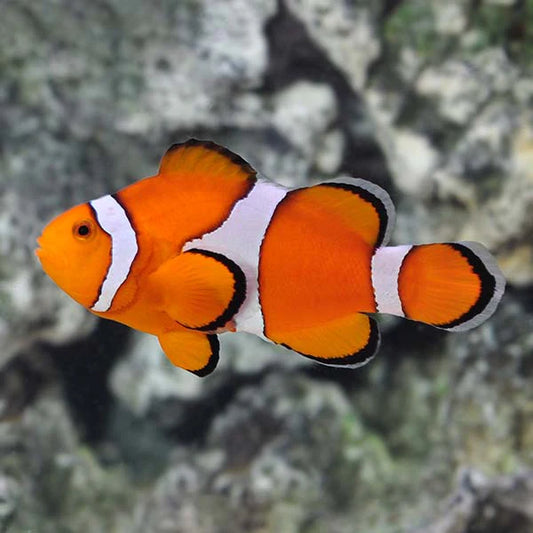
  • Clownfish
  • Tangs
  • Angelfish
  • Gobies & Blennies
  • Wrasses

Each species offers unique behaviors, colors, and benefits for your aquarium ecosystem.


Login

Forgot your password?

Don't have an account yet?
Create account