Genicanthus bellus
Bellus Angelfish
Bellus Angelfish
SKU:F-ANG-020
Out of stock
Couldn't load pickup availability
Medium
Peaceful
Reef Safe
Quick Information
Quick Information
- Care Level: Medium
- Reef Compatible: Reef Safe
- Temper: Peaceful
- Minimum Tank Size: 450 Liters
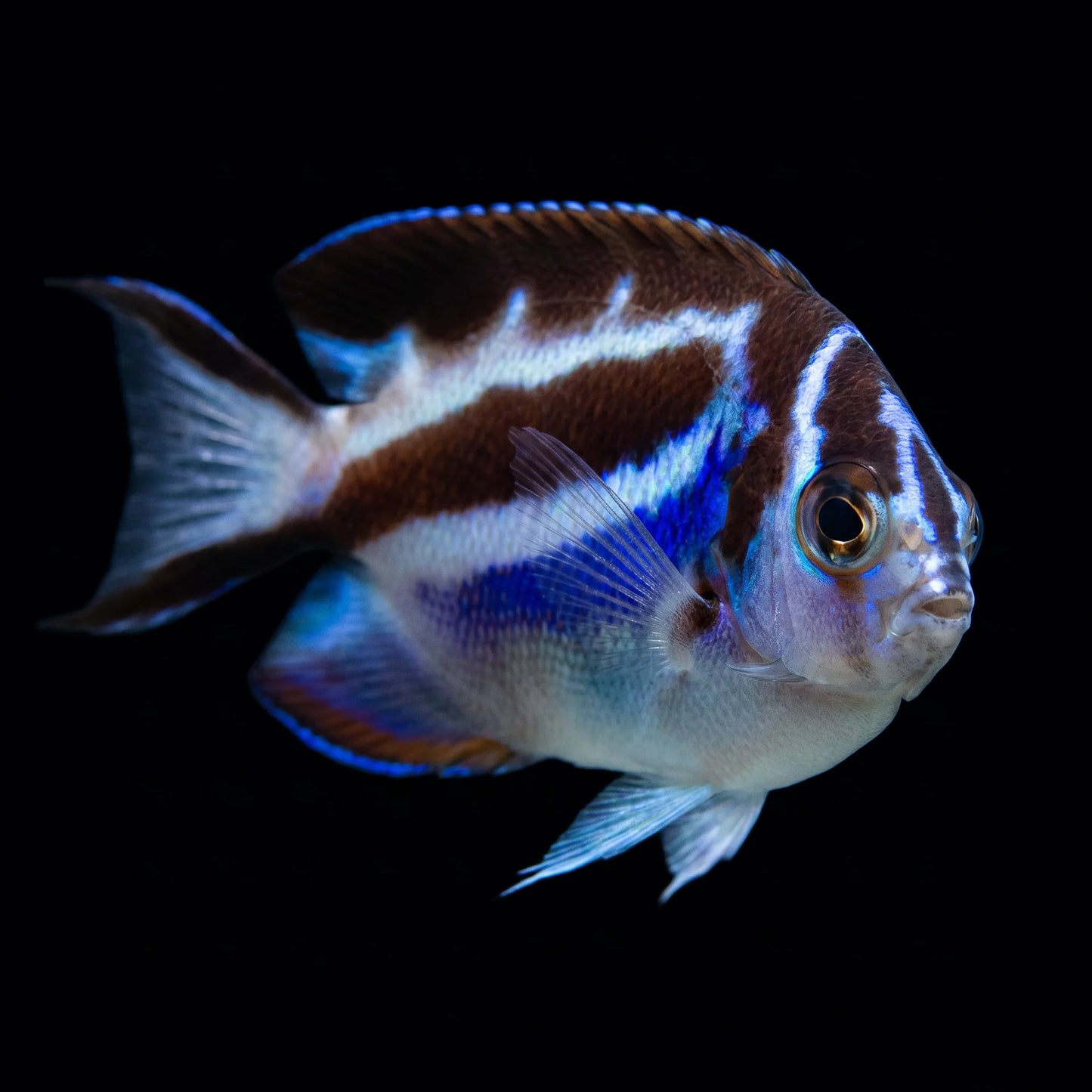
The Bellus Angelfish, also known as the Ornate Angelfish, originates from the Indo Pacific region. The Bellus Angelfish prefers deeper coral rich areas.
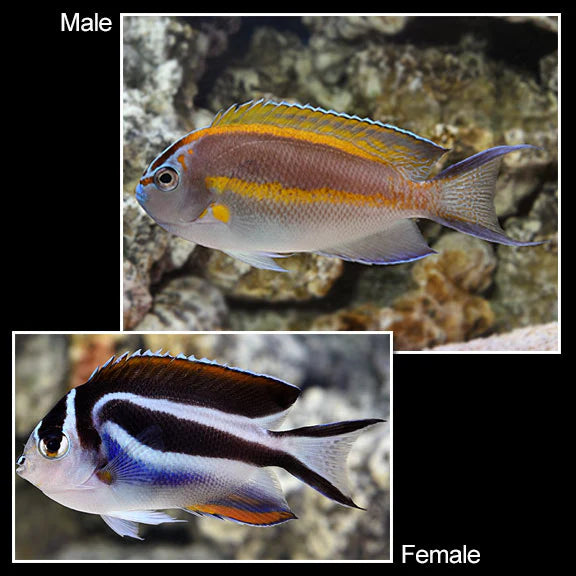
The Bellus Angelfish is one of the few angelfish displaying sexual dimorphism. The male is an iridescent pale white and blue, with the lower half of the body and anal fin highlighted by long, horizontal blue stripes and one, yellow to orange stripe extending toward the caudal fin and edging the dorsal fin. The female is an iridescent pale white and blue and black with a yellow/orange dorsal fin and lateral stripe running from gills to tail.
Bellus Angelfish are best housed as a male-female pair or small harem of one male and few females in a 125-gallon or larger aquarium, and are ideal candidates for the deep-water reef aquarium. Acclimation will be facilitated by a dimly-lit tank, but these fishes seem to adapt well to the intense lighting in most modern reef aquariums. The tank should have multiple hiding places and live rock for grazing. Do not keep two males in the same tank as fighting will ensue.
The Bellus Angelfish are hermaphroditic and have the ability to change sex from female to male, and males can even revert back to female if no females are present in the aquarium. They are difficult to breed, but many seasoned veteran aquarists have successfully observed these fishes spawning on a regular basis in very large home aquariums.
A varied diet of meaty foods such as vitamin enriched frozen brine shrimp, plus spirulina, marine algae, high-quality angelfish preparations, mysis or frozen shrimp, and other meaty items will provide good nutrition.
Share

Warrning!
Please note that livestock is available for delivery within Jordan only and cannot be shipped internationally due to shipping regulations and animal welfare requirements. For more information, please refer to our Shipping Policy.
Blog posts
View all-
Copperband Butterflyfish Care Guide
Wesam MsaitefPart 1: Why This Beautiful Fish Is One of the Most Rewarding—and Challenging—Species in Reef Keeping Introduction Ask a group of experienced reef keepers about the Copperband Butterflyfish (Chelmon rostratus),...
Copperband Butterflyfish Care Guide
Wesam MsaitefPart 1: Why This Beautiful Fish Is One of the Most Rewarding—and Challenging—Species in Reef Keeping Introduction Ask a group of experienced reef keepers about the Copperband Butterflyfish (Chelmon rostratus),...
-
Aiptasia Control Options: Choosing the Right So...
Wesam MsaitefIntroduction Few pests are as notorious among reef aquarists as Aiptasia. What often begins as a single small anemone hidden between rocks can quickly turn into dozens—or even hundreds—of unwanted...
Aiptasia Control Options: Choosing the Right So...
Wesam MsaitefIntroduction Few pests are as notorious among reef aquarists as Aiptasia. What often begins as a single small anemone hidden between rocks can quickly turn into dozens—or even hundreds—of unwanted...
-
Common Nuisance Algae and How to Treat Them
Wesam MsaitefIntroduction Few reef keepers make it through the hobby without facing nuisance algae at some point. Whether you're cycling your first marine aquarium or maintaining a mature reef system that...
Common Nuisance Algae and How to Treat Them
Wesam MsaitefIntroduction Few reef keepers make it through the hobby without facing nuisance algae at some point. Whether you're cycling your first marine aquarium or maintaining a mature reef system that...