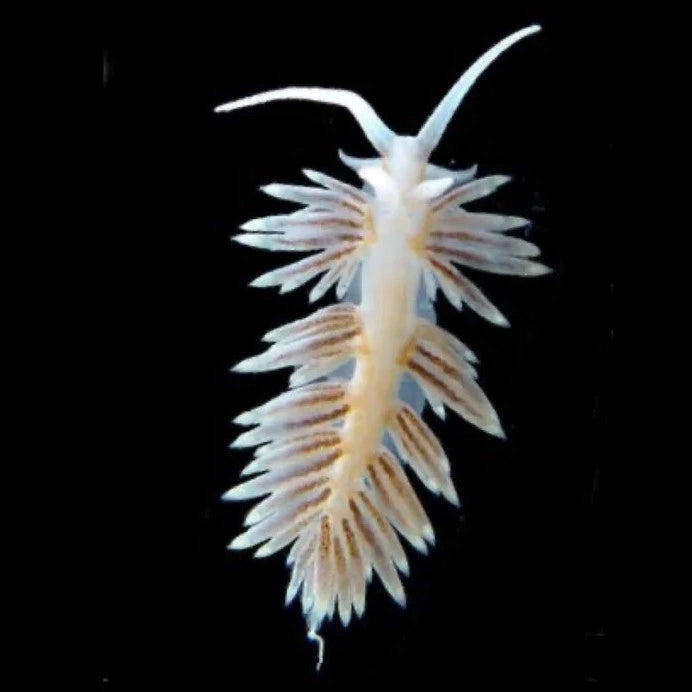
Berghia stephanieae
Berghia Nudibranchs
Berghia Nudibranchs
SKU:I-NUD-001
Low stock
Couldn't load pickup availability
 Medium - Hard
 Peaceful
 Reef Safe

Quick Information
Quick Information
- Care Level: Medium - Hard
- Reef Compatible: Reef Safe
- Temper: Peaceful
- Minimum Tank Size:
Berghia Nudibranchs (Berghia stephanieae) are highly sought-after reef-safe sea slugs known for one remarkable trait: they feed exclusively on nuisance Aiptasia anemones.
Unlike chemical treatments or fish that may harm corals, Berghia Nudibranchs offer a completely natural and reef-safe method for eliminating Aiptasia infestations from marine aquariums.
Once introduced into the aquarium, they actively hunt and consume Aiptasia, including small and hard-to-reach specimens hidden within rockwork.
Key Features
- Feeds exclusively on Aiptasia anemones
- Completely reef-safe
- Safe with corals, fish, and invertebrates
- Natural biological pest control
- Reaches Aiptasia hidden deep within rock structures
- Can reproduce in aquariums when food is available
Benefits
- Eliminates Aiptasia naturally
- Avoids chemical treatments
- No risk to corals or reef inhabitants
- Provides long-term biological control
- Effective against both small and large infestations
Reef Compatibility
Berghia Nudibranchs are considered one of the safest methods of Aiptasia control because they do not consume:
- SPS corals
- LPS corals
- Soft corals
- Zoanthids
- Clams
- Fish
Their diet consists exclusively of Aiptasia anemones.
Natural Predators
Many aquarium inhabitants naturally prey on Berghia Nudibranchs. For best results, avoid keeping them with:
- Wrasses
- Peppermint Shrimp
- Dottybacks
- Butterflyfish
- Certain crabs and predatory shrimp
Important Care Information
- Requires the presence of Aiptasia to survive
- May be preyed upon by certain wrasses, peppermint shrimp, and other predators
- Best introduced after lights out
- Avoid adding to aquariums without an Aiptasia population
- Sensitive to rapid changes in salinity and water parameters
Quick Facts
- Scientific Name: Berghia stephanieae
- Common Name: Berghia Nudibranch
- Reef Safe: Yes
- Temperament: Peaceful
- Diet: Aiptasia only
- Care Level: Moderate
Ideal For
- Reef aquariums with Aiptasia infestations
- SPS reef systems
- LPS reef systems
- Mixed reef aquariums
- Aquarists seeking chemical-free pest control