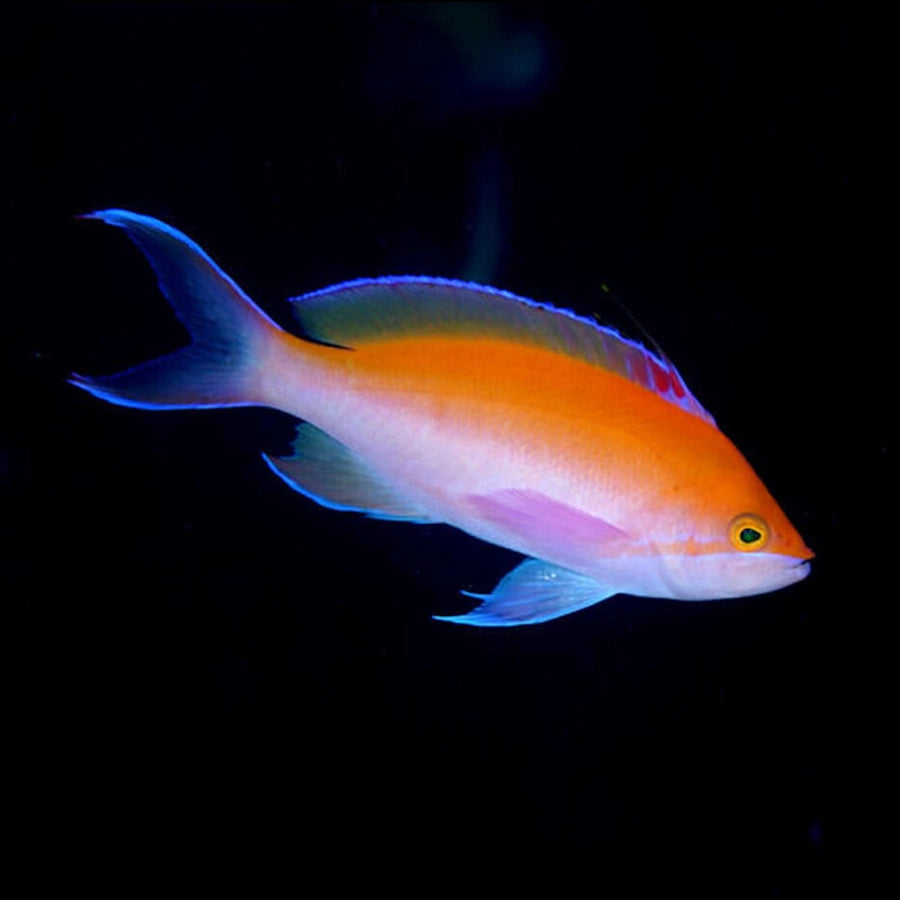
Pseudanthias bicolor
Bicolor Anthias
Bicolor Anthias
SKU:F-ANT-003
Out of stock
Couldn't load pickup availability
Easy
Semi-Aggressive
Reef Safe
Quick Information
Quick Information
- Care Level: Easy
- Reef Compatible: Reef Safe
- Temper: Semi-Aggressive
- Minimum Tank Size: 450 Liters
The Bicolor Anthias form massive schools among the reefs. The males have a more intense coloration with a violet body and yellow running along the back through the upper caudal lobe. The females tend to be lavender in color with a yellow back and caudal fin. The dorsal fin of the male is edged in purple, and the first ray is elongated. These are one of the hardier of the Anthias and make a wonderful addition to the saltwater reef or fish only aquarium.
The Bicolor Anthias does best when kept with its own species in an aquarium of at least 125 gallons, but is also a beautiful fish for the fish only, invertebrate or reef aquarium. The Anthias dwell in the middle of the aquarium, but appreciates the availability of several hiding places. These fish should not be kept with aggressive fish that will cause them to become withdrawn from the rest of the community.
Anthias species all share the trait of being hermaphroditic. If a dominant male perishes, the largest female of the group will often morph to take its place.
Once acclimated to a new aquarium, Anthias do best when fed a varied diet of frozen mysis shrimp, enriched frozen brine shrimp, and over time may eat high-quality flake foods offered in small quantities throughout the day. An attached refugium cultivating copepods and amphipods provides a steady supply of nutritious live food sure to keep this active planktivore content..
Share

Warrning!
Please note that livestock is available for delivery within Jordan only and cannot be shipped internationally due to shipping regulations and animal welfare requirements. For more information, please refer to our Shipping Policy.
Blog posts
View all-
Copperband Butterflyfish Care Guide
Wesam MsaitefPart 1: Why This Beautiful Fish Is One of the Most Rewarding—and Challenging—Species in Reef Keeping Introduction Ask a group of experienced reef keepers about the Copperband Butterflyfish (Chelmon rostratus),...
Copperband Butterflyfish Care Guide
Wesam MsaitefPart 1: Why This Beautiful Fish Is One of the Most Rewarding—and Challenging—Species in Reef Keeping Introduction Ask a group of experienced reef keepers about the Copperband Butterflyfish (Chelmon rostratus),...
-
Aiptasia Control Options: Choosing the Right So...
Wesam MsaitefIntroduction Few pests are as notorious among reef aquarists as Aiptasia. What often begins as a single small anemone hidden between rocks can quickly turn into dozens—or even hundreds—of unwanted...
Aiptasia Control Options: Choosing the Right So...
Wesam MsaitefIntroduction Few pests are as notorious among reef aquarists as Aiptasia. What often begins as a single small anemone hidden between rocks can quickly turn into dozens—or even hundreds—of unwanted...
-
Common Nuisance Algae and How to Treat Them
Wesam MsaitefIntroduction Few reef keepers make it through the hobby without facing nuisance algae at some point. Whether you're cycling your first marine aquarium or maintaining a mature reef system that...
Common Nuisance Algae and How to Treat Them
Wesam MsaitefIntroduction Few reef keepers make it through the hobby without facing nuisance algae at some point. Whether you're cycling your first marine aquarium or maintaining a mature reef system that...