Ecsenius namiyei
Black Combtooth Blenny
SKU:F-BLN-004
Out of stock
Couldn't load pickup availability
Easy
Peaceful
With Caution
Quick Information
Quick Information
- Care Level: Easy
- Reef Compatible: With Caution
- Temper: Peaceful
- Minimum Tank Size: 100 Liters
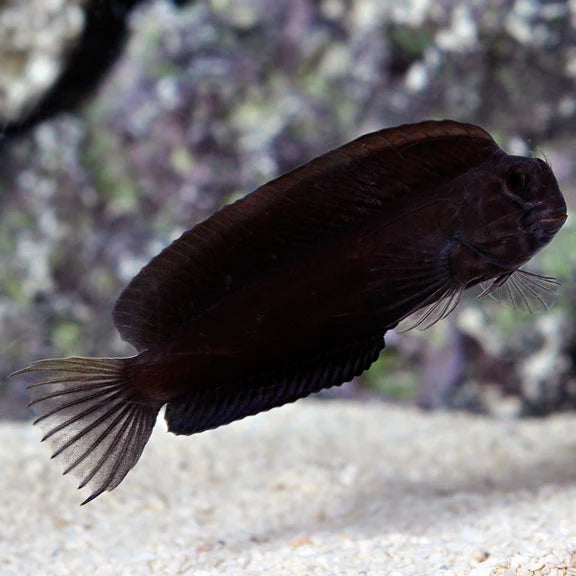
The Black Combtooth Blenny - also known as Namive's Blenny, Tribal Blenny or Yellowtail Black Blenny - isn't often seen in the hobby. Adding one to your reef aquarium may just cause a little blenny envy among friends!
Useful for controlling microalgae on live rock and corals, these reef-safe herbivores pack plenty of personality, darting from perch to perch among the rockwork. Body coloration graduates from a primarily blackish-purple body to an electric indigo and yellow-white tail.
In nature, they are most commonly found among the shallow reef flats, but also inhabit estuaries and outer reef lagoons to about 60 feet deep. Combtooth Blennies are named for their distinctive fine teeth - about 100! - embedded in their lips rather than their jaw. They use these teeth to scrape algae off rocks and aquarium glass.
Generally found amid crevices and rocks on the bottom of its environment, the Black Combtooth Blenny needs a tank of at least 30 gallons with plenty of scattered live rock for perching and hiding. They are generally peaceful, but may become territorial towards others within the same genus.
The diet of the Black Combtooth Blenny should include vegetable matter, including frozen and dried foods containing marine and blue-green algae. It will also feed on (and help control) algae growing in the aquarium.
Share

Warrning!
Please note that livestock is available for delivery within Jordan only and cannot be shipped internationally due to shipping regulations and animal welfare requirements. For more information, please refer to our Shipping Policy.
Blog posts
View all-
Reef Tank Cleanup Crew Myths vs. Reality: What ...
Wesam MsaitefThink a cleanup crew replaces water changes? Separate reef tank cleanup crew myths from reality and learn how to stock snails, hermit crabs, and shrimp correctly. Introduction A cleanup crew...
Reef Tank Cleanup Crew Myths vs. Reality: What ...
Wesam MsaitefThink a cleanup crew replaces water changes? Separate reef tank cleanup crew myths from reality and learn how to stock snails, hermit crabs, and shrimp correctly. Introduction A cleanup crew...
-
Why Captive-Bred Marine Fish Are the Best Choice?
Wesam MsaitefDiscover why captive-bred marine fish are healthier, easier to keep, and more sustainable than wild-caught fish. Learn the real benefits for both your reef aqua…
1 commentWhy Captive-Bred Marine Fish Are the Best Choice?
Wesam MsaitefDiscover why captive-bred marine fish are healthier, easier to keep, and more sustainable than wild-caught fish. Learn the real benefits for both your reef aqua…
1 comment -
Aiptasia Control Options: Choosing the Right So...
Wesam MsaitefDiscover the most effective Aiptasia control methods for reef aquariums, including chemical treatments, biological predators, manual removal, and long-term prev…
Aiptasia Control Options: Choosing the Right So...
Wesam MsaitefDiscover the most effective Aiptasia control methods for reef aquariums, including chemical treatments, biological predators, manual removal, and long-term prev…