Lysmata debelius
Blood Red Fire Shrimp
SKU:I-SHR-010
Out of stock
Couldn't load pickup availability
Easy
Peaceful
Reef Safe
Quick Information
Quick Information
- Care Level: Easy
- Reef Compatible: Reef Safe
- Temper: Peaceful
- Minimum Tank Size:
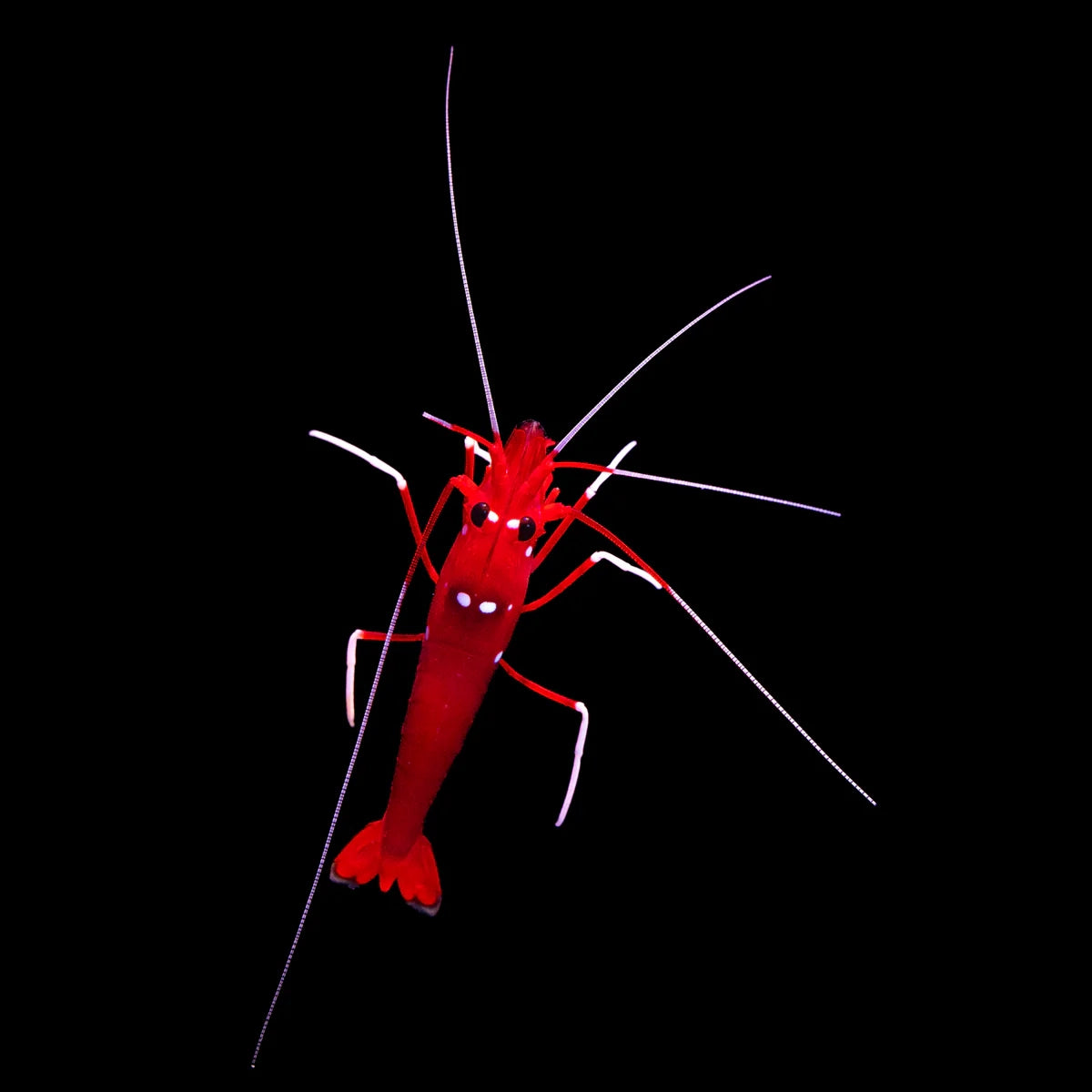
The Blood Red Fire Shrimp (Lysmata debelius), also known as Blood Shrimp, Fire Shrimp, or Scarlet Cleaner Shrimp, is one of the most popular ornamental shrimp in the marine aquarium hobby. The Blood Red Fire Shrimp boasts striking blood-red coloration with brilliant white spots and long white antennae. Depending on which region of the Indo-Pacific from which it originates, the Blood Red Fire Shrimp may have the white dots just on its carapace or covering its entire body.
The Blood Red Fire Shrimp is most active at night and prefers a habitat aquascaped with caves and overhangs where the lighting is not too intense during the "day". While the Blood Red Fire Shrimp will tolerate its mate, others of its own kind will be chased away or harassed unless kep in a very spacious aquarium setup. It is generally peaceful with most other organisms in the reef system unless they impinge on its territory. As a "cleaner shrimp," the Blood Red Fire Shrimp will set up cleaning stations and remove dead tissue and parasites from fish that present themselves. The Blood Red Fire Shrimp will also scavenge for meaty bits along the substrate bottom. Often, only its antennae will be visible. Similar to all invertebrates, the Blood Red Fire Shrimp will not tolerate copper or high levels of nitrates in the aquarium. The Blood Red Fire Shrimp will require correct levels of iodine in the water to promote proper molting.
The diet of the Blood Red Fire Shrimp should include freeze-dried, live or frozen foods, and flaked foods.
Share

Warrning!
Please note that livestock is available for delivery within Jordan only and cannot be shipped internationally due to shipping regulations and animal welfare requirements. For more information, please refer to our Shipping Policy.
Blog posts
View all-
Ich vs. Marine Velvet: How to Recognize and Tre...
Wesam MsaitefLearn how to distinguish marine ich from velvet, recognize the early warning signs, understand why breathing changes matter, and choose an effective treatment approach without exposing your reef tank’s corals...
Ich vs. Marine Velvet: How to Recognize and Tre...
Wesam MsaitefLearn how to distinguish marine ich from velvet, recognize the early warning signs, understand why breathing changes matter, and choose an effective treatment approach without exposing your reef tank’s corals...
-
How to Photograph Corals with Your Smartphone
Wesam MsaitefA Complete Guide to Better Colors, Sharper Details, and More Realistic Reef Photography Introduction Why Does Your Coral Look Amazing in Person but Terrible on Your Phone? You are standing...
How to Photograph Corals with Your Smartphone
Wesam MsaitefA Complete Guide to Better Colors, Sharper Details, and More Realistic Reef Photography Introduction Why Does Your Coral Look Amazing in Person but Terrible on Your Phone? You are standing...
-
Live Rock Buyer's Guide: Live vs. Dry Rock, Cur...
Wesam MsaitefA practical live rock buyer's guide covering live, dry, and man-made rock, curing die-off, common hitchhikers, and aquascaping so your reef tank foundation is right the first time. Introduction Choosing...
Live Rock Buyer's Guide: Live vs. Dry Rock, Cur...
Wesam MsaitefA practical live rock buyer's guide covering live, dry, and man-made rock, curing die-off, common hitchhikers, and aquascaping so your reef tank foundation is right the first time. Introduction Choosing...