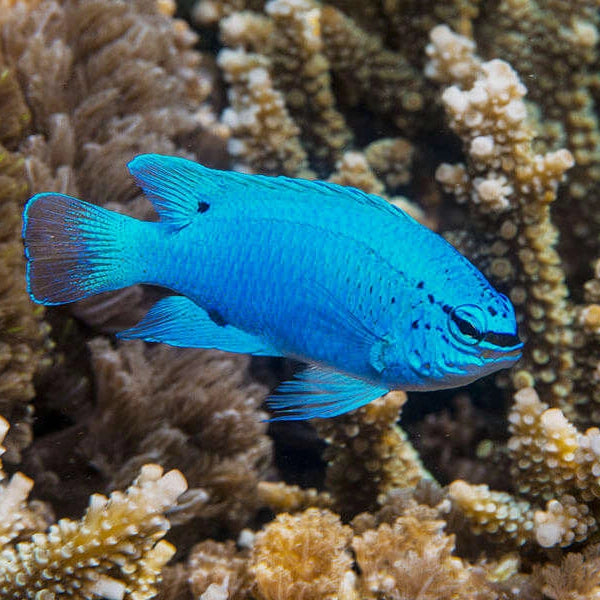
Chrysiptera cyanea
Blue Damselfish
Blue Damselfish
SKU:F-DMS-002
25 in stock
Couldn't load pickup availability
Easy
Semi-Aggressive
Reef Safe
The Blue Damselfish is probably the best selling marine fish in the United States. Beginning hobbyists relish its hardiness and small size, while advanced aquarists praise the color and activity this member of the Pomacentridae family brings to the aquarium. Female Blue Damselfish are completely blue. Males, on the other hand, have an orange tail and are commonly called the Orangetail Blue Damselfish or Blue Devil Damselfish.
Native to reefs across the Indo-Pacific, Chrysiptera cyanea is usually busy defending a small territory. Interestingly, the Blue Damselfish has the ability to hide in a hole or crevice and darken to an almost black color. This usually happens when it is threatened. After the perceived threat is gone, the Blue Damselfish will return to its electric blue color in a matter of seconds.
The Blue Damselfish is somewhat aggressive, so its housing should be large enough to easily accommodate multiple specimens. It is a good fish for beginners and makes an ideal companion fish for saltwater aquariums of over 30 gallons. The Blue Damselfish is also a great choice for reef aquariums with invertebrates. As the Blue Damselfish matures, it may demonstrate pronounced territorial behavior towards future additions to the aquarium. If keeping the Blue Damselfish with other damselfish, provide multiple hiding places to break up territories and decrease aggression
The diet of the Blue Damselfish should consist of flaked and frozen foods, and herbivore preparations.
Share

Warrning!
Please note that livestock is available for delivery within Jordan only and cannot be shipped internationally due to shipping regulations and animal welfare requirements. For more information, please refer to our Shipping Policy.
Blog posts
View all-
Ich vs. Marine Velvet: How to Recognize and Tre...
Wesam MsaitefLearn how to distinguish marine ich from velvet, recognize the early warning signs, understand why breathing changes matter, and choose an effective treatment approach without exposing your reef tank’s corals...
Ich vs. Marine Velvet: How to Recognize and Tre...
Wesam MsaitefLearn how to distinguish marine ich from velvet, recognize the early warning signs, understand why breathing changes matter, and choose an effective treatment approach without exposing your reef tank’s corals...
-
How to Photograph Corals with Your Smartphone
Wesam MsaitefA Complete Guide to Better Colors, Sharper Details, and More Realistic Reef Photography Introduction Why Does Your Coral Look Amazing in Person but Terrible on Your Phone? You are standing...
How to Photograph Corals with Your Smartphone
Wesam MsaitefA Complete Guide to Better Colors, Sharper Details, and More Realistic Reef Photography Introduction Why Does Your Coral Look Amazing in Person but Terrible on Your Phone? You are standing...
-
Live Rock Buyer's Guide: Live vs. Dry Rock, Cur...
Wesam MsaitefA practical live rock buyer's guide covering live, dry, and man-made rock, curing die-off, common hitchhikers, and aquascaping so your reef tank foundation is right the first time. Introduction Choosing...
Live Rock Buyer's Guide: Live vs. Dry Rock, Cur...
Wesam MsaitefA practical live rock buyer's guide covering live, dry, and man-made rock, curing die-off, common hitchhikers, and aquascaping so your reef tank foundation is right the first time. Introduction Choosing...