Paracanthurus hepatus
Blue Tang
Blue Tang
SKU:F-TNG-001
Out of stock
Couldn't load pickup availability
 Medium
 Semi-Aggressive
 Reef Safe

Blue Tang
Blue Tang – Paracanthurus hepatus
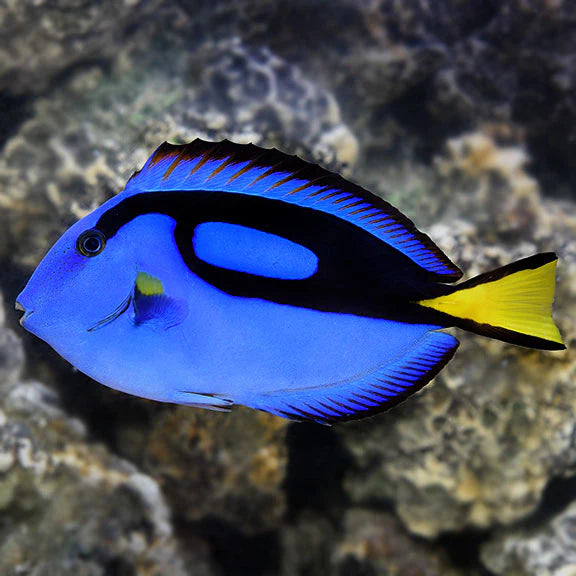
The Blue Tang, scientifically known as Paracanthurus hepatus, is also commonly called the Palette Surgeonfish, Pacific Blue Tang, or Regal Tang. It is one of the world's most recognizable marine fish, admired for its brilliant electric-blue coloration and distinctive body pattern.
Its vibrant blue body features a bold black marking that begins at the eye, extends along the back, and curves downward toward the pectoral fin, creating a shape resembling an artist's palette—hence one of its common names. The bright yellow tail provides a striking contrast, making this fish an eye-catching centerpiece in any large reef aquarium.
Key Features
- Brilliant electric-blue body with a vivid yellow tail.
- One of the world's most iconic and popular surgeonfish.
- Active swimmer that adds constant movement to the aquarium.
- Excellent choice for large reef aquariums.
- Generally peaceful with most marine fish.
Aquarium Requirements
- Minimum Aquarium Size: Approximately 680 liters (180 gallons) or an aquarium at least 180 cm (6 ft) long.
- Requires extensive open swimming space.
- Provide plenty of live rock with numerous hiding places.
- Needs excellent water quality with efficient filtration.
- Benefits from moderate to strong water flow and good oxygenation.
Compatibility & Temperament
| Aggression Level | Peaceful to Semi-Aggressive |
| Reef Compatibility | Yes |
| Fish Compatibility | Compatible with most community marine fish. It may become territorial toward other Blue Tangs or similarly shaped surgeonfish. |
| Recommendation | If keeping multiple Blue Tangs, introduce them simultaneously into a spacious aquarium to help reduce territorial aggression. |
The Blue Tang is an active herbivore that thrives in mature reef aquariums with ample swimming space and abundant live rock for grazing.
Feeding
The Blue Tang primarily feeds on algae but also benefits from a varied diet that includes marine protein.
Recommended foods include:
- Dried Seaweed (Nori).
- Marine algae.
- High-quality herbivore pellets and flakes.
- Mysis Shrimp.
- Krill and frozen marine foods.
Reefamorous Tip: Offer dried seaweed at least three times per week using a seaweed clip or attach it to live rock. A varied diet rich in marine algae helps strengthen the immune system, enhance coloration, and reduce territorial behavior.
Important: Blue Tangs are particularly susceptible to Marine Ich (White Spot Disease), fin erosion, and Head and Lateral Line Erosion (HLLE). Maintaining excellent water quality, minimizing stress, and providing a varied algae-rich diet are essential for long-term health. This species is best suited for aquarists with moderate to advanced marine aquarium experience.