Omobranchus anolius
Brachiosaurus Blenny
SKU:F-BLN-007
Out of stock
Couldn't load pickup availability
Medium
Peaceful
With Caution
Quick Information
Quick Information
- Care Level: Medium
- Reef Compatible: With Caution
- Temper: Peaceful
- Minimum Tank Size: 100 Liters
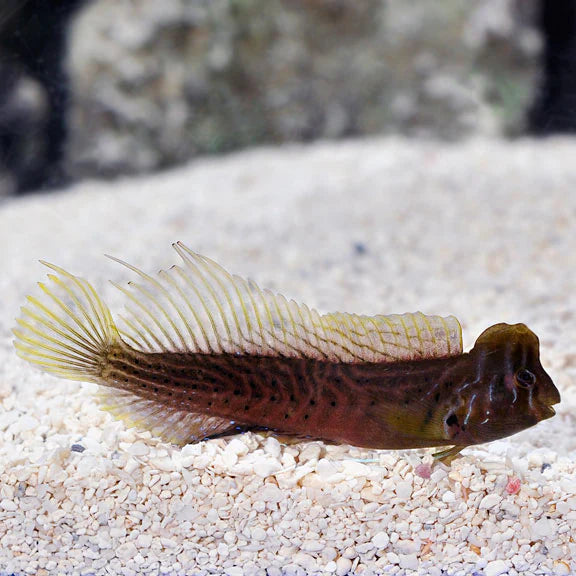
The Brachiosaurus Blenny is an exciting new addition to the aquarium trade, generating buzz among hobbyists. It is easy to see how this blenny received its common name as the male Brachiosaurus Blenny sports a pronounced fleshy crest that gives it a distinct dinosaurian appearance. If that wasn't enough to capture your imagination, the male Brachiosaurus Blenny also sports very exotic-looking finnage (most notable is the sail-like dorsal fin) that enhances the "prehistoric" appearance of this buzz-worthy blenny.
The Brachiosaurus Blenny is endemic to Australia occurring in shallow estuarine waters and intertidal mudflats. The Brachiosaurus Blenny is often associated with oyster beds, using the empty shells for habitat and for nesting. Harvested from shallow water, the Brachiosaurus Blenny adapts well to aquariums that are maintained around 75 degrees. To recreate habitat for the Brachiosaurus Blenny, provide a tank of at least 30 gallons with plenty of scattered rubble, empty shells and live rock full of nooks, crannies and caves for perching and hiding. The Brachiosaurus Blenny is peaceful towards other fish unless the tank mate is similar in shape or appearance to the blenny. Blennies generally make a good addition to reef aquariums, but use caution in smaller set ups, or with smaller fleshy corals, as individuals may pick at the mantles of clams, and at fleshy large polyp stony corals when underfed.
The diet of the Brachiosaurus Blenny should include vegetable matter, including frozen and dried foods containing marine and blue-green algae. It will also feed on (and help control) algae growing in the aquarium.
Share

Warrning!
Please note that livestock is available for delivery within Jordan only and cannot be shipped internationally due to shipping regulations and animal welfare requirements. For more information, please refer to our Shipping Policy.
Blog posts
View all-
Copperband Butterflyfish Care Guide
Wesam MsaitefPart 1: Why This Beautiful Fish Is One of the Most Rewarding—and Challenging—Species in Reef Keeping Introduction Ask a group of experienced reef keepers about the Copperband Butterflyfish (Chelmon rostratus),...
Copperband Butterflyfish Care Guide
Wesam MsaitefPart 1: Why This Beautiful Fish Is One of the Most Rewarding—and Challenging—Species in Reef Keeping Introduction Ask a group of experienced reef keepers about the Copperband Butterflyfish (Chelmon rostratus),...
-
Aiptasia Control Options: Choosing the Right So...
Wesam MsaitefIntroduction Few pests are as notorious among reef aquarists as Aiptasia. What often begins as a single small anemone hidden between rocks can quickly turn into dozens—or even hundreds—of unwanted...
Aiptasia Control Options: Choosing the Right So...
Wesam MsaitefIntroduction Few pests are as notorious among reef aquarists as Aiptasia. What often begins as a single small anemone hidden between rocks can quickly turn into dozens—or even hundreds—of unwanted...
-
Common Nuisance Algae and How to Treat Them
Wesam MsaitefIntroduction Few reef keepers make it through the hobby without facing nuisance algae at some point. Whether you're cycling your first marine aquarium or maintaining a mature reef system that...
Common Nuisance Algae and How to Treat Them
Wesam MsaitefIntroduction Few reef keepers make it through the hobby without facing nuisance algae at some point. Whether you're cycling your first marine aquarium or maintaining a mature reef system that...