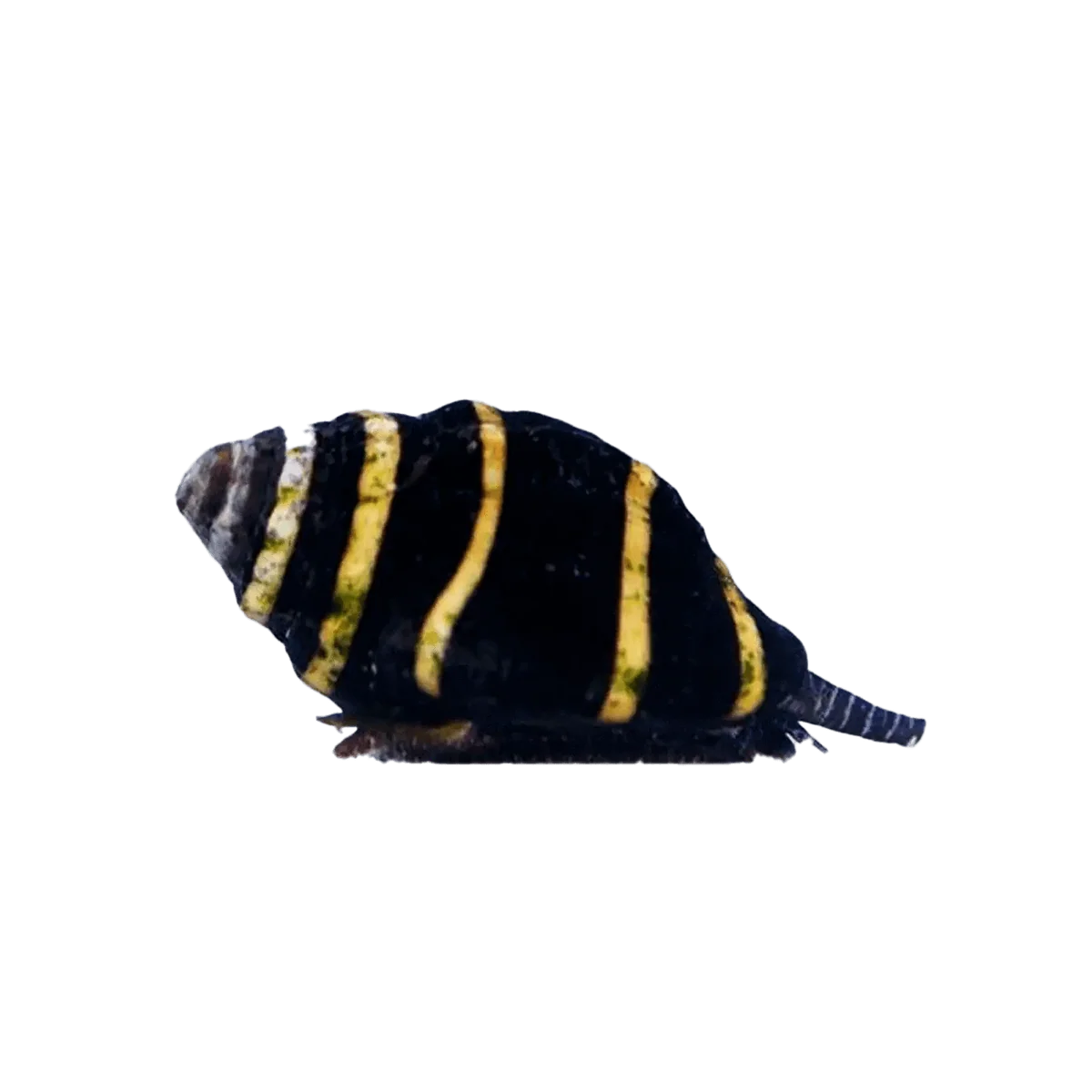
Pusiostoma mendicaria
Bumble Bee Snail
Bumble Bee Snail
SKU:I-SNL-001
In stock
Couldn't load pickup availability
 Easy
Easy
 Peaceful
 Reef Safe

Quick Information
Quick Information
- Care Level: Easy
- Reef Compatible: Reef Safe
- Temper: Peaceful
- Minimum Tank Size:
The tiny Bumble Bee Snail benefits most marine reef aquariums in big ways. Heralded for their small size and beautiful coloration, Pusiostoma mendicaria can get into small crevices and tight locations between rockwork. Here, they clean away detritus, including uneaten meaty foods and decomposing organisms. This tiny member of the Buccinidae family also burrows into your sand bed, consumes sand-dwelling worms, and helps aerate your substrate. Plus, with its striking black shell, striped in elegant white to yellow bands, the Bumble Bee Snail is indeed beautiful to observe.
For best care, offer ample hiding places with large areas to roam. The Bumble Bee Snail prefers to consume foods off of live rock and deep sand beds where it can forage for food undisturbed. Like other invertebrates, the Bumble Bee Snail is sensitive to copper-based medications, high nitrate levels, and even the slightest fluctuation in water parameters.
Though peaceful, keep in mind that the Bumble Bee Snail is a carnivore. If there is insufficient food, the Bumble Bee Snail may feed on other snails in your aquarium or indiscriminately consume polychaetes whether beneficial or the more troublesome bristleworm. In well-established systems, most Bumble Bee Snails do not require supplemental feeding. However, if sufficient food sources are unavailable, supplement their diet with offerings of meaty foods, including finely chopped brine or mysis shrimp and frozen meaty foods.
The Bumble Bee Snail is extremely difficult to breed in the aquarium, partly because there are no distinguishing characteristics between Bumble Bee Snail sexes.