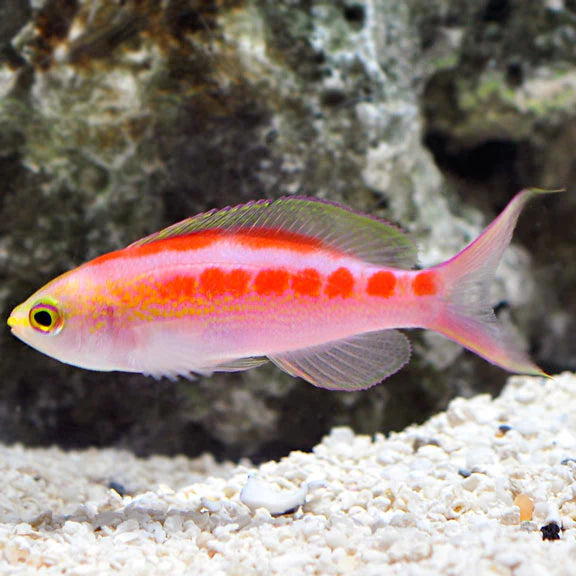
Pseudanthias aurulentus
Central Pacific Anthias
Central Pacific Anthias
SKU:F-ANT-008
Out of stock
Couldn't load pickup availability
 Medium
 Peaceful
 Reef Safe

What makes the Central Pacific Anthias a highly desirable addition for the seasoned reef hobbyist is not only the striking multiple pink and yellow colorations but also its active nature, great personality and overall disinterest in corals, sessile invertebrates as well as dissimilar fishes. Due to limited harvest, isolated locales and extreme depth where they are most abundant, the Central Pacific Anthias is infrequently seen in the aquarium trade, thus heightening the desirability of this jewel of the deep.
The Central Pacific Anthias initially may be difficult to acclimate to a quarantine system. The Central Pacific Anthias are collected in waters of up to 196 feet deep and prefer low to moderate lighting conditions initially but will over time adapt to aquariums with stronger lighting. The Central Pacific Anthias may also find shipping stressful contributing to their difficulty in acclimating. Once the Central Pacific Anthias has completed its quarantine period and are sturdy enough to introduce to your display aquarium they will thrive and become peaceful members of your aquarium with other peaceful fish. The Central Pacific Anthias should be introduced into your aquarium before other more active, territorial fishes so they can settle in with limited stress.
As with many Anthias species, the Central Pacific Anthias can be kept singly but does best in small shoals comprised of several individuals. Members of the Anthias group all share the trait of being hermaphroditic. If a dominant male perishes, the largest female of the group can morph into a fully functioning male to take its place. To recreate habitat for the Central Pacific Anthias, aquascape liberally with live rock, creating numerous caves and other hiding places. Be sure to maintain open areas and plenty of surface area for proper water oxygenation. For a dramatic aquarium display, consider a steep reef profile, perhaps with a slight overhang to provide additional shelter as well as diffused lighting.
Once acclimated to a new aquarium, the Central Pacific Anthias do best when fed a varied diet of enriched frozen mysis shrimp, enriched frozen brine shrimp, and over time may eat high-quality flake foods offered in small quantities throughout the day. An attached refugium cultivating copepods and amphipods provides a steady supply of nutritious live food sure to keep this active planktivore content.