Gobiodon citrinus
Clown Goby - Citrinis
SKU:F-GOB-003
Out of stock
Couldn't load pickup availability
Easy
Peaceful
Reef Safe
Quick Information
Quick Information
- Care Level: Easy
- Reef Compatible: Reef Safe
- Temper: Peaceful
- Minimum Tank Size: 40 Liters
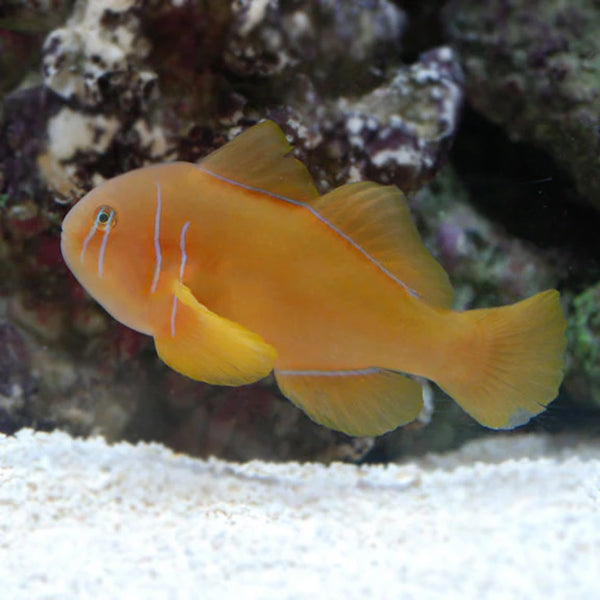
The Citrinis Clown Goby, also known as the Citron or Citrin Goby, is common within the reefs of Sri Lanka and the Coral Sea. They are usually found among soft and hard coral colonies. They are a small yellow fish with blue vertical lines around the eyes and gills, and a blue horizontal line along the dorsal fin. Their body color can vary between dark brown and pale yellow. They are a peaceful fish that makes a wonderful addition to a reef aquarium containing colonies of polyp coral and other soft corals, as they enjoy swimming and hiding amongst the polyps.
The Citrinis Clown Goby feeds on the mucous polyps of Acropora sp. in the wild and is considered reef safe but will nip at the polyps or bases of Acropora sp. and possibly other SPS corals. If the SPS dominated aquarium is not heavily stocked with very mature colonies these fish may severely damage Acropora sp. in these displays.
It requires a 10 gallon or larger aquarium and prefers branched corals, often resting on them for hours at a time. It will rarely become aggressive towards other fish, but will fight with its own kind in smaller tanks. It is best if it is kept with other docile species.
It is common for clown gobies to spawn in an aquarium. Caution should be exercised if the aquarium contains Acropora sp. or similar SPS corals. They will lay their eggs on the underside of the coral's branch, which will cause tissue recession in that area of the coral.
The Citrinis Clown Goby's diet should consist of a variety of brine shrimp, frozen mysis shrimp, table shrimp, and frozen food preparations for carnivores.
Share

Warrning!
Please note that livestock is available for delivery within Jordan only and cannot be shipped internationally due to shipping regulations and animal welfare requirements. For more information, please refer to our Shipping Policy.
Blog posts
View all-
Reef Tank Cleanup Crew Myths vs. Reality: What ...
Wesam MsaitefThink a cleanup crew replaces water changes? Separate reef tank cleanup crew myths from reality and learn how to stock snails, hermit crabs, and shrimp correctly. Introduction A cleanup crew...
Reef Tank Cleanup Crew Myths vs. Reality: What ...
Wesam MsaitefThink a cleanup crew replaces water changes? Separate reef tank cleanup crew myths from reality and learn how to stock snails, hermit crabs, and shrimp correctly. Introduction A cleanup crew...
-
Why Captive-Bred Marine Fish Are the Best Choice?
Wesam MsaitefDiscover why captive-bred marine fish are healthier, easier to keep, and more sustainable than wild-caught fish. Learn the real benefits for both your reef aqua…
1 commentWhy Captive-Bred Marine Fish Are the Best Choice?
Wesam MsaitefDiscover why captive-bred marine fish are healthier, easier to keep, and more sustainable than wild-caught fish. Learn the real benefits for both your reef aqua…
1 comment -
Aiptasia Control Options: Choosing the Right So...
Wesam MsaitefDiscover the most effective Aiptasia control methods for reef aquariums, including chemical treatments, biological predators, manual removal, and long-term prev…
Aiptasia Control Options: Choosing the Right So...
Wesam MsaitefDiscover the most effective Aiptasia control methods for reef aquariums, including chemical treatments, biological predators, manual removal, and long-term prev…