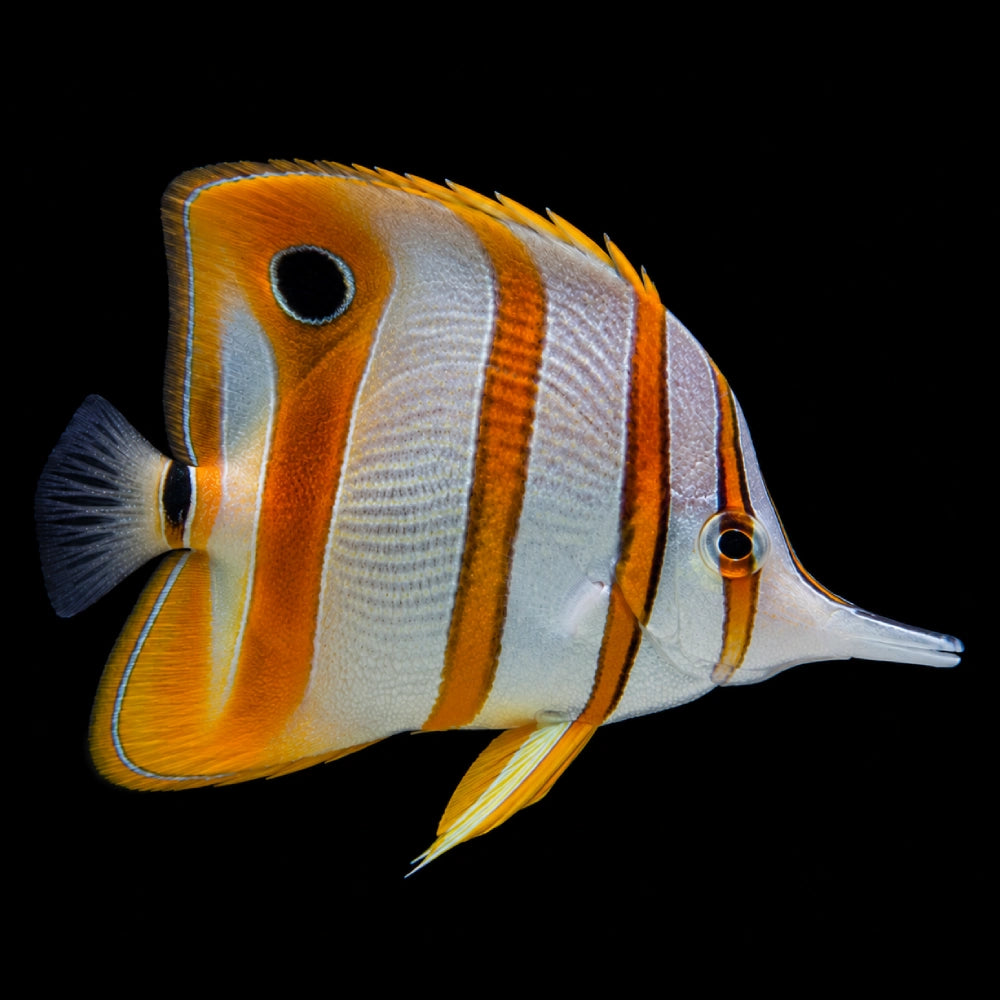
Chelmon rostratus
Copperband Butterflyfish
Copperband Butterflyfish
SKU:F-BTF-006
Out of stock
Couldn't load pickup availability
 Expert
 Peaceful
 With Caution

Copperband Butterflyfish
Copperband Butterflyfish – Chelmon rostratus
The Copperband Butterflyfish, scientifically known as Chelmon rostratus, is also commonly called the Beaked Butterflyfish or Beaked Coralfish. It is one of the most recognizable butterflyfish species, admired for its bright white body decorated with bold copper-orange vertical bands and its long, slender snout, which it uses to extract prey from narrow crevices in live rock and coral formations.
A distinctive black eyespot on the rear of the dorsal fin serves as a natural defense mechanism by distracting predators. The Copperband Butterflyfish is highly prized among reef aquarists, particularly for its potential ability to control Aiptasia (Glass Anemones), although not every individual will exhibit this behavior.
Key Features
- Striking copper-orange and white coloration that is instantly recognizable.
- Long, specialized snout designed for feeding within rock crevices.
- May help control Aiptasia in many aquariums.
- Graceful swimming behavior adds elegance to the aquarium.
- Ideal for mature, stable marine aquariums.
Aquarium Requirements
- Minimum Aquarium Size: Approximately 475 liters (125 gallons).
- Provide abundant live rock rich in natural microfauna.
- Requires plenty of hiding places and open swimming areas.
- Needs stable water quality and a mature, established aquarium.
- Best kept singly and should not be housed with similar butterflyfish or aggressive tank mates.
Compatibility & Temperament
| Aggression Level | Peaceful |
| Reef Compatibility | With caution |
| Coral Compatibility | May nip at certain invertebrates, particularly Aiptasia, feather duster worms, and occasionally coral polyps. Careful observation is recommended in reef aquariums. |
| Fish Compatibility | Compatible with most peaceful marine fish. Frequently used for Aiptasia control, although success cannot be guaranteed with every individual. |
The Copperband Butterflyfish is one of the most rewarding butterflyfish species to keep but also one of the most challenging. It should only be introduced into mature aquariums where natural food sources are available, and it should not be expected that every specimen will consume Aiptasia.
Feeding
The Copperband Butterflyfish is considered one of the more delicate butterflyfish when it comes to feeding and may require time before accepting prepared foods after introduction. Patience and a varied diet are essential for long-term success.
Recommended foods include:
- Frozen Mysis Shrimp.
- Fresh chopped clam.
- Marine crustaceans.
- High-quality frozen marine foods.
- Marine worms and other protein-rich foods.
Reefamorous Tip: Feed several small meals each day and carefully monitor the fish during its acclimation period to ensure it is eating consistently. Fresh clam, live blackworms (where available), and frozen Mysis Shrimp are often excellent starter foods for newly imported specimens.