Dispar Anthias

Description

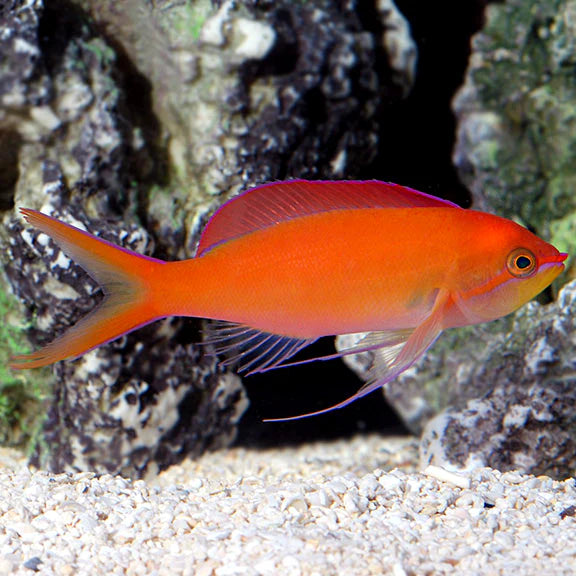
The Dispar Anthias is commonly known as the Madder Seaperch. Males have a bright red dorsal fin and lack any red stripes on their tail. The female may display a yellowish-orange on the top and pale lavender to white on the underside.

The Dispar Anthias is a reef inhabitant in the wild. It is a shallow water species that thrives best in a 125 gallon aquarium with one male and up to ten females. When housed singly, 70 gallon tank is sufficient.

Anthias species all share the trait of being hermaphroditic. If a dominant male perishes, the largest female of the group will often morph to take its place.

Once acclimated to a new aquarium, anthias do best when fed a varied diet of frozen mysis shrimp, enriched frozen brine shrimp, and over time may eat high-quality flake foods offered in small quantities throughout the day. An attached refugium cultivating copepods and amphipods provides a steady supply of nutritious live food sure to keep this active planktivore content.
Product form

SKU: F-ANT-009

Pseudanthias dispar

The Dispar Anthias is commonly known as the Madder Seaperch. Males have a bright red dorsal fin and lack any... Read more

Sold Out

10.000 JD

    • Care Level: Medium
    • Reef Compatible: Reef Safe
    • Temper: Peaceful
    • Minimum Tank Size: 250 Liters

      This item cant be shipped internationally

    Livestock, including fish, corals, and other aquatic species, cannot be shipped internationally due to shipping and regulatory restrictions.
    Read more

    Description

    The Dispar Anthias is commonly known as the Madder Seaperch. Males have a bright red dorsal fin and lack any red stripes on their tail. The female may display a yellowish-orange on the top and pale lavender to white on the underside.

    The Dispar Anthias is a reef inhabitant in the wild. It is a shallow water species that thrives best in a 125 gallon aquarium with one male and up to ten females. When housed singly, 70 gallon tank is sufficient.

    Anthias species all share the trait of being hermaphroditic. If a dominant male perishes, the largest female of the group will often morph to take its place.

    Once acclimated to a new aquarium, anthias do best when fed a varied diet of frozen mysis shrimp, enriched frozen brine shrimp, and over time may eat high-quality flake foods offered in small quantities throughout the day. An attached refugium cultivating copepods and amphipods provides a steady supply of nutritious live food sure to keep this active planktivore content.

    Important Note
    Proper acclimation is extremely important considering the stress imposed on the animals by the shipping process. Please take a moment to review our Acclimation Guide.


    Recently viewed products

      Login

      Forgot your password?

      Don't have an account yet?
      Create account