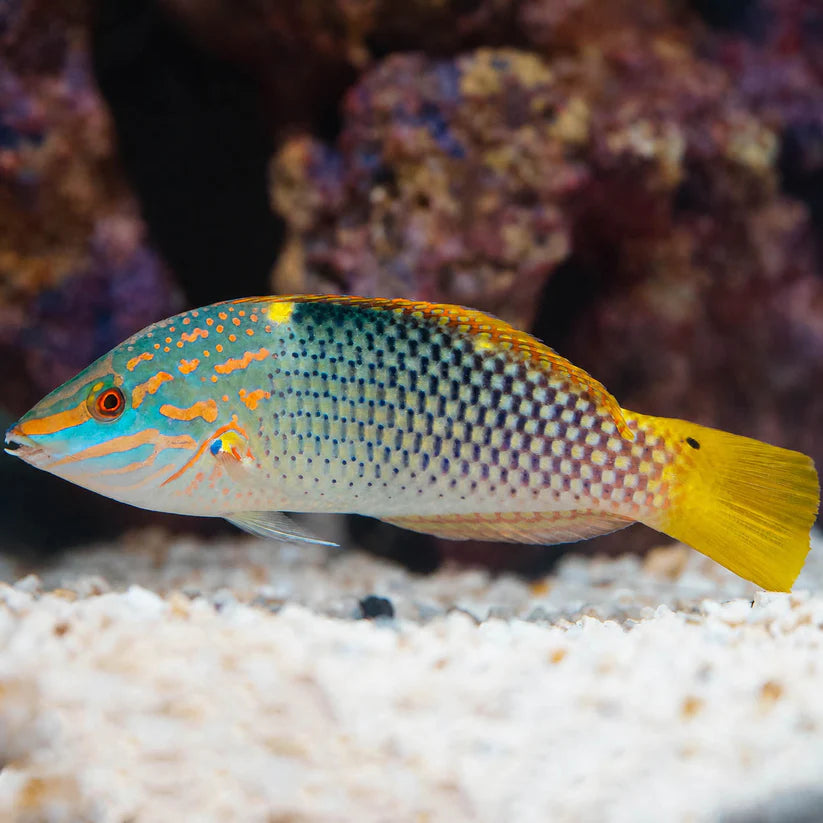
Halichoeres hortulanus
Marble/Hortulanus Wrasse
Marble/Hortulanus Wrasse
SKU:F-WRS-014
Low stock: 1 left
Couldn't load pickup availability
 Medium
 Peaceful
 Reef Safe

Marble Wrasse
Marble Wrasse – Halichoeres hortulanus
The Marble Wrasse, scientifically known as Halichoeres hortulanus, is also commonly known as the Hortulanus Wrasse or Checkerboard Wrasse. It is one of the largest and most striking wrasse species found in the marine aquarium hobby. Juveniles display a white body decorated with black spots, lines, and markings, while adults develop a silvery body with distinctive black checkerboard-like patterns. Bright yellow dorsal and caudal fins, along with a light green face accented by orange or pink lines, complete its impressive appearance.
In addition to its beautiful coloration, the Marble Wrasse is highly valued for helping control a variety of unwanted pests commonly found in reef aquariums.
Key Features
- Distinctive checkerboard pattern develops as the fish matures.
- Beautiful combination of silver, yellow, and green coloration.
- Helps control a variety of common aquarium pests.
- Active swimmer that adds movement and energy to the aquarium.
- Excellent choice for large reef aquariums.
Aquarium Requirements
- Minimum Aquarium Size: Approximately 475 liters (125 gallons).
- A tightly fitting aquarium lid is essential, as this species is an excellent jumper.
- Provide a soft sand bed 5–8 cm deep for sleeping and hiding when threatened.
- Offer plenty of live rock with caves and hiding places.
- Requires stable water quality and ample open swimming space.
Compatibility & Temperament
| Aggression Level | Peaceful to Semi-Peaceful |
| Reef Compatibility | Yes, with caution |
| Fish Compatibility | Compatible with most wrasses and peaceful marine fish. |
| Pest-Control Benefits | Helps eliminate Fireworms, Pyramidellid Snails, feather duster worms, tubeworms, and Flatworms. Adult specimens may also prey on small ornamental shrimp and small crabs. |
The Marble Wrasse is an excellent addition to mature reef aquariums thanks to its natural pest-control abilities. However, larger individuals may prey on small ornamental crustaceans, so caution is recommended when keeping them together.
Feeding
The Marble Wrasse requires a varied, protein-rich diet to maintain its active behavior, vibrant coloration, and overall health.
Recommended foods include:
- Vitamin-enriched Mysis Shrimp.
- Vitamin-enriched Brine Shrimp.
- Krill.
- High-quality frozen marine foods.
- Premium marine pellets and flakes.
Reefamorous Tip: Offer several small meals throughout the day and provide a mature aquarium with a deep sand bed. This encourages natural behavior while helping maintain excellent coloration and overall health.