Horseshoe Crab

Description

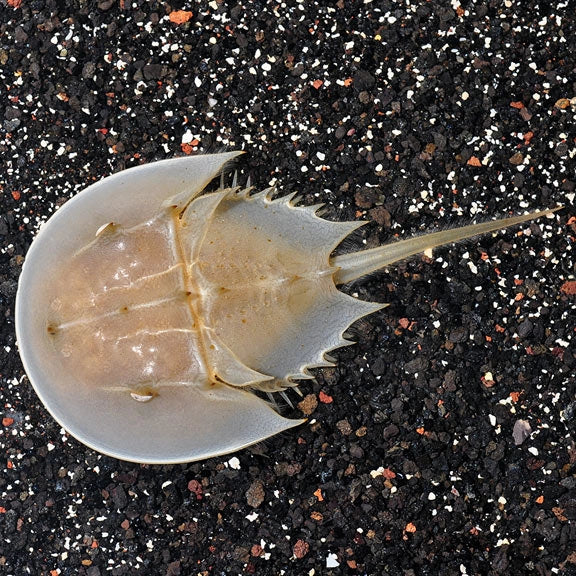
The Horseshoe Crab is greenish brown to light tan in color. The dorsal part of the body is rounded, and it has a long spike for a tail. The Horseshoe Crab is really not a crab, but more closely related to spiders and mites, belonging to a group of animals called chelicerates. Horseshoe Crabs can grow quite large. The female horseshoe crabs usually grow larger than the males, with their body reaching a maximum size of 12 inches in diameter. When small, they are very efficient scavengers and are great for aerating and maintaining sand beds.

The Horseshoe Crabs dig through sand and gravel in search of worms and any organic debris. It will move the substrate around almost nonstop in its search for food. They are reef safe, but when they attain a large size, can be harmful to fish and invertebrates, especially worms and clams.

Although it may find some food scavenging, its diet should be supplemented with meaty items such as pieces of squid and shrimp.
Product form

SKU: I-CRB-008

Limulus polyphemus

The Horseshoe Crab is greenish brown to light tan in color. The dorsal part of the body is rounded, and... Read more

Sold Out

35.000 JD

    • Care Level: Easy
    • Reef Compatible: Not Reef Safe
    • Minimum Tank Size: 650 Liters

      This item cant be shipped internationally

    Livestock, including fish, corals, and other aquatic species, cannot be shipped internationally due to shipping and regulatory restrictions.
    Read more

    Description

    The Horseshoe Crab is greenish brown to light tan in color. The dorsal part of the body is rounded, and it has a long spike for a tail. The Horseshoe Crab is really not a crab, but more closely related to spiders and mites, belonging to a group of animals called chelicerates. Horseshoe Crabs can grow quite large. The female horseshoe crabs usually grow larger than the males, with their body reaching a maximum size of 12 inches in diameter. When small, they are very efficient scavengers and are great for aerating and maintaining sand beds.

    The Horseshoe Crabs dig through sand and gravel in search of worms and any organic debris. It will move the substrate around almost nonstop in its search for food. They are reef safe, but when they attain a large size, can be harmful to fish and invertebrates, especially worms and clams.

    Although it may find some food scavenging, its diet should be supplemented with meaty items such as pieces of squid and shrimp.

    Important Note
    Proper acclimation is extremely important considering the stress imposed on the animals by the shipping process. Please take a moment to review our Acclimation Guide.


    Recently viewed products

      Login

      Forgot your password?

      Don't have an account yet?
      Create account