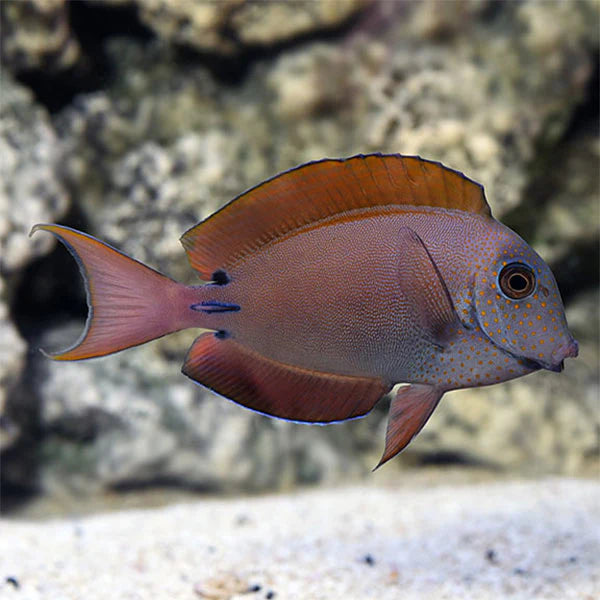
Acanthurus nigrofuscus
Lavender Tang
Lavender Tang
SKU:F-TNG-008
Out of stock
Couldn't load pickup availability
 Easy
Easy
 Semi-Aggressive
 Reef Safe

Lavender Tang
Lavender Tang – Acanthurus nigrofuscus
The Lavender Tang, scientifically known as Acanthurus nigrofuscus, is also known as the Spot-Cheeked Surgeonfish. This active surgeonfish naturally inhabits large schools around coral reefs throughout the Central Pacific. It features an elegant body with colors ranging from pale lavender to grayish-brown, accented by distinctive orange spots on the face that gradually transition into fine black speckles across the body. Its deeply forked tail gives it a graceful, streamlined appearance while swimming.
An active herbivore, the Lavender Tang is highly valued for its ability to graze on nuisance algae, making it an excellent addition to large reef aquariums.
Key Features
- Elegant coloration blending soft lavender and grayish-brown tones.
- Distinctive orange facial markings with fine black speckles across the body.
- Active swimmer that brings movement and energy to the aquarium.
- Excellent algae grazer that helps control nuisance algae growth.
- Well suited for large reef aquariums.
Aquarium Requirements
- Minimum Aquarium Size: Approximately 475 liters (125 gallons).
- Requires ample open swimming space.
- Provide plenty of live rock for grazing and shelter.
- Needs stable water quality with efficient filtration.
- Multiple hiding places are recommended to help reduce stress.
Compatibility & Temperament
| Aggression Level | Semi-Aggressive |
| Reef Compatibility | Yes |
| Fish Compatibility | Compatible with most marine fish outside the surgeonfish family, but may become aggressive toward other tangs, especially species with a similar appearance. |
| Algae Control | An excellent herbivore that continuously grazes on algae, making it a valuable addition to reef aquariums. |
The Lavender Tang is an active and hardy species that thrives in spacious, mature aquariums with abundant live rock and stable water conditions. It is best introduced carefully when other tangs are already present.
Feeding
The Lavender Tang primarily feeds on marine algae and other plant-based foods, although it will also accept protein-rich marine foods as part of a balanced diet.
Recommended foods include:
- Dried Seaweed (Nori).
- Marine algae formulated for tangs.
- High-quality herbivore pellets and flakes.
- Mysis Shrimp.
- Krill and other frozen marine foods.
Reefamorous Tip: Offer dried seaweed at least three times per week using a seaweed clip or attach it to the live rock. A steady supply of vegetable-based foods helps strengthen the immune system, reduce aggression, and maintain excellent health and coloration.