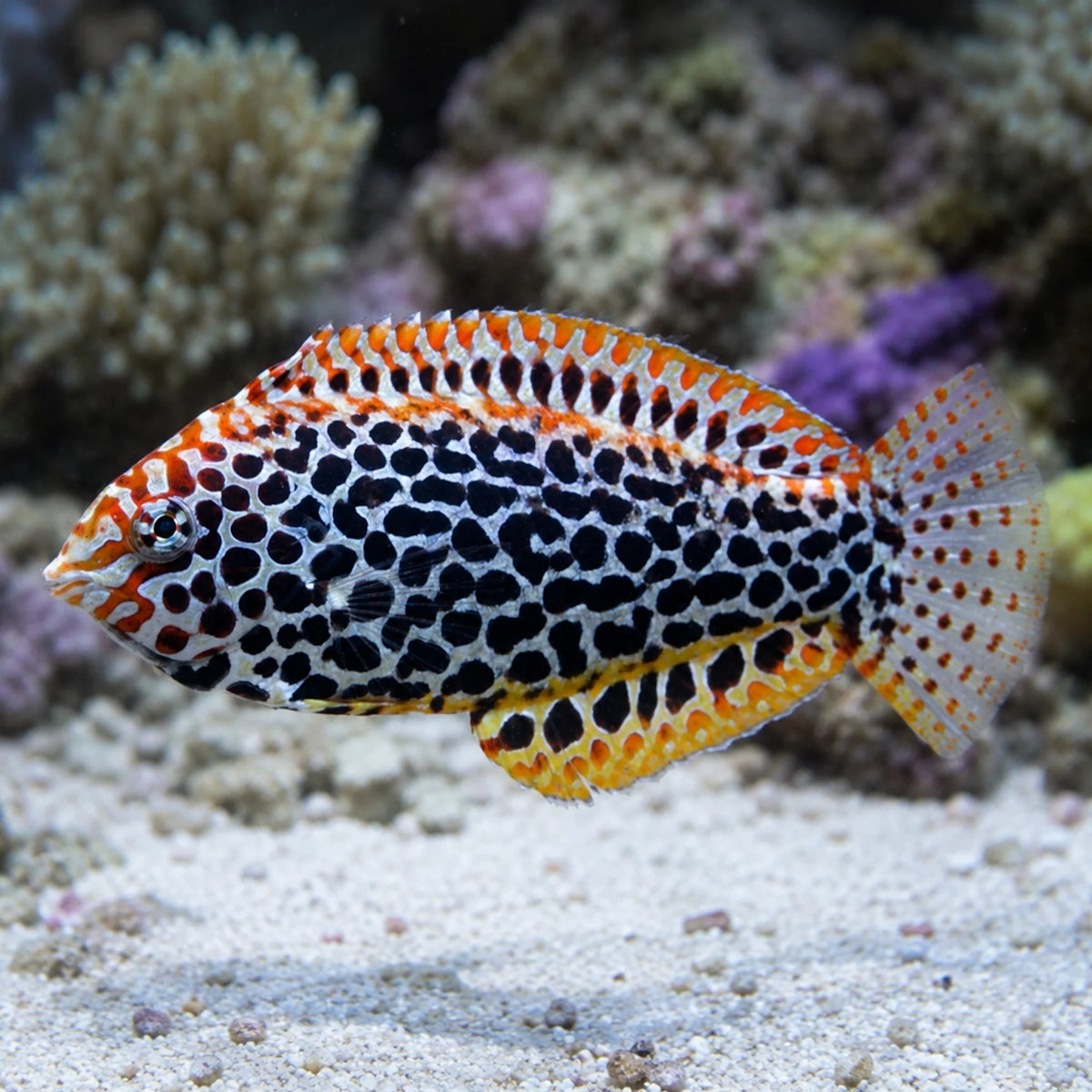
Macropharyngodon meleagris
Leopard Wrasse EXPERT ONLY
Leopard Wrasse EXPERT ONLY
SKU:F-WRS-012
Low stock: 1 left
Couldn't load pickup availability
 Expert
 Peaceful
 Reef Safe

Leopard Wrasse
Leopard Wrasse – Macropharyngodon meleagris
The Leopard Wrasse, scientifically known as Macropharyngodon meleagris, is also commonly known as the Guinea Fowl Wrasse or Blackspotted Wrasse. It is one of the most beautiful and distinctive marine wrasses, well known for the striking differences in coloration between males and females.
Females display a white to cream-colored body covered with irregular black or brown spots outlined in white or blue, with subtle yellow or tan highlights on the fins. Males, on the other hand, develop a stunning orange-red body covered with intricate green mottling, making them one of the most colorful and eye-catching reef fish.
This peaceful species is an excellent addition to mature reef aquariums, where it brings graceful movement, vibrant coloration, and fascinating natural behavior.
Key Features
- Beautiful sexual dimorphism with dramatically different male and female coloration.
- Distinctive leopard-like patterning.
- Completely reef-safe with corals and ornamental invertebrates.
- Peaceful temperament, making it ideal for community reef aquariums.
- Adds vibrant color and graceful movement to mature reef tanks.
Aquarium Requirements
- Minimum Aquarium Size: Approximately 340 liters (90 gallons).
- A mature aquarium with abundant live rock is essential.
- A deep bed of fine live sand is required for sleeping and hiding when frightened.
- Requires stable water quality and a well-established population of natural microfauna.
- A tightly fitting lid is recommended, as this species may jump.
Compatibility & Temperament
| Aggression Level | Peaceful |
| Reef Compatibility | Yes |
| Fish Compatibility | Compatible with most peaceful reef fish. Keeping groups of three or more individuals introduced at the same time helps reduce stress and encourages natural social behavior. |
| Natural Feeding Behavior | Constantly searches live rock for microfauna such as Amphipods and Foraminiferans, making a mature aquarium essential for long-term success. |
The Leopard Wrasse is a peaceful and rewarding species, but it thrives best in mature reef aquariums with abundant live rock and natural microfauna. It is recommended for experienced reef keepers who can provide a stable environment.
Feeding
Once acclimated, the Leopard Wrasse requires a varied, protein-rich diet to maintain its health, activity, and brilliant coloration.
Recommended foods include:
- Vitamin-enriched Mysis Shrimp.
- Vitamin-enriched Brine Shrimp.
- Krill.
- High-quality frozen marine foods.
- Premium marine pellets and flakes.
Reefamorous Tip: Feed several small meals throughout the day and maintain a mature reef aquarium with abundant live rock and natural microfauna. These natural food sources play a vital role in the long-term health and success of Leopard Wrasses.