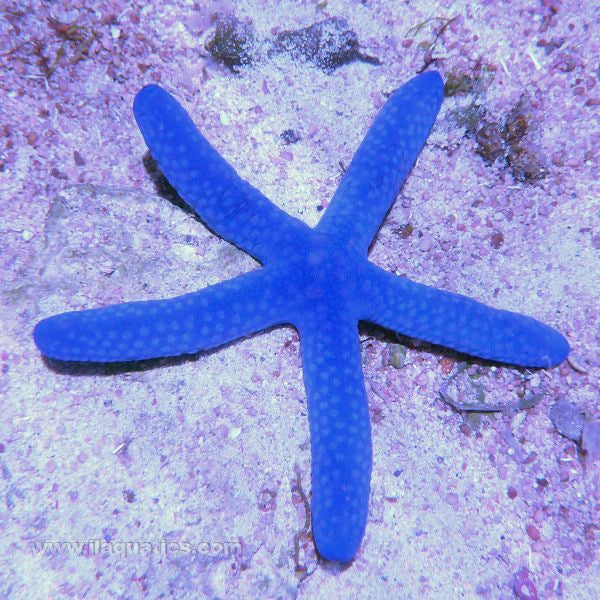
Linckia laevigata
Linckia Sea Star, Blue EXPERT ONLY
Linckia Sea Star, Blue EXPERT ONLY
SKU:I-STR-002
In stock
Couldn't load pickup availability
 Expert
 Peaceful
 Reef Safe

Quick Information
Quick Information
- Care Level: Expert
- Reef Compatible: Reef Safe
- Temper: Peaceful
- Minimum Tank Size:
Scientific Name: Linckia laevigata
The Blue Linckia Sea Star is certain to be the shining star for the dedicated reef aquarium enthusiast. The unusual blue color of this sea star is truly remarkable and this standout color makes the Blue Linckia Sea Star a beautiful focal point. Its bright blue body may sometimes be embellished with red or purplish spots. The Blue Linckia Sea Star is also known as the Comet Sea Star, Blue Sea Star, or Blue Starfish.
In the wild, the Blue Linckia Sea Star is found in the sunny areas of the reef and reef fringe, constantly foraging for food. In the home aquarium setting, the Blue Linckia Sea Star prefers a well-lit sandy or coral rubble substrate, with many rocky hiding places. As a juvenile (when it has a blue-green coloration), the Blue Linckia Sea Star spends most of the day hiding in small caves or overhangs. As a larger adult, it can be seen anchored to the rocks or glass, waving one or two arms in the water, searching for small, free-floating microbes. The Blue Linckia Sea Star is generally solitary, but it will tolerate other starfish and amiable fish in the aquarium.
The Blue Linckia Sea Star is very intolerant of sudden changes in oxygen levels, salinity and pH of the water, and cannot tolerate copper-based medications. The drip-acclimation method is highly recommended for all Sea Stars due to their intolerance to changes in water chemistry. The Blue Linckia Sea Star should never be exposed to air while handling, and should be carefully monitored for the presence of a small parasitic snail, Thyca crystallina. In the wild, the Blue Linckia Sea Star is capable of regenerating a new starfish from almost any portion of its body that might break off. In the home aquarium, this is far less likely.
Small pieces of clam meat or tablets can be placed under the Blue Linckia Sea Star starfish to supplement its diet.
Approximate Purchase Size: Small: 0.5" to 2"; Medium: 2" to 4"; Large: 4" to 6"