


Pachyclavularia violacea
Metallic Green Star Polyp Coral (GSP)
Metallic Green Star Polyp Coral (GSP)
SKU:C-SFT-001
Low stock: 10 left
Couldn't load pickup availability
Metallic Green Star Polyp Coral (GSP)
Pachyclavularia violacea
Overview
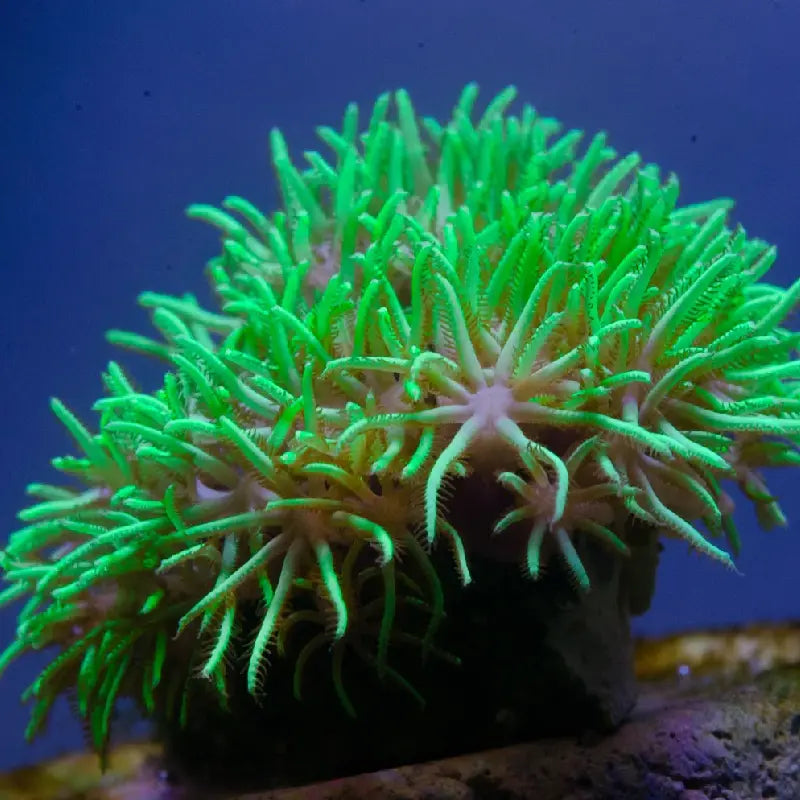
The Metallic Green Star Polyp Coral, commonly known as GSP, is a popular soft coral recognized by its vivid metallic-green polyps and contrasting purple or reddish encrusting mat. When fully extended, the polyps create a bright, grass-like appearance that adds movement and intense color to the reef aquarium.
Green Star Polyps are hardy, fast-growing, and adaptable to a wide range of aquarium conditions. They can rapidly spread across rocks, aquarium walls, overflow boxes, and other hard surfaces, making them an excellent choice for decorative coral islands or background coverage.
Care Requirements
Lighting and Water Flow
Metallic Green Star Polyps adapt well to low to moderately strong reef lighting. A PAR range of approximately 50–150 is suitable for most colonies. Brighter lighting may encourage more compact growth and stronger coloration, while insufficient lighting can result in reduced extension or duller appearance.
Provide moderate to strong, indirect, and variable water flow. Good flow helps keep sediment and detritus from collecting on the coral’s mat and encourages the polyps to extend fully. Avoid placing the coral directly in front of a powerful pump, as constant concentrated flow may prevent normal polyp extension.
Aquarium Placement
Green Star Polyps can be placed in the lower, middle, or upper areas of the aquarium, depending on lighting intensity and water movement. Secure the coral on stable rockwork or another hard surface where it can spread naturally.
Because GSP grows rapidly, it is often best placed on a separate rock island away from the main aquascape. This makes its growth easier to control and reduces the risk of it covering slower-growing corals.
Recommended Water Parameters
Feeding
Metallic Green Star Polyps contain symbiotic zooxanthellae and obtain most of their energy through photosynthesis. Direct feeding is generally not required when the coral is kept under suitable lighting and in a stable reef aquarium.
The colony may absorb dissolved nutrients and capture very fine suspended foods from the water column, including:
- Fine phytoplankton preparations.
- Very small zooplankton-based coral foods.
- Dissolved organic nutrients.
- Fine particles released during normal fish feeding.
Avoid excessive feeding, as Green Star Polyps normally grow well without regular target feeding and additional food may unnecessarily increase nutrient levels.
Compatibility and Growth Control
Metallic Green Star Polyps are generally considered peaceful in terms of stinging ability, but their extremely fast growth makes them highly competitive. The spreading mat can grow over nearby rocks and may eventually cover or shade slower-growing corals.
Leave adequate space around the colony and trim back the mat whenever it begins approaching neighboring corals. Regular maintenance is especially important when GSP is attached directly to the main rock structure.
For easier long-term control, place Green Star Polyps on an isolated rock, aquarium wall, overflow box, or removable structure. This allows the coral to create an attractive display without spreading throughout the entire aquascape.
Although Green Star Polyps have a relatively mild sting, they can become invasive. Monitor their growth regularly and prevent the purple mat from reaching valuable or slow-growing corals.
Acclimation
Acclimate the coral gradually to the aquarium’s water conditions and lighting. Begin in an area with moderate lighting and indirect water flow, then adjust its position based on polyp extension and coloration.
Green Star Polyps may remain closed for several hours or even a few days after transport, handling, fragging, cleaning, or changes in water conditions. This is often temporary, provided the mat remains firm and free from tissue deterioration.
Signs of Good Health
- Regular and full polyp extension.
- Bright metallic-green coloration.
- A firm purple or reddish encrusting mat.
- Steady expansion across nearby hard surfaces.
- No peeling, discoloration, excessive algae, or tissue breakdown on the mat.
Share

Warrning!
Please note that livestock is available for delivery within Jordan only and cannot be shipped internationally due to shipping regulations and animal welfare requirements. For more information, please refer to our Shipping Policy.
Blog posts
View all-
Keeping a Reef Tank Cool Through a Riyadh Summer
Wesam MsaitefA practical guide to managing reef aquarium temperature through Riyadh's extreme summer heat — from room AC and cooling fans to dedicated chillers, correct sizing, temperature monitoring, and emergency planning....
Keeping a Reef Tank Cool Through a Riyadh Summer
Wesam MsaitefA practical guide to managing reef aquarium temperature through Riyadh's extreme summer heat — from room AC and cooling fans to dedicated chillers, correct sizing, temperature monitoring, and emergency planning....
-
Ich vs. Marine Velvet: How to Recognize and Tre...
Wesam MsaitefLearn how to distinguish marine ich from velvet, recognize the early warning signs, understand why breathing changes matter, and choose an effective treatment approach without exposing your reef tank’s corals...
Ich vs. Marine Velvet: How to Recognize and Tre...
Wesam MsaitefLearn how to distinguish marine ich from velvet, recognize the early warning signs, understand why breathing changes matter, and choose an effective treatment approach without exposing your reef tank’s corals...
-
How to Photograph Corals with Your Smartphone
Wesam MsaitefA Complete Guide to Better Colors, Sharper Details, and More Realistic Reef Photography Introduction Why Does Your Coral Look Amazing in Person but Terrible on Your Phone? You are standing...
How to Photograph Corals with Your Smartphone
Wesam MsaitefA Complete Guide to Better Colors, Sharper Details, and More Realistic Reef Photography Introduction Why Does Your Coral Look Amazing in Person but Terrible on Your Phone? You are standing...