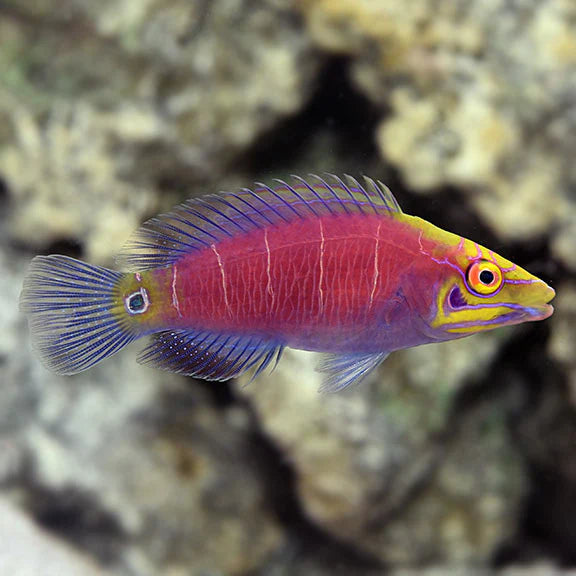
Pseudocheilinus ocellatus
Mystery Wrasse
Mystery Wrasse
SKU:F-WRS-019
Out of stock
Couldn't load pickup availability
 Easy
Easy
 Semi-Aggressive
 Reef Safe

Mystery Wrasse
Mystery Wrasse – Pseudocheilinus ocellatus
The Mystery Wrasse, scientifically known as Pseudocheilinus ocellatus, is also commonly known as the Whitebarred Wrasse or Fivebarred Wrasse. It is one of the rarest and most sought-after wrasse species in the reef aquarium hobby. Its deep burgundy-red body is decorated with fine white horizontal stripes, while the face displays a stunning blend of yellow, blue, and violet hues. A distinctive eyespot on the green tail, accented with yellow highlights, completes its spectacular appearance.
Juveniles often display more vibrant green coloration, which gradually transitions into rich crimson-red as they mature and settle into the aquarium.
Key Features
- One of the rarest and most beautiful wrasse species available.
- Brilliant coloration featuring shades of red, violet, blue, and yellow.
- Reef-safe with most corals and sessile invertebrates.
- Helps control certain nuisance pests in reef aquariums.
- Active swimmer that constantly explores live rock.
Aquarium Requirements
- Minimum Aquarium Size: Approximately 340 liters (90 gallons).
- Requires abundant live rock with plenty of caves and hiding places.
- A fine sand substrate is recommended.
- Needs stable water quality in a mature, established aquarium.
- A tightly fitting lid is essential, as this species is an excellent jumper when startled.
Compatibility & Temperament
| Aggression Level | Peaceful to Semi-Peaceful |
| Reef Compatibility | Yes |
| Fish Compatibility | Compatible with most reef fish, including many other wrasse species. |
| Special Behavior | Feeds on certain nuisance pests such as Pyramidellid Snails and Flatworms, making it a valuable addition to reef aquariums. Adult specimens may prey on small ornamental shrimp introduced after the wrasse has established its territory, so shrimp should ideally be added first. |
The Mystery Wrasse is an excellent reef inhabitant that combines exceptional beauty with practical pest-control benefits. Although generally peaceful, mature individuals may become territorial toward newly introduced small crustaceans or similarly shaped fish.
Feeding
The Mystery Wrasse requires a varied, protein-rich diet to maintain its vibrant coloration, active behavior, and long-term health.
Recommended foods include:
- Vitamin-enriched Frozen Mysis Shrimp.
- Vitamin-enriched Brine Shrimp.
- Krill.
- Frozen marine foods.
- High-quality marine pellets and flakes.
Reefamorous Tip: Feed two to three times daily with a varied diet rich in high-quality frozen foods. Regular feeding helps maintain the Mystery Wrasse's brilliant coloration while encouraging its natural pest-hunting behavior within the reef aquarium.