Naso lituratus
Naso Tang
Naso Tang
SKU:F-TNG-012
Out of stock
Couldn't load pickup availability
 Medium
 Semi-Aggressive
 Reef Safe

Naso Tang
Naso Tang – Naso lituratus
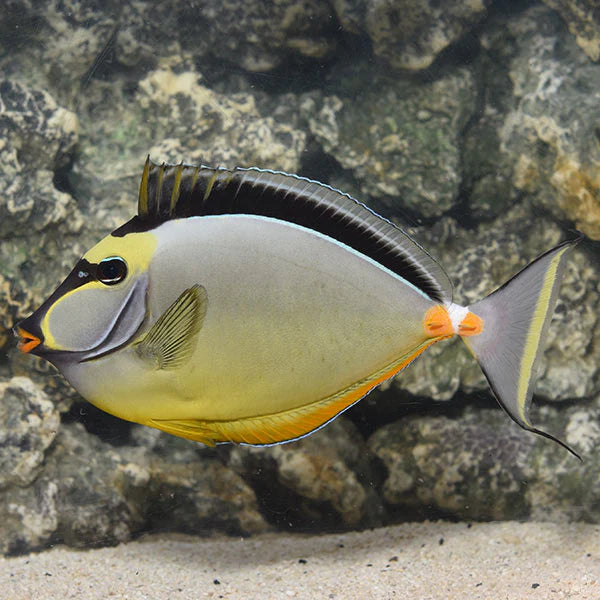
The Naso Tang, scientifically known as Naso lituratus, is also commonly referred to as the Orangespine Unicornfish. It is one of the most beautiful and popular tang species for large reef aquariums. Its coloration changes significantly as it matures, and specimens originating from Hawaii are often especially bright and vivid compared with those from other regions.
As a juvenile, the fish has a dark gray body with a blue stripe running along the dorsal fin and an orange stripe along the anal fin. As it matures, the body develops a reddish-brown coloration and its markings become more pronounced. The tail develops a distinctive lyre shape with a vertical yellow band, while two bright orange patches appear at the base of the tail.
The face also develops a narrow black mask outlined in vivid yellow, complemented by orange-red lips. These striking features give the Naso Tang a unique and unmistakable appearance.
With its impressive size, constant movement, and active personality, the Naso Tang makes a magnificent centerpiece for large marine aquariums.
Key Features
- Its coloration develops and becomes increasingly striking as it matures.
- Features an elegant lyre-shaped tail.
- Helps control natural algae growth within the aquarium.
- An active swimmer that adds movement and energy to the tank.
- Reef-safe and suitable for aquariums containing corals and invertebrates.
Aquarium Requirements
- Minimum Aquarium Size: Approximately 680 liters (180 gallons).
- Requires a large aquarium with plenty of open swimming space.
- Live rock should be provided with suitable hiding and grazing areas.
- A tightly fitted aquarium lid is recommended, as the fish may jump when frightened or stressed.
- Requires stable water quality and good water movement.
- A mature, well-established aquarium with natural algae growth is highly recommended.
Compatibility & Temperament
| Aggression Level | Semi-aggressive |
| Reef Compatibility | Yes, generally safe with corals and invertebrates |
| Fish Compatibility | Generally compatible with most marine fish species |
| Tang Compatibility | May show aggression toward other tangs, especially species with a similar body shape or coloration |
The Naso Tang generally coexists well with most marine fish, but it may become territorial toward other surgeonfish, particularly those with a similar appearance or size. Providing a large aquarium with open swimming areas, multiple grazing zones, and suitable hiding places can help reduce competition and aggressive behavior.
Feeding
The Naso Tang is primarily herbivorous, although it will also accept a variety of protein-rich marine foods. Its diet should be based mainly on marine algae and high-quality vegetable-based foods to support healthy digestion, strong immunity, vibrant coloration, and long-term well-being.
Recommended foods include:
- Dried seaweed (Nori).
- Marine algae formulated specifically for tangs.
- High-quality vegetable-based pellets and flakes.
- Frozen Mysis Shrimp.
- Krill and other frozen marine foods.
Reefamorous Tip: Offer dried marine seaweed at least three times per week using a dedicated algae clip or by securing it to the live rock. A varied diet with regular access to marine algae helps strengthen the immune system, maintain healthy activity levels, and preserve the fish’s natural coloration.