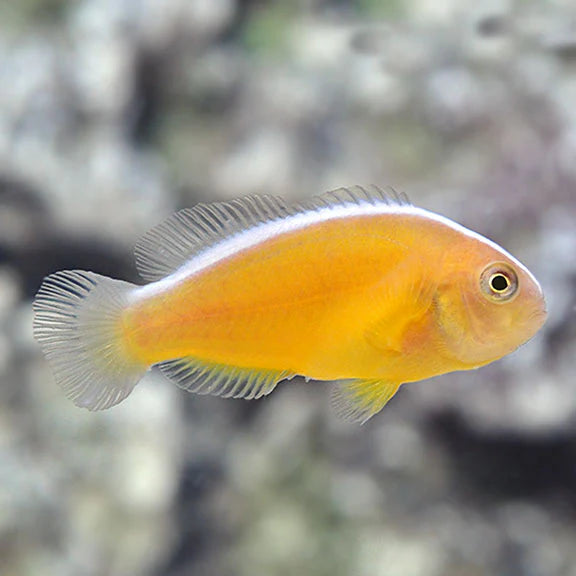
Amphiprion sandaracinos
Orange Skunk Clownfish
Orange Skunk Clownfish
SKU:F-CLN-020
20 in stock
Couldn't load pickup availability
 Medium
 Semi-Aggressive
 Reef Safe

Orange Skunk Clownfish
Orange Skunk Clownfish – Amphiprion sandaracinos
The Orange Skunk Clownfish, scientifically known as Amphiprion sandaracinos, is also commonly called the Skunk-striped Anemonefish. It is an attractive and hardy clownfish species known for its bright orange coloration and distinctive white stripe running along the top of its body.
The body is typically pale to vivid orange, with a single white stripe beginning near the mouth and extending over the head along the entire length of the back. Its streamlined appearance, manageable size, and active personality make the Orange Skunk Clownfish an excellent addition to established reef aquariums.
Key Features
- Beautiful pale to bright orange body coloration.
- Distinctive white stripe extending along the entire back.
- Hardy and adaptable once properly acclimated.
- Suitable for both beginner and experienced marine aquarists.
- Excellent choice for established reef aquariums.
- Can form compatible pairs and breed successfully in captivity.
Aquarium Requirements
- Minimum Aquarium Size: Approximately 115 liters (30 gallons).
- Provide plenty of live rock with caves and secure hiding places.
- Requires stable water quality and efficient filtration.
- Prefers a well-established aquarium with adequate swimming space.
- A host anemone is beneficial but not required for successful long-term care.
- Natural host anemones include Stichodactyla mertensii and Heteractis crispa.
Compatibility & Temperament
| Aggression Level | Peaceful to Semi-Aggressive |
| Reef Compatibility | Yes |
| Fish Compatibility | Compatible with most peaceful to moderately assertive reef fish. Established pairs may become territorial around their host or nesting area. |
| Invertebrate Compatibility | Generally safe with corals, shrimp, snails, crabs, and other common reef invertebrates. |
Feeding
The Orange Skunk Clownfish is an omnivore and readily accepts a wide variety of aquarium foods once acclimated.
Recommended foods include:
- Mysis shrimp.
- Vitamin-enriched brine shrimp.
- Finely chopped shrimp and marine seafood.
- High-quality frozen marine foods.
- Marine pellets and flakes.
- Foods containing marine algae and other plant-based ingredients.
A varied diet combining meaty and plant-based foods will help maintain healthy growth, strong coloration, and good overall condition. Several small meals throughout the day are recommended.
Breeding
The Orange Skunk Clownfish can breed successfully in home aquariums. When a compatible pair forms, the female becomes the larger and dominant individual, while the smaller fish functions as the male.
The pair will typically clean a flat surface near their established territory before depositing adhesive eggs. Both fish defend the nesting area, with the male usually taking a major role in guarding and aerating the developing eggs.
Depending on water temperature and aquarium conditions, the eggs generally hatch within approximately 6–11 days. The larvae should be raised in a separate aquarium and initially fed appropriately sized rotifers, followed by newly hatched brine shrimp as they develop.
Reefamorous Tip: Orange Skunk Clownfish appreciate a stable reef aquarium with plenty of shelter and peaceful tank mates. Although they do not require an anemone, providing a suitable established host can encourage natural behavior. Avoid adding a newly purchased anemone to an immature aquarium simply for the clownfish.