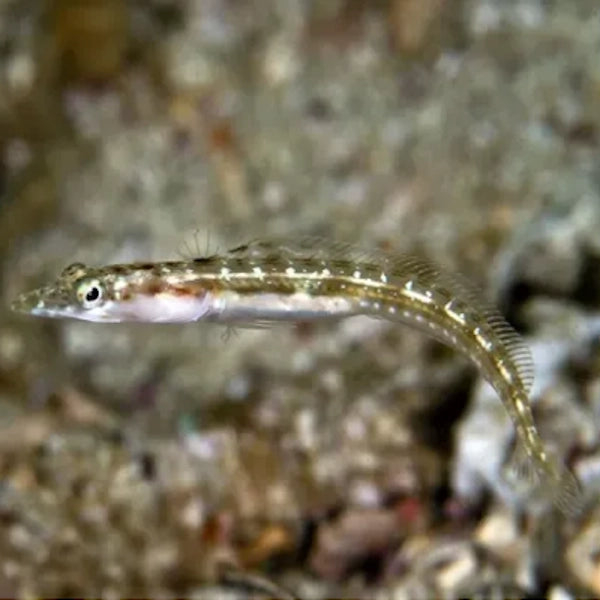
Chaenopsis alepidota
Orangethroat Pikeblenny
Orangethroat Pikeblenny
SKU:F-BLN-026
Out of stock
Couldn't load pickup availability
 Easy
Easy
 Peaceful
 Reef Safe

The Orangethroat Pikeblenny is a fascinating fish with unique traits sure to captivate any marine aquarist. Most notable is the distinct eel-like body that gives the Orangethroat Pikeblenny an immediate sense of mystery. The elongated serpentine body is accentuated by a tapered snout featuring a long, slit-like mouth that extends behind the eyes. It is easy to see why this ornate fish belongs to the group of Chaenopsids collectively called "pike blennies." Thanks to its relative small size, the Orangethroat Pikeblenny makes an intriguing choice for nano style marine aquariums.
The Orangethroat Pikeblenny exhibits distinct sexual dichromatism. In other words, male and female Orangethroat Pikeblennies have marked differences in their coloration and patterning. Male Orangethroat Pikeblennies sport more robust coloration while females display a mottled palate of subdued earth-tones with an effervescent speckling of pearl-like dots. Both male and female Orangethroat Pikeblennies exhibit an orange stripe that follows the profile of the "throat" and "neck" region like a chin strap. This namesake coloration is vivid and pronounced in males and contrasts brilliantly against their dark espresso brown body color. The sail-like dorsal fin of the male Orangethroat Pikeblenny is put to dramatic effect during courting and territorial displays. The male Orangethroat Pikeblennies are known to engage in flamboyant displays ranging from tail-standing, contortions, flaring and mouth gaping for a colorful and energetic show.
Originating from the reef rubble zone, the Orangethroat Pikeblenny feels at home in aquariums with similar environmental features. The simulated reef rubble zone can include varied topography ranging from open sand and rubble flats of varied coarseness and depth to a network of small and mid-size live rock piled to create a honeycomb of tunnels. It is reputed that the Orangethroat Pikeblenny inhabits empty worm tubes in the wild. To best recreate this, consider using PVC or flexible vinyl tubing up to 1/2" in diameter as a sensible substitute. While relatively peaceful towards other fish, the Orangethroat Pikeblenny will jealously defend its territory.
The diet of the Orangethroat Pikeblenny in the wild primarily consists of small crustaceans and small fish. In the aquarium, it should be fed mysis shrimp, vitamin-enriched brine shrimp, frozen preparations and other meaty items.