


Acropora sp.
Paletta Pink Tip Acropora
Paletta Pink Tip Acropora
SKU:C-SPS-001
Out of stock
Couldn't load pickup availability
Paletta Pink Tip Acropora
Acropora sp.
Overview
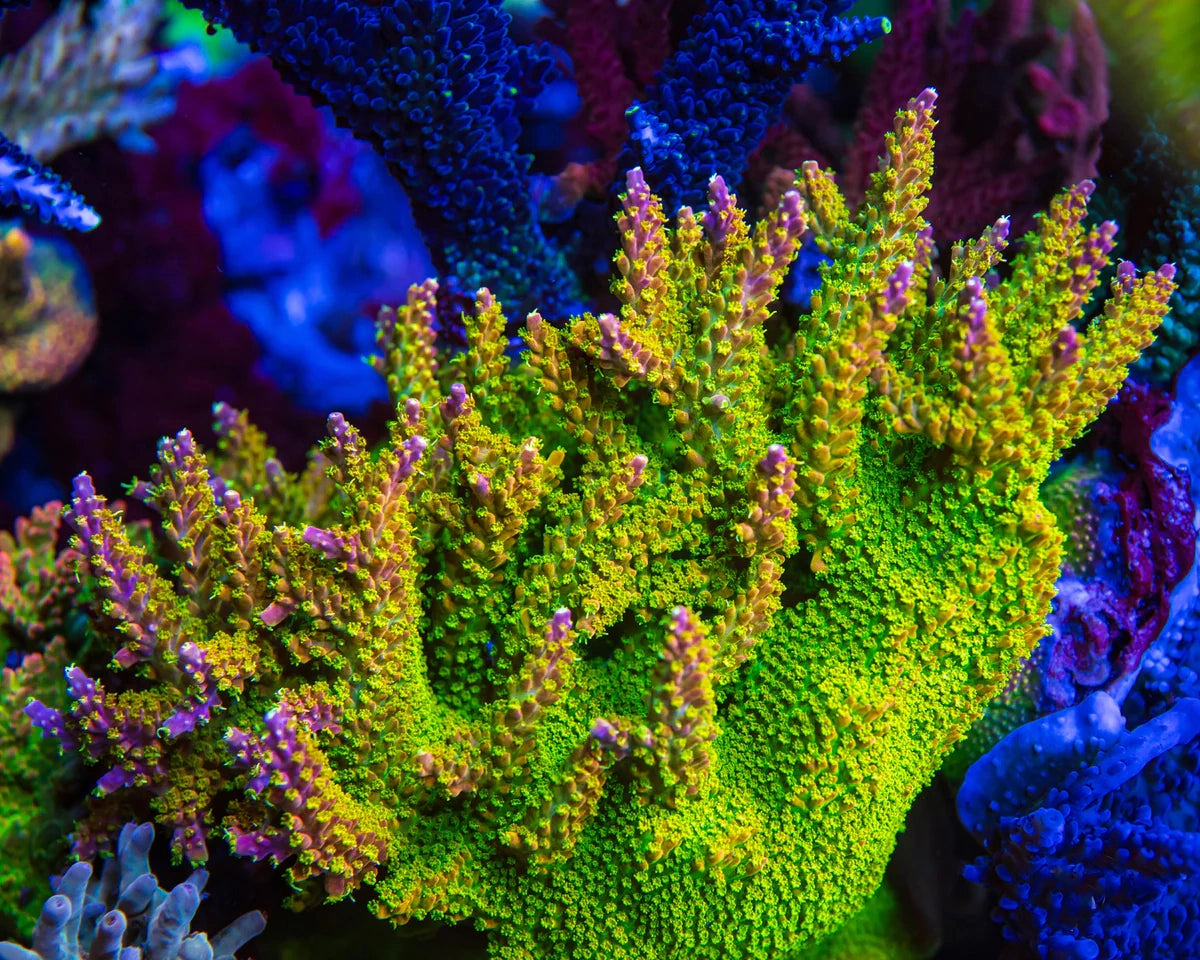
The Paletta Pink Tip Acropora is a striking SPS coral known for its elegant branching growth form and distinctive pink-colored growth tips. Under suitable reef lighting and stable water conditions, the colony can develop strong contrast between its base coloration and bright fluorescent tips.
Like other Acropora species, the Paletta Pink Tip requires excellent water quality, strong lighting, good water movement, and stable reef parameters. When maintained successfully, it can develop into a dense branching colony and become an impressive centerpiece in an SPS-dominated reef aquarium.
Care Requirements
Lighting and Water Flow
The Paletta Pink Tip Acropora performs best under strong reef lighting. A PAR range of approximately 250–400 is suitable for many established colonies, although the ideal intensity depends on the coral’s previous lighting conditions, placement, and overall aquarium stability.
Provide strong, turbulent, and variable water flow. Acropora corals benefit from high water movement that keeps oxygen levels elevated, prevents detritus from settling between branches, and improves nutrient exchange around the coral tissue.
Avoid placing the coral directly in front of a single powerful pump. Broad, random, and alternating flow is preferable to a narrow constant stream.
Aquarium Placement
Place the Paletta Pink Tip Acropora in the middle to upper area of the reef aquarium where it can receive strong lighting and good water circulation.
Allow sufficient space around the colony for future branching growth and to prevent contact with neighboring corals. Good polyp extension, strong coloration, and active tip growth generally indicate that the placement is suitable.
Recommended Water Parameters
Feeding
The Paletta Pink Tip Acropora contains symbiotic zooxanthellae and obtains most of its energy through photosynthesis. Direct feeding is not essential, but the coral may benefit from very fine suspended foods and dissolved nutrients available in a healthy reef aquarium.
- Fine zooplankton-based coral foods.
- Small-particle SPS coral foods.
- Amino acid supplements formulated for reef aquariums.
- Natural dissolved and suspended nutrients from regular fish feeding.
Avoid excessive feeding or nutrient supplementation. Maintaining balanced nutrients and stable water chemistry is more important than heavy target feeding for Acropora corals.
Compatibility and Aggression
The Paletta Pink Tip Acropora is considered moderately aggressive. Although it does not have long sweeper tentacles like many LPS corals, it can compete with neighboring corals through direct contact and may damage or overgrow nearby colonies.
Leave adequate space around the colony for future branching growth. Avoid placing it where rapidly growing corals or aggressive LPS species can reach its branches.
Acropora corals are particularly sensitive to sudden changes in alkalinity, salinity, temperature, lighting intensity, and nutrient levels. Long-term stability is one of the most important factors for maintaining strong coloration and healthy growth.
Rapid tissue necrosis (RTN) and slow tissue necrosis (STN) can progress quickly in stressed Acropora colonies. Inspect the coral regularly for tissue recession, exposed white skeleton, pests, or sudden changes in coloration.
Acclimation
Acclimate the coral gradually to both the aquarium’s water chemistry and lighting. Begin the coral under slightly reduced light intensity and increase exposure gradually over several days or weeks.
Sudden exposure to very strong lighting can cause bleaching or tissue stress. Likewise, rapid changes in alkalinity, salinity, or temperature should be avoided.
When handling the coral, hold it by the frag plug or exposed skeleton whenever possible and avoid touching the living tissue directly.
Signs of Good Health
- Regular polyp extension, particularly during feeding periods or after lights dim.
- Strong and consistent coloration.
- Bright pink coloration on actively growing branch tips.
- Visible new skeletal growth at the tips and base.
- Healthy tissue completely covering the skeleton.
- No bleaching, tissue recession, excessive mucus, RTN, STN, or visible pests.
Share

Warrning!
Please note that livestock is available for delivery within Jordan only and cannot be shipped internationally due to shipping regulations and animal welfare requirements. For more information, please refer to our Shipping Policy.
Blog posts
View all-
Keeping a Reef Tank Cool Through a Riyadh Summer
Wesam MsaitefA practical guide to managing reef aquarium temperature through Riyadh's extreme summer heat — from room AC and cooling fans to dedicated chillers, correct sizing, temperature monitoring, and emergency planning....
Keeping a Reef Tank Cool Through a Riyadh Summer
Wesam MsaitefA practical guide to managing reef aquarium temperature through Riyadh's extreme summer heat — from room AC and cooling fans to dedicated chillers, correct sizing, temperature monitoring, and emergency planning....
-
Ich vs. Marine Velvet: How to Recognize and Tre...
Wesam MsaitefLearn how to distinguish marine ich from velvet, recognize the early warning signs, understand why breathing changes matter, and choose an effective treatment approach without exposing your reef tank’s corals...
Ich vs. Marine Velvet: How to Recognize and Tre...
Wesam MsaitefLearn how to distinguish marine ich from velvet, recognize the early warning signs, understand why breathing changes matter, and choose an effective treatment approach without exposing your reef tank’s corals...
-
How to Photograph Corals with Your Smartphone
Wesam MsaitefA Complete Guide to Better Colors, Sharper Details, and More Realistic Reef Photography Introduction Why Does Your Coral Look Amazing in Person but Terrible on Your Phone? You are standing...
How to Photograph Corals with Your Smartphone
Wesam MsaitefA Complete Guide to Better Colors, Sharper Details, and More Realistic Reef Photography Introduction Why Does Your Coral Look Amazing in Person but Terrible on Your Phone? You are standing...