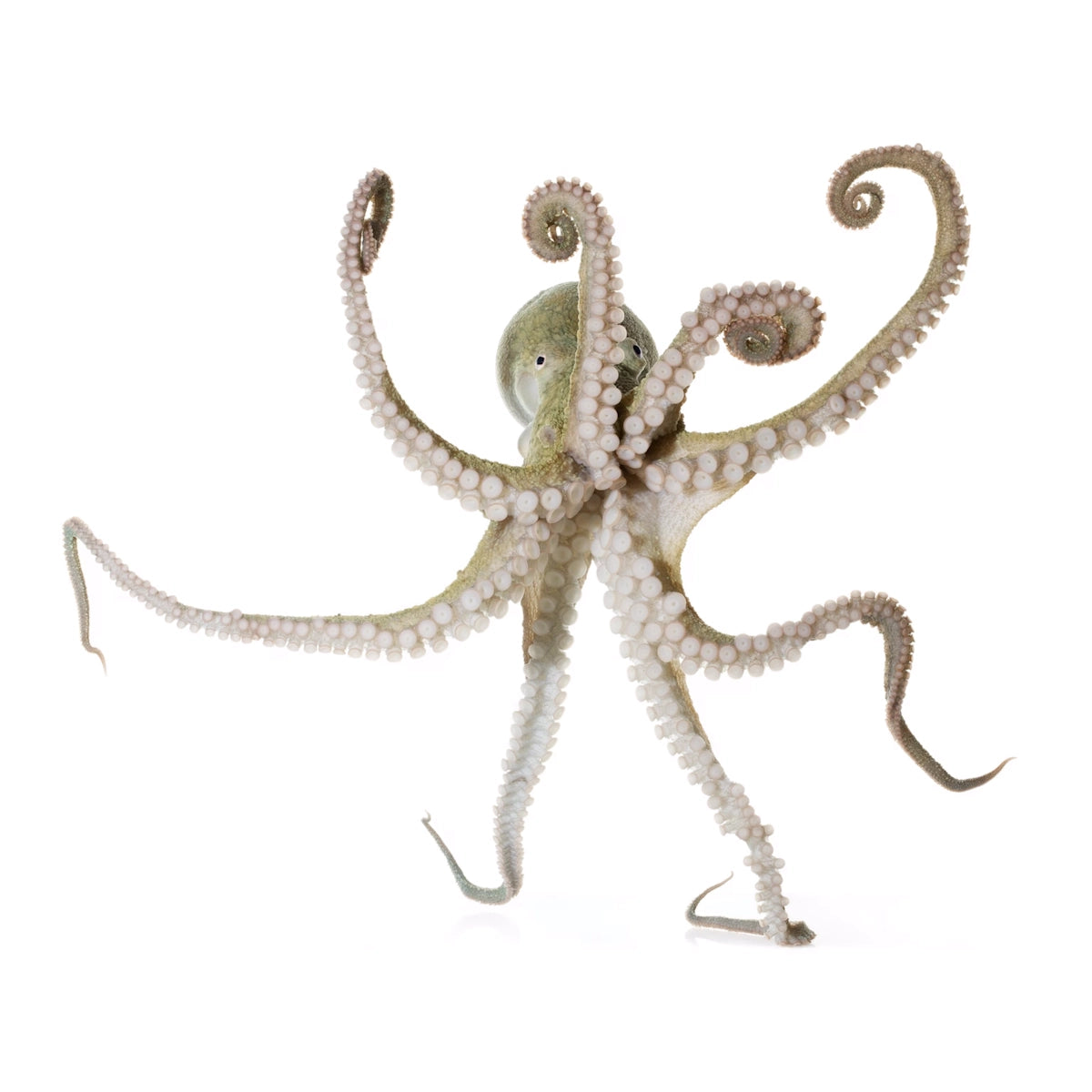
Abdopus aculeatus
Prickly Octopus
Prickly Octopus
SKU:I-OCTO-001
Out of stock
Couldn't load pickup availability
 Expert
 Semi-Aggressive
 Not Reef Safe

Quick Information
Quick Information
- Care Level: Expert
- Reef Compatible: Not Reef Safe
- Temper: Semi-Aggressive
- Minimum Tank Size:
The Prickly Octopus, also known as the Algae Octopus or Wunderpus, is a fascinating and highly intelligent marine species recognized for its remarkable ability to change color and texture to blend seamlessly into its surroundings. This adaptive capability, along with its unique prickly appearance, makes the Prickly Octopus a captivating but challenging addition to marine aquariums. Due to its specific care requirements and complex behaviors, it is recommended exclusively for experienced aquarists.
Native to shallow, sandy, and rocky substrates in the Indo-Pacific, the Prickly Octopus thrives in an environment that provides hiding spaces and a variety of textures for camouflage. As a carnivore, it requires a diet of meaty foods, such as shrimp, crabs, and small fish, often hunting or scavenging actively. Due to its intelligence, it benefits from interactive feeding methods that stimulate its natural hunting instincts, keeping it mentally engaged and reducing stress.
The Prickly Octopus can be semi-aggressive, especially in smaller tanks or if it feels threatened. It requires a secure, octopus-proof tank setup, as it is an adept escape artist that can fit through surprisingly small openings. In addition, it should not be kept in reef aquariums, as it may prey on tankmates and disturb delicate corals or invertebrates.
This species is highly sensitive to water conditions and stress, so stable, well-maintained water parameters are essential for its health. Regular tank monitoring and careful maintenance are required to provide the Prickly Octopus with a suitable environment where it can thrive.
For aquarists with the expertise and dedication to care for a cephalopod, the Prickly Octopus offers an unparalleled viewing experience. Its intelligence, unique appearance, and dynamic behavior create a fascinating display, though it requires meticulous care and an environment tailored to its needs.