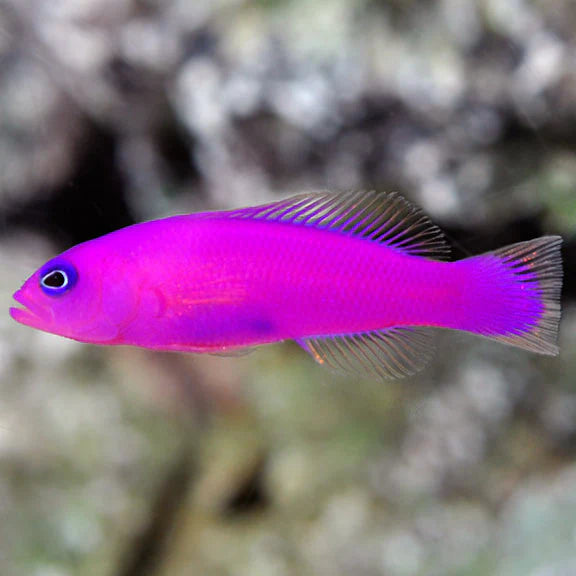
Pseudochromis porphyreus
Purple Dottyback
Purple Dottyback
SKU:F-DTB-002
Out of stock
Couldn't load pickup availability
 Easy
Easy
 Semi-Aggressive
 Reef Safe

Purple Dottyback
Purple Dottyback – Pseudochromis porphyreus
The Purple Dottyback, scientifically known as Pseudochromis porphyreus, is also commonly called the Magenta Dottyback or Purple Pseudochromis. It is one of the most striking dottyback species, admired for its vibrant magenta-purple coloration that gives it a bold presence despite its small size.
This species is known for its confident personality and constant activity among live rock. Hardy and easy to care for, it quickly adapts to established aquariums when provided with plenty of hiding places, making it an excellent choice for small to medium-sized reef tanks.
Key Features
- Brilliant magenta-purple coloration.
- Small, hardy, and easy to care for.
- Active, bold, and curious personality.
- Suitable for reef aquariums.
- Adapts well to stable marine systems.
Aquarium Requirements
- Minimum Aquarium Size: Approximately 115 liters (30 gallons).
- Provide plenty of live rock with caves and hiding places.
- Requires stable water parameters and efficient filtration.
- Multiple hiding spots help reduce territorial behavior.
Compatibility & Temperament
| Aggression Level | Semi-Aggressive |
| Reef Compatibility | Yes |
| Fish Compatibility | May become territorial toward other Pseudochromis species or fish with a similar body shape. Generally compatible with most reef fish when sufficient space and hiding places are available. |
| Recommendation | Avoid keeping multiple individuals of the same species in smaller aquariums to reduce territorial disputes. |
The Purple Dottyback is an active cave-dwelling fish that spends much of its time weaving through rockwork while defending a small territory.
Feeding
The Purple Dottyback thrives on a varied protein-rich diet.
Recommended foods include:
- Mysis Shrimp.
- Brine Shrimp.
- Frozen marine foods.
- High-quality marine pellets and flakes.
Reefamorous Tip: Feeding a varied diet enriched with vitamins helps maintain excellent health while enhancing the fish's vivid magenta coloration.