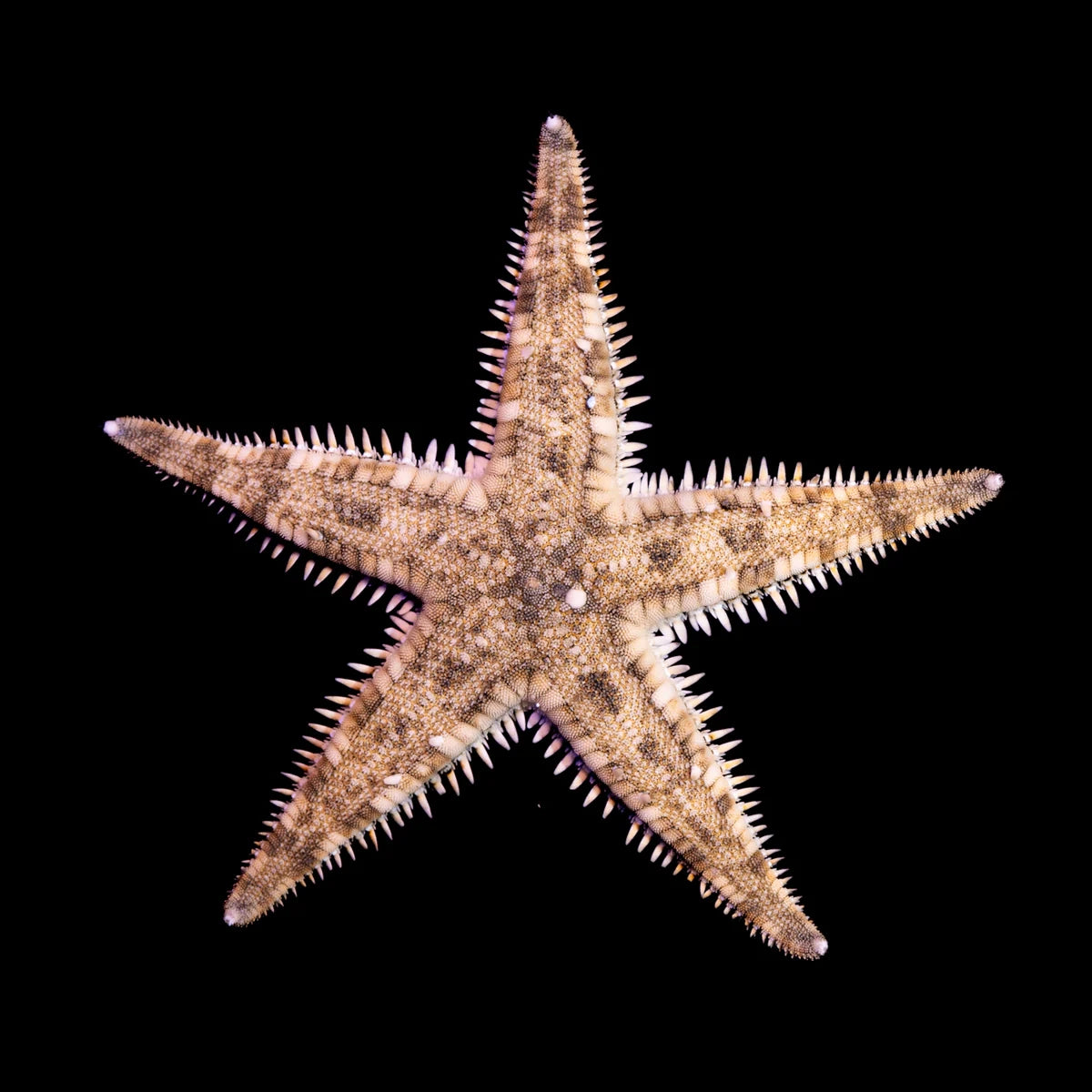
Astropecten Polyacanthus
Sand Sifting Sea Star
Sand Sifting Sea Star
SKU:I-STR-001
In stock
Couldn't load pickup availability
 Easy
Easy
 Peaceful
 Reef Safe

Quick Information
Quick Information
- Care Level: Easy
- Reef Compatible: Reef Safe
- Temper: Peaceful
- Minimum Tank Size:
The Sand Sifting Sea Star, at first glance, seems to be drably colored like most bottom dwellers. But closer inspection reveals a striking beauty and serenity to the alternating bands of brown and beige that dress this invertebrate's thick, spine-covered arms. Like other starfish, Astropecten polycanthus efficiently consumes mass amounts of detritus and uneaten foods. This nocturnally active member of the Astropectinidae family can move large amounts of sand as it burrows into the substrate in its search for food.
This peaceful omnivore will effectively clean even the largest home aquarium of detritus and left over food. Like other starfish, the Sand Sifting Sea Star will also consume small invertebrates, including shrimp, urchins, mollusks, bivalves, or other small sea stars. As such, the Sand Sifting Sea Star should be actively fed a varied diet consisting of natural food sources, especially in well-established marine aquariums. Otherwise, this voracious feeder will quickly clean your aquarium of detritus and then burrow into your substrate, starve, and eventually begin to decay.
To foster its feeding habits, the Sand Sifting Sea Star should be kept in aquariums with large, deep sand bottoms of several inches in depth. Since it is slower moving than most fish, the Sand Sifting Sea Star should not be housed with natural predators, including Puffers.
Like other invertebrates, the Sand Sifting Sea Star is very intolerant of sudden changes in oxygen levels, salinity, and pH and cannot tolerate copper-based medications. To successfully acclimate new specimens to your aquarium, use the drip acclimation method and never expose the Sand Sifting Sea Star to air while handling.
Breeding in the home aquarium is extremely difficult with no distinguishing characteristics to help differentiate between males and females.