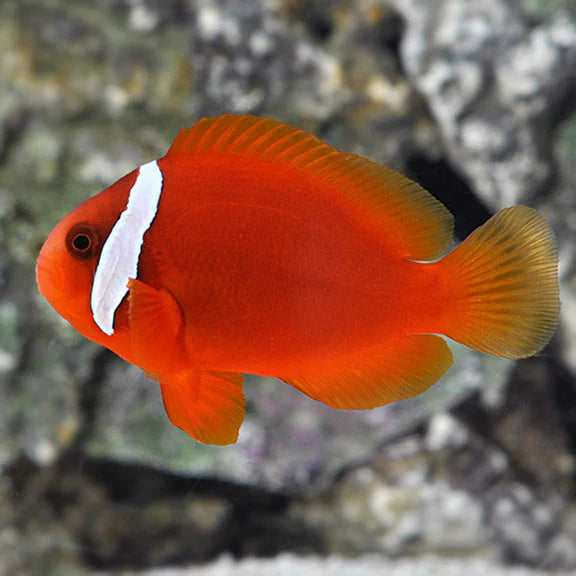
Amphiprion frenatus
Tomato Clownfish
Tomato Clownfish
SKU:F-CLN-019
Out of stock
Couldn't load pickup availability
 Easy
Easy
 Peaceful
 Reef Safe

Tomato Clownfish
Tomato Clownfish – Amphiprion frenatus
The Tomato Clownfish, scientifically known as Amphiprion frenatus, is also commonly called the Red Clownfish or Bridled Clownfish. It is a hardy and attractive clownfish species known for its rich red-orange coloration and bold personality.
Native to the western Pacific, Tomato Clownfish are commonly associated with sea anemones, particularly the Bubble Tip Anemone (Entacmaea quadricolor). In aquariums, however, they do not require an anemone to survive and may occasionally adopt certain corals or other structures as a substitute host.
Key Features
- Beautiful red to orange coloration with a distinctive white head stripe.
- Hardy and adaptable to established marine aquarium conditions.
- Can form a strong relationship with a Bubble Tip Anemone.
- Does not require an anemone to remain healthy in captivity.
- Active, confident personality and usually readily accepts prepared foods.
- Can be successfully bred in home aquariums.
Aquarium Requirements
- Minimum Aquarium Size: Approximately 115 liters (30 gallons).
- Provide live rock with caves and sheltered areas where the fish can establish a territory.
- Requires stable water quality with efficient filtration.
- A Bubble Tip Anemone may be provided as a natural host, but it is not essential.
- Provide adequate space when keeping the fish with peaceful or smaller tank mates, as adults can become territorial.
Compatibility & Temperament
| Aggression Level | Semi-Aggressive |
| Reef Compatibility | Yes |
| Fish Compatibility | Compatible with many marine community fish, but mature individuals can become territorial, particularly around their host or nesting area. |
| Invertebrate Compatibility | Generally safe with corals and most reef invertebrates. |
Feeding
The Tomato Clownfish is an aggressive and enthusiastic feeder that readily accepts a wide variety of aquarium foods.
Recommended foods include:
- Mysis shrimp.
- Vitamin-enriched brine shrimp.
- Chopped marine seafood.
- High-quality frozen marine foods.
- Marine pellets and flakes.
- Foods containing marine algae and other plant-based ingredients.
A varied diet containing both meaty and plant-based foods helps maintain strong coloration, healthy growth, and good overall condition.
Breeding
Tomato Clownfish can breed successfully in home aquariums. When a compatible pair forms, the female becomes the larger and more dominant fish, while the smaller individual functions as the male.
The pair typically deposits adhesive eggs on a cleaned flat surface near their territory or host. The parents, particularly the male, will guard and aerate the eggs until they hatch. Depending on temperature and aquarium conditions, hatching generally occurs within approximately 6–11 days.
The larvae should be raised separately and initially fed appropriately sized live foods such as rotifers, followed by newly hatched brine shrimp as they develop.
Reefamorous Tip: Tomato Clownfish become more territorial as they mature, especially when paired or hosting an anemone. Introduce peaceful tank mates carefully and provide enough space around the clownfish's chosen territory. A Bubble Tip Anemone can provide a natural hosting relationship, but the clownfish can live perfectly well without one.