

Euphyllia parancora
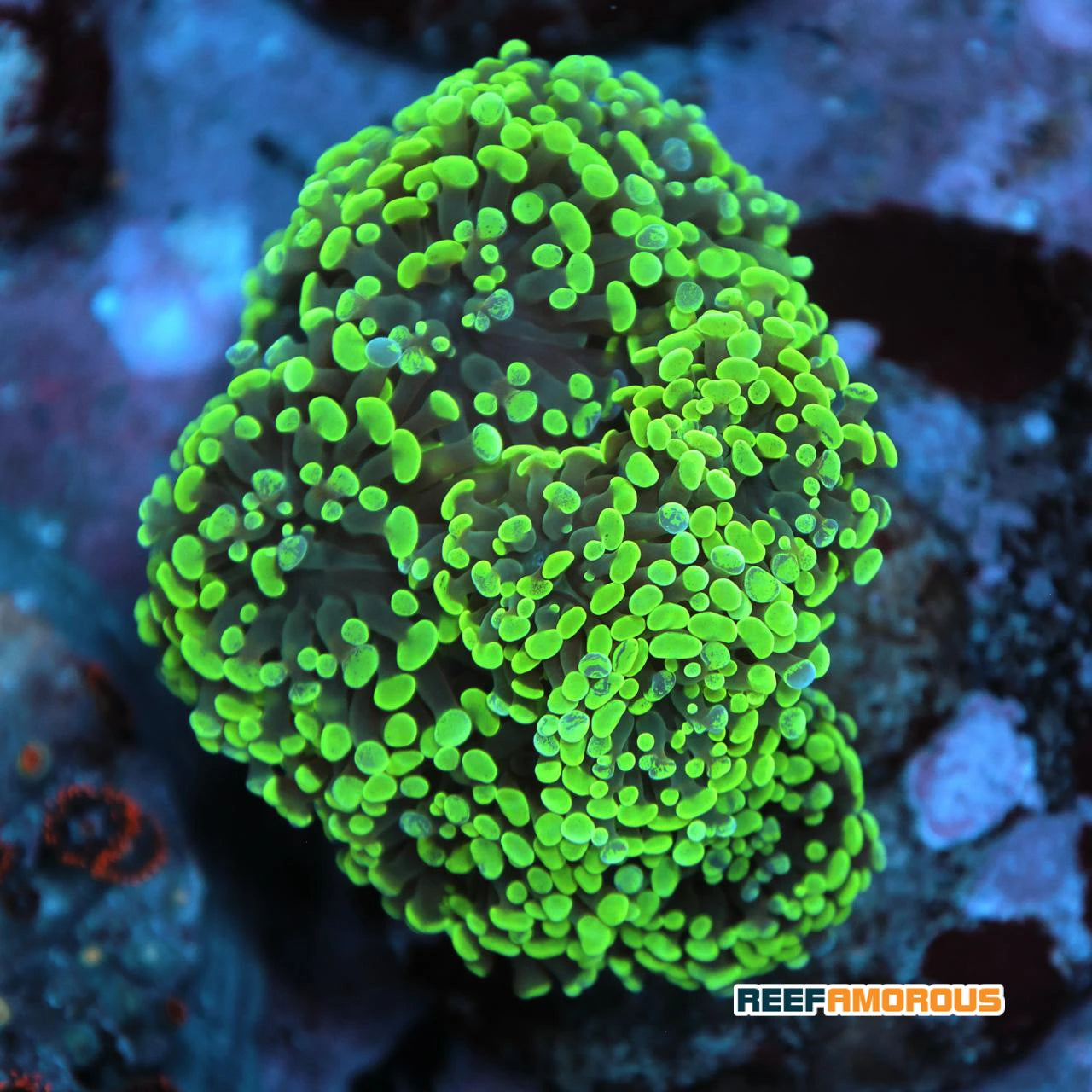
Toxic Branching Hammer
Toxic Branching Hammer
SKU:AUC-016
Low stock: 1 left
Couldn't load pickup availability
Hammer Coral
Fimbriaphyllia ancora
Overview
The Hammer Coral, also known as the Anchor Coral, is a popular large-polyp stony coral recognized by its thick, fleshy tentacles and distinctive hammer- or anchor-shaped tips. Its gently swaying polyps add attractive movement and texture to a reef aquarium.
Hammer Corals are available in green, gold, yellow, purple, orange, bicolor, and other premium color varieties. They may develop as wall-forming or branching colonies, depending on the species and growth form. With stable water parameters, moderate lighting, gentle water movement, and sufficient spacing, they can grow into impressive colonies.
Care Requirements
Lighting and Water Flow
Hammer Coral generally performs best under moderate reef lighting. A PAR range of approximately 80–150 is suitable for many specimens, although the ideal intensity may vary according to the coral’s coloration, origin, and previous lighting conditions.
Provide low to moderate, indirect, and variable water flow. The fleshy tentacles should sway gently without being folded over, compressed, or pushed continuously in one direction. Strong direct flow can prevent normal expansion and may damage the coral’s soft tissue against its skeleton.
Aquarium Placement
Place the coral in the lower or middle area of the aquarium, depending on the strength of the lighting system. Secure the coral firmly on stable rockwork where it cannot fall, become covered by sand, or touch neighboring corals.
Good polyp extension, stable coloration, and gentle natural movement usually indicate that the placement is suitable. If the coral remains tightly retracted, reduce direct water flow and confirm that the lighting intensity is appropriate.
Recommended Water Parameters
Feeding
Hammer Coral contains symbiotic zooxanthellae and obtains much of its energy through photosynthesis. Occasional target feeding may support tissue development, coloration, recovery, and colony growth.
- Finely chopped mysis shrimp.
- Small pieces of marine-based meaty food.
- Specialized LPS coral pellets.
- Fine plankton-based coral preparations.
Offer small portions when the feeding tentacles are extended. Avoid oversized food particles, excessive feeding, and allowing uneaten food to remain on the coral or accumulate inside the aquarium.
Compatibility and Aggression
Hammer Coral is considered a moderately aggressive coral. It may extend sweeper tentacles beyond its normally visible polyps, particularly at night, and can sting nearby corals.
Leave approximately 10–20 cm of open space around the colony. Additional spacing may be necessary when water movement carries its tentacles toward neighboring corals.
Hammer Corals may sometimes tolerate contact with certain closely related corals, but compatibility is not guaranteed. Direct contact should be monitored carefully, particularly between different species, growth forms, or colonies from different sources.
Maintain stable alkalinity, calcium, magnesium, salinity, and temperature. Wall-forming Hammer Corals can be especially vulnerable once tissue recession begins because the affected area may spread along the continuous skeleton.
Do not place Hammer Coral too close to unrelated corals. Its sweeper tentacles can cause tissue damage, recession, and loss of neighboring colonies.
Acclimation
Acclimate the coral gradually to the aquarium’s water conditions and lighting. Begin in an area with reduced light intensity, then move it gradually toward its intended position over several days.
Avoid exposing a newly introduced Hammer Coral immediately to intense lighting or strong direct water flow. Handle it by the hard skeleton whenever possible and avoid touching or compressing the fleshy polyps.
Signs of Good Health
- Full and consistent polyp extension.
- Inflated, fleshy tentacles with clearly defined hammer-shaped tips.
- Strong coloration without unusual fading or bleaching.
- Healthy tissue extending over the upper edges of the skeleton.
- Normal feeding response when suitable food is offered.
- No brown jelly, tissue recession, mouth gaping, or exposed skeleton.
Share
Warrning!
Please note that livestock is available for delivery within Jordan only and cannot be shipped internationally due to shipping regulations and animal welfare requirements. For more information, please refer to our Shipping Policy.
Blog posts
View all-
Keeping a Reef Tank Cool Through a Riyadh Summer
Wesam MsaitefA practical guide to managing reef aquarium temperature through Riyadh's extreme summer heat — from room AC and cooling fans to dedicated chillers, correct sizing, temperature monitoring, and emergency planning....
Keeping a Reef Tank Cool Through a Riyadh Summer
Wesam MsaitefA practical guide to managing reef aquarium temperature through Riyadh's extreme summer heat — from room AC and cooling fans to dedicated chillers, correct sizing, temperature monitoring, and emergency planning....
-
Ich vs. Marine Velvet: How to Recognize and Tre...
Wesam MsaitefLearn how to distinguish marine ich from velvet, recognize the early warning signs, understand why breathing changes matter, and choose an effective treatment approach without exposing your reef tank’s corals...
Ich vs. Marine Velvet: How to Recognize and Tre...
Wesam MsaitefLearn how to distinguish marine ich from velvet, recognize the early warning signs, understand why breathing changes matter, and choose an effective treatment approach without exposing your reef tank’s corals...
-
How to Photograph Corals with Your Smartphone
Wesam MsaitefA Complete Guide to Better Colors, Sharper Details, and More Realistic Reef Photography Introduction Why Does Your Coral Look Amazing in Person but Terrible on Your Phone? You are standing...
How to Photograph Corals with Your Smartphone
Wesam MsaitefA Complete Guide to Better Colors, Sharper Details, and More Realistic Reef Photography Introduction Why Does Your Coral Look Amazing in Person but Terrible on Your Phone? You are standing...