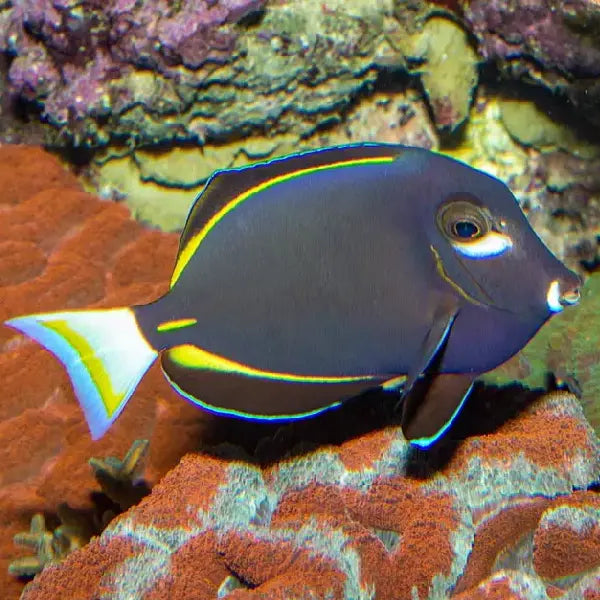
Acanthurus nigricans
Whitecheek Tang (Gold Rimmed)
Whitecheek Tang (Gold Rimmed)
SKU:F-TNG-014
Low stock: 2 left
Couldn't load pickup availability
 Medium
 Semi-Aggressive
 Reef Safe

Whitecheek Tang
Whitecheek Tang – Acanthurus nigricans
The Whitecheek Tang, scientifically known as Acanthurus nigricans, is also commonly referred to as the Gold-rimmed Surgeonfish. It is one of the most striking tang species, admired for its elegant color contrast and distinctive markings.
Its body ranges from deep black to dark bluish-purple, highlighted by a prominent white patch on the cheek between the mouth and the eye. A vivid yellow border runs along the dorsal and anal fins, while the blue tail with yellow accents adds to its exceptional appearance.
This species is an excellent choice for large reef aquariums, combining beauty with constant activity. It also helps graze on certain types of natural algae that grow on live rock, contributing to a healthier aquarium environment.
Key Features
- Elegant coloration and distinctive markings make it one of the most attractive tang species.
- Helps control certain types of natural algae within the aquarium.
- An active swimmer that brings constant movement and energy to the tank.
- Reef-safe and compatible with corals and most invertebrates.
- Creates a bold and impressive display in large marine aquariums.
Aquarium Requirements
- Minimum Aquarium Size: Approximately 500 liters.
- Requires plenty of open swimming space.
- Live rock should be provided with suitable areas for grazing and hiding.
- Needs stable water quality and high dissolved oxygen levels.
- Moderate to strong water movement is recommended to replicate its natural reef habitat.
- Should only be introduced into a mature, well-established aquarium with natural algae growth.
Compatibility & Temperament
| Aggression Level | Semi-aggressive, especially toward similar tang species |
| Reef Compatibility | Yes, safe with corals and invertebrates |
| Fish Compatibility | Compatible with most marine fish when provided with adequate swimming space |
| Tang Compatibility | May become aggressive toward tangs with a similar shape or coloration. It is best introduced as the last tang in the aquarium. |
The Whitecheek Tang may become territorial toward other surgeonfish, particularly species with a similar appearance or size. Providing a spacious aquarium with open swimming areas, multiple grazing spots, and adequate hiding places can significantly reduce aggression and territorial behavior.
Feeding
Although the Whitecheek Tang will readily accept some meaty foods, its diet should primarily consist of marine algae and plant-based foods to support healthy digestion, a strong immune system, and overall well-being.
Recommended foods include:
- Dried seaweed (Nori).
- Marine algae formulated for tangs.
- High-quality herbivore marine foods.
- Frozen mysis shrimp and chopped shrimp in moderation as supplemental protein sources.
- Premium pellets and flakes formulated for herbivorous marine fish.
Reefamorous Tip: Offer marine seaweed regularly, ideally every day or several times per week using a dedicated algae clip. A consistent vegetable-based diet helps strengthen the immune system, reduce stress and aggression, and maintain the fish's vibrant coloration and overall health.