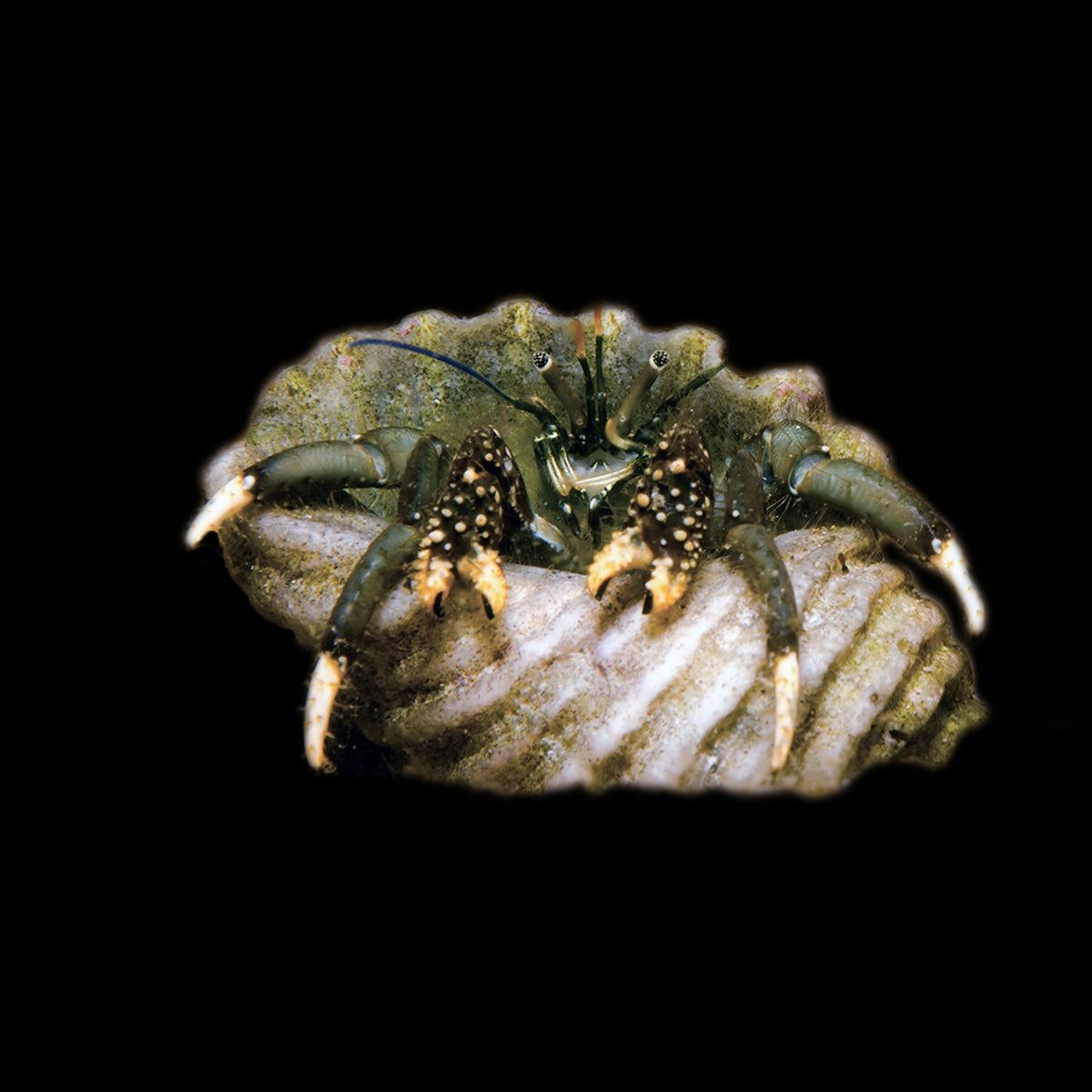
Clibanarius virescens
Yellow Legged Hermit Crab
Yellow Legged Hermit Crab
SKU:I-CRB-015
In stock
Couldn't load pickup availability
 Easy
Easy
 Peaceful
 Reef Safe

Quick Information
Quick Information
- Care Level: Easy
- Reef Compatible: Reef Safe
- Temper: Peaceful
- Minimum Tank Size: 100 Liters
The Yellow Legged Hermit Crab is one of the most popular members of the reef aquarium cleanup crew. It is highly valued for its ability to consume nuisance algae, leftover food, detritus, and other organic waste, helping to maintain a cleaner and healthier aquarium. Its bright yellow legs contrasted with its blue-green body make it both attractive and functional.
Native to tropical coral reefs throughout the Indo-Pacific, the Yellow Legged Hermit Crab spends much of its time climbing over live rock and sand in search of algae and organic debris. It is an active scavenger that constantly grazes on aquarium surfaces, helping to reduce the buildup of unwanted algae.
The Yellow Legged Hermit Crab is considered reef safe and is generally peaceful toward corals and other reef inhabitants. However, like most hermit crabs, it may occasionally fight with other hermits over shells or prey on snails if suitable empty shells are not available. Providing several empty shells of different sizes will help reduce aggression and support healthy growth.
This hermit crab is best kept in established reef aquariums with live rock and stable water parameters. It requires adequate calcium levels to maintain healthy shell growth and successful molting. Like all marine invertebrates, it is sensitive to copper-based medications and elevated nitrate levels.
Its diet consists of:
- Film algae
- Hair algae
- Detritus
- Leftover fish food
- Decaying organic matter
- Occasional meaty marine foods
Although it obtains much of its nutrition by scavenging, supplemental feeding may be necessary in very clean aquariums where natural food sources are limited.