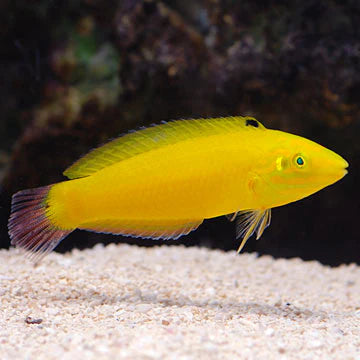
Halichoeres chrysus
Yellow Wrasse
Yellow Wrasse
SKU:F-WRS-016
Out of stock
Couldn't load pickup availability
 Easy - Moderate
 Peaceful
 Reef Safe

Yellow Wrasse
Yellow Wrasse – Halichoeres chrysus
The Yellow Wrasse, scientifically known as Halichoeres chrysus, is also commonly known as the Golden Wrasse, Golden Rainbowfish, Yellow Coris Wrasse, or Canary Wrasse. It is one of the most popular wrasse species for reef aquariums thanks to its brilliant yellow coloration, active personality, and ease of care, making it an excellent choice for both beginners and experienced reef keepers.
This species is naturally distributed throughout the eastern Indian Ocean and the western Pacific Ocean, ranging from the Solomon Islands to southern Japan and the eastern coast of Australia, where it inhabits sandy areas and the edges of coral reefs.
Interestingly, juveniles and young females display several black spots on their fins, while mature adults retain only a single distinctive black spot.
Key Features
- Brilliant yellow coloration adds brightness and vibrancy to any aquarium.
- Generally reef-safe with most corals.
- Helps control nuisance Fireworms and Pyramidellid Snails.
- Hardy and easy to care for, making it suitable for aquarists of all experience levels.
- Active swimmer that adds constant movement and energy to the aquarium.
Aquarium Requirements
- Minimum Aquarium Size: Approximately 190 liters (50 gallons).
- A tightly fitting lid is essential, as this species is an excellent jumper.
- Provide plenty of live rock with numerous caves and hiding places.
- A fine sand bed 5–8 cm deep is required for sleeping and hiding when frightened.
- Requires open swimming space, stable water quality, and moderate water flow.
Compatibility & Temperament
| Aggression Level | Peaceful |
| Reef Compatibility | Yes, with caution around small ornamental invertebrates |
| Fish Compatibility | Compatible with most peaceful reef fish, including other wrasse species. |
| Pest-Control Benefits | Helps eliminate Fireworms and Pyramidellid Snails that may damage clams and corals. It may also prey on small ornamental shrimp, feather duster worms, and other tiny crustaceans if given the opportunity. |
The Yellow Wrasse is a highly beneficial addition to reef aquariums due to its natural pest-hunting behavior. While it is generally safe with both soft and stony corals, caution is advised if the aquarium contains small ornamental shrimp or delicate invertebrates.
Feeding
The Yellow Wrasse thrives on a varied, protein-rich diet that supports its active lifestyle and vibrant coloration.
Recommended foods include:
- Vitamin-enriched Mysis Shrimp.
- Vitamin-enriched Brine Shrimp.
- Krill.
- High-quality frozen marine foods.
- Premium marine pellets and flakes.
Reefamorous Tip: Feed several small meals throughout the day to support this species' active metabolism. A varied diet helps maintain its vivid yellow coloration while encouraging its natural pest-control behavior.