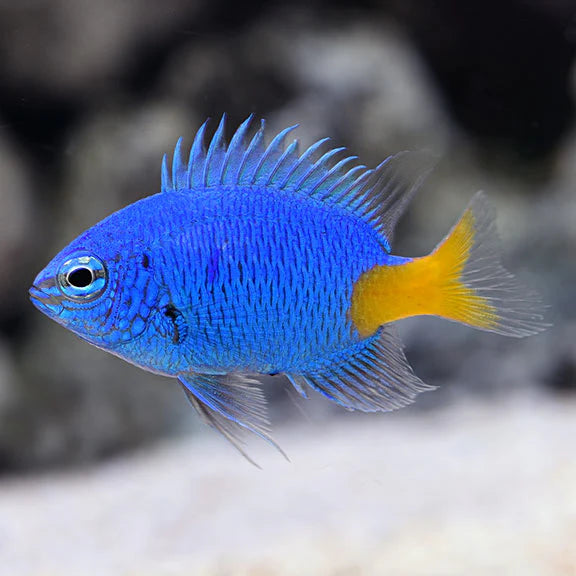
Chrysiptera parasema
Yellowtail Damselfish
Yellowtail Damselfish
SKU:F-DMS-006
21 in stock
Couldn't load pickup availability
 Easy
Easy
 Peaceful
 Reef Safe

Yellowtail Damselfish
Yellowtail Damselfish – Chrysiptera parasema
The Yellowtail Damselfish, scientifically known as Chrysiptera parasema, is also commonly called the Yellowtail Blue Damselfish or Yellowtail Demoiselle. It is one of the most popular damselfish species in the marine aquarium hobby thanks to its exceptional hardiness, brilliant coloration, and relatively manageable temperament.
This attractive fish features a vivid jewel-blue body contrasted by a bright yellow tail, creating a striking appearance against live rock and colorful corals. Native to the reefs of the Indo-Pacific, the Yellowtail Damselfish is generally less aggressive than many other damselfish species, making it a good choice for both beginner and experienced marine aquarists.
Key Features
- Brilliant jewel-blue body contrasted by a vibrant yellow tail.
- One of the hardiest and easiest damselfish species to maintain.
- Generally less aggressive than many other damselfish species.
- Suitable for both beginner and experienced marine aquarists.
- Reef compatible and generally safe with corals and invertebrates.
- Successfully bred in captivity.
Aquarium Requirements
- Minimum Aquarium Size: Approximately 75 liters (20 gallons).
- Provide plenty of live rock with caves, crevices, and hiding places.
- Requires stable water quality and efficient filtration.
- Provide open swimming areas alongside sheltered territories.
- When keeping multiple individuals, additional space and several separate hiding areas are recommended to reduce territorial aggression.
Compatibility & Temperament
| Aggression Level | Semi-Aggressive |
| Reef Compatibility | Yes |
| Fish Compatibility | Compatible with many peaceful to moderately assertive marine fish. It may become territorial toward its own species or similarly sized fish. |
| Invertebrate Compatibility | Generally safe with shrimp, snails, crabs, and other common reef invertebrates. |
Feeding
The Yellowtail Damselfish is an omnivore that naturally feeds on zooplankton, algae, and other small food particles.
Recommended foods include:
- Mysis shrimp.
- Vitamin-enriched brine shrimp.
- High-quality frozen marine foods.
- Marine pellets and flakes.
- Foods containing marine algae and other plant-based ingredients.
For best health and coloration, provide a varied diet and offer several small meals throughout the day rather than one large feeding.
Reefamorous Tip: Yellowtail Damselfish are excellent choices for aquarists looking for a hardy, colorful reef fish. Although more peaceful than many other damsels, providing several hiding places helps reduce territorial behavior, especially when keeping multiple individuals.