Reefamorous

32 products

  • Sale -24%New Metalic Green Branching Frogspawn 4 Heads

    ReefAmorous Metalic Green Branching Frogspawn 4 Heads

    1 in stock In Stock

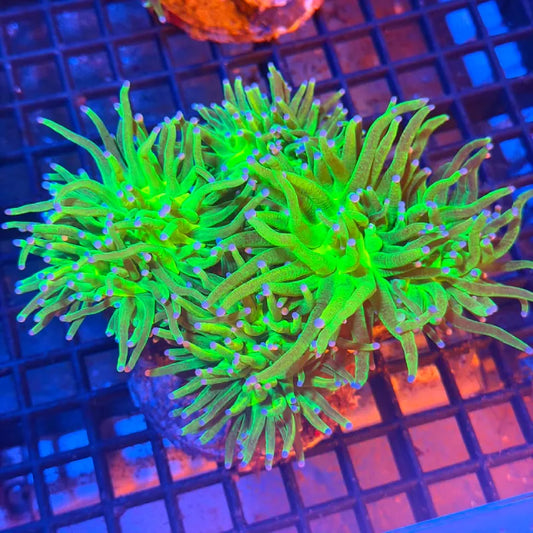
    Euphyllia paradivisa, commonly known as the Branching Frogspawn Coral, is a species of Large Polyp Stony (LPS) coral belonging to the Euphylliidae family. This coral shares the common name "Frogspawn Coral" with Euphyllia divisa, but the two species can be distinguished by their skeletal structure: Euphyllia paradivisa (Branching Frogspawn) has a branching skeleton, with each coral head growing on its own distinct branch. Euphyllia divisa (Wall Frogspawn) has a continuous wall-like skeleton rather than separate branches. The branching growth form makes Euphyllia paradivisa easier to frag and propagate compared to wall-type frogspawn corals. Branching Frogspawn Coral is highly prized in reef aquariums for its flowing movement and attractive coloration, which may include shades of green, purple, pink, gold, and bi-color combinations. Its tentacles resemble clusters of frog eggs, which is the origin of its common name. Care Requirements Lighting: Moderate to moderately high Water Flow: Moderate, indirect, and turbulent Placement: Typically middle to lower areas of the aquarium Care Level: Easy to moderate Reef Safe: Yes Important Notes Branching Frogspawn Coral possesses stinging sweeper tentacles that can extend beyond the colony and damage nearby corals. Adequate spacing should be provided between it and other coral species. Feeding Although it relies primarily on photosynthesis through its symbiotic zooxanthellae algae, it benefits from supplemental feeding, including: Mysis shrimp Brine shrimp Specialized LPS coral foods Other finely chopped meaty marine foods Regular feeding can promote faster growth, larger polyp extension, and enhanced coloration.

    1 in stock In Stock

    110.000 JD 84.000 JD

  • Sale -30%New Black Torch 6-8 Heads

    ReefAmorous Black Torch 6-8 Heads

    1 in stock In Stock

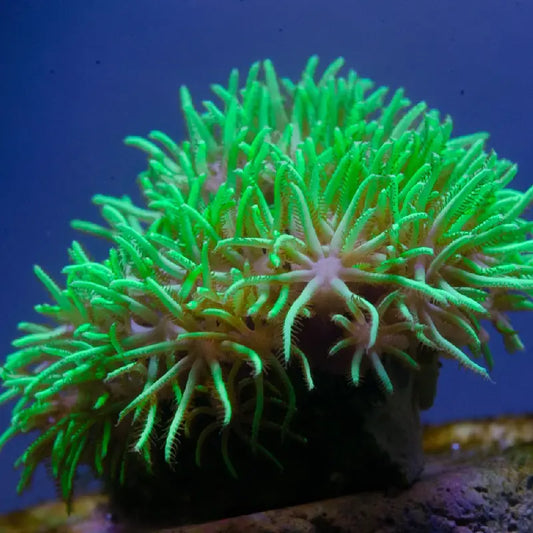
    The Euphyllia Torch Coral is a large polyp stony (LPS) coral, often referred to as Trumpet Coral or Pom-Pom Coral. It has long and flowing polyps with single rounded tips which are visible throughout the day and night, hiding its branching skeletal base most of the time. It may be brown or green with yellow on the tips of its tentacles. The yellow will sometimes appear to glow under actinic lighting. Provide plenty of room between the Euphyllia Torch Coral and other sessile animals, since at night, its sweeper tentacles can extend up to several inches from its base and sting other coral species. It is moderately difficult to maintain, but it is a popular coral that will thrive under proper conditions and excellent water quality parameters. Ideally, it needs to have moderate lighting combined with moderate water movement within the aquarium. Its aquatic home will also require the addition of calcium, strontium, and other trace elements to the water for its continued good health. It will also benefit from additional food fed weekly in the form of micro-plankton or brine shrimp.

    1 in stock In Stock

    128.000 JD 89.000 JD

  • Sale -26%New Metalic Green Open Brain Trachyphyllia

    ReefAmorous Metalic Green Open Brain Trachyphyllia

    1 in stock In Stock

    The Trachyphyllia Brain Coral is also referred to as a Folded Brain, or Crater Coral and is a large polyp stony (LPS) coral. It may have a folded, or figure-eight shape. Its genus name, Trachyphyllia, comes from the Greek trachys (rough) plus phyllon (leaf) because it resembles a rough leaf lying on the sandy bed. There are two common species of Trachphyllia: T. geoffroyi and T. radiata. The T. radiata, which is usually more convoluted in appearance and has fused walls, was formerly called Wellsophyllia radiata, but the genus Wellsophyllia has now been eliminated. T. geoffroyi is easily collected from the reef because it prefers to attach itself to a piece of shell or dead coral, and may be found washed into the shallow waters lying on the sand bed. Trachyphyllia Brain Corals fluoresce brightly under actinic lighting. They do best in a well established reef aquarium that incorporates moderate to strong lighting with a moderate water current, along with the addition of calcium, strontium, and other trace elements to the water. Allow ample space between it and other corals, as it will sometimes sting its neighbors. It does not require additional food to maintain its health in the reef aquarium, but it will feed on micro-plankton or foods designed for filter feeding invertebrates.

    1 in stock In Stock

    39.000 JD 29.000 JD

  • New Green Indophyllia Coral

    ReefAmorous Green Indophyllia Coral

    1 in stock In Stock

    Indophyllia coral, often called Button Coral, Meat Coral, or Indophyllia Button Coral, is a colorful large polyp stony coral known for its inflated fleshy tissue, rounded single-polyp appearance, and bright reef tank colors. Red, green, orange, pink, brown, and translucent varieties can make Indophyllia a striking sandbed showpiece in the right aquarium. Indophyllia is often compared to Cynarina coral because both have large fleshy tissue and a similar inflated look. Like Cynarina, Indophyllia rewards gentle handling, lower light, low to moderate indirect flow, and stable water chemistry. Its tissue can expand beyond the skeleton, so it should be protected from sharp rock, sand abrasion, strong flow, and aggressive neighbors. Indophyllia is a solitary large polyp stony coral with a hard skeleton and a large fleshy polyp. It is often sold as Button Coral or Meat Coral because of its rounded, inflated appearance. When healthy, the tissue can look thick, glossy, and expanded, giving the coral a bold presence on the sandbed. Indophyllia corals are found in Indo-Pacific reef environments, including Australia, Indonesia, Papua New Guinea, and reef areas around the Great Barrier Reef. They are often associated with sandy or muddy lagoon floors, soft substrates, and deeper reef slopes with gentle water movement. In reef aquariums, this natural background points toward sandbed placement, low to moderate light, and low to moderate indirect flow. A healthy Indophyllia should inflate regularly, hold stable color, and show no exposed skeleton, tissue tearing, spreading recession, or brown jelly.

    1 in stock In Stock

    84.000 JD

  • New Green Maze Brain Platygyra Coral Green Maze Brain Platygyra Coral

    ReefAmorous Green Maze Brain Platygyra Coral

    1 in stock In Stock

    The Platygyra Brain Coral is a large polyp stony (LPS) coral and is also referred to as Brain, Maze, Closed Brain, or Bowl Coral. Its genus name, Platygyra, was derived from the Greek words platys (flat) and gyros (wide circle), which describes the maze-like channels in its calcareous skeleton. The Brain Worm Coral colonies are usually massive and either dome-shaped or flattened, with various color shades of purple, green, brown, or gray and contrasting valleys which may be fluorescent under actinic lighting. It is a semi-aggressive coral that extends sweeper tentacles at night and should be provided with adequate spacing between itself and other corals in the aquarium. The Platygyra Brain Worm Coral is relatively hardy, easy to maintain in the reef aquarium, and makes an excellent candidate for the beginner reef aquarist. It requires moderate lighting combined with moderate water movement. For continued good health, it will also require the addition of calcium, strontium, and other trace elements to the water. It produces a large amount of mucus. It will benefit from additional food in the form of micro-plankton or brine shrimp fed in the evening while its tentacles are visible.

    1 in stock In Stock

    32.000 JD

  • New Large Green Goniopora/Flower Pot Coral

    ReefAmorous Large Green Goniopora/Flower Pot Coral

    1 in stock In Stock

    The  Flower Pot Coral is also known as Daisy Coral, Ball Coral, or Sunflower Coral. Whether sourced from Australia or Tonga, this coral showcases a captivating blue and purple coloration, paired with mesmerizing movement that appeals to LPS coral enthusiasts. Its flower-like nickname comes from the appearance it takes when all its polyps are fully extended, resembling a bouquet of flowers. This rounded or ball-shaped variety is distinct from its branching relatives. As it can be aggressive, it is important to provide adequate space between this coral and its neighbors. Its polyps are capable of extending significantly beyond its base, potentially stinging other corals in the aquarium. This coral has a moderate care level, requiring moderate lighting and water flow within the aquarium. To maintain its health, ensure that the water is supplemented with calcium, strontium, and other essential trace elements. The symbiotic algae, zooxanthellae, housed within its tissue, supplies most of its nutritional needs through photosynthesis. However, it can also benefit from supplemental feeding with micro-plankton or brine shrimp. In the absence of an anemone, clownfish may interact with the Flower Pot Coral, playing among its polyps in a reef aquarium.

    1 in stock In Stock

    78.000 JD

  • New Green Cynarina Button Coral

    ReefAmorous Green Cynarina Button Coral

    1 in stock In Stock

    The Green Cynarina Button Coral, a large polyp stony (LPS) coral, is often called the Cat's Eye, Tooth, Doughnut, Teary Eye, or Meat Coral. Its genus name, Cynarina, originates from the Greek words kinara (artichoke) and ina (similar to), which fittingly describe its artichoke-like appearance. This solitary, round coral is among the largest single-polyped corals in nature and is available in a variety of color forms, ranging from pastel to bright and translucent, to vibrant shades like red, as well as more muted tones. It is sometimes mistaken for its close relative, Scolymia. Although it is not aggressive, the Cynarina Button Coral should have adequate space from other corals, as it can expand to twice its original size. It is simple to care for in a reef aquarium, making it a great choice for both novice and experienced reef aquarists. It thrives under medium lighting and low water movement. To maintain good health, the water should be supplemented with calcium, strontium, and other essential trace elements. This coral should be fed meaty foods such as micro-plankton or brine shrimp during the evening.

    1 in stock In Stock

    90.000 JD

  • New Pink Goniopora/Flower Pot Coral

    ReefAmorous Pink Goniopora/Flower Pot Coral

    1 in stock In Stock

    The  Flower Pot Coral is also known as Daisy Coral, Ball Coral, or Sunflower Coral. Whether sourced from Australia or Tonga, this coral showcases a captivating blue and purple coloration, paired with mesmerizing movement that appeals to LPS coral enthusiasts. Its flower-like nickname comes from the appearance it takes when all its polyps are fully extended, resembling a bouquet of flowers. This rounded or ball-shaped variety is distinct from its branching relatives. As it can be aggressive, it is important to provide adequate space between this coral and its neighbors. Its polyps are capable of extending significantly beyond its base, potentially stinging other corals in the aquarium. This coral has a moderate care level, requiring moderate lighting and water flow within the aquarium. To maintain its health, ensure that the water is supplemented with calcium, strontium, and other essential trace elements. The symbiotic algae, zooxanthellae, housed within its tissue, supplies most of its nutritional needs through photosynthesis. However, it can also benefit from supplemental feeding with micro-plankton or brine shrimp. In the absence of an anemone, clownfish may interact with the Flower Pot Coral, playing among its polyps in a reef aquarium.

    1 in stock In Stock

    95.000 JD

  • New Gold Torch 24K - 5 Heads

    ReefAmorous Gold Torch 24K - 5 Heads

    Sold Out

    The Euphyllia Torch Coral is a large polyp stony (LPS) coral, often referred to as Trumpet Coral or Pom-Pom Coral. It has long and flowing polyps with single rounded tips which are visible throughout the day and night, hiding its branching skeletal base most of the time. It may be brown or green with yellow on the tips of its tentacles. The yellow will sometimes appear to glow under actinic lighting. Provide plenty of room between the Euphyllia Torch Coral and other sessile animals, since at night, its sweeper tentacles can extend up to several inches from its base and sting other coral species. It is moderately difficult to maintain, but it is a popular coral that will thrive under proper conditions and excellent water quality parameters. Ideally, it needs to have moderate lighting combined with moderate water movement within the aquarium. Its aquatic home will also require the addition of calcium, strontium, and other trace elements to the water for its continued good health. It will also benefit from additional food fed weekly in the form of micro-plankton or brine shrimp.

    Sold Out

    320.000 JD

  • New Acan Brain Coral - Orange

    ReefAmorous Acan Brain Coral - Orange

    1 in stock In Stock

    The Acan Brain Coral wakes up tired reef aquariums with a jolt of exhilarating orange or red coloration. This color morph of the popular large polyp stony (LPS) coral demonstrates the exceptional range of vivid coloration displayed by Acanthastrea echinata. The Acan Brain Coral boasts coloration inspired by pop-culture featuring contrasting gradients of teal, orange, and sometimes red. Intense pops of caffeine-induced coloration transforms barren regions of your substrate and other lack-luster regions of the reef aquarium with visual excitement. Acanthastrea generally have large corallites (8-15mm) with small teeth or lobes on their septa, as well as well-developed columellae. In the wild, they're found mostly in shallow water to about 20m, often in protected areas like lagoons, forming colonies up to several meters across. In the reef aquarium, Acanthastrea are incredibly hardy and fast growing, tolerating a wide variety of conditions including both low and moderate lighting and moderate water currents. They make ideal candidates for fragging at home since they have very distinct corallites (less risk of collateral damage!), amazing adaptability to lighting conditions, and rapid growth rates. Though tolerant of a wide range of aquarium conditions, the undemanding Acan Brain Coral will thrive in established reef aquariums with stable conditions. Be aware that Acanthastrea are voracious nocturnal predators and competitively extrude mesenterial filaments and digest organisms within reach. Great care must be taken in determining the placement and distance between Acan Brain Coral colonies. Target feed minced meaty foods and zooplankton for best growth and frag recovery time. The use of a quality protein skimmer helps maintain water quality and combat the effects of heavy feeding.

    1 in stock In Stock

    37.000 JD

  • New Toxic Branching Hammer

    ReefAmorous Toxic Branching Hammer

    1 in stock In Stock

    The Hammer Coral, Branching is a large polyp stony (LPS) coral and often referred to as Euphyllia Hammer Coral or Anchor Coral. Its common names are derived from the appearance of its hammer-, or anchor-shaped tentacles. Its polyps are visible throughout the day and night and hide its skeletal base. It may be green, tan, or brown in color, with lime green or yellow tips on the ends of its tentacles that glow under actinic lighting. Some varieties may be branched which makes them look similar to a Torch Coral (E. glabrescens). It is moderately difficult to maintain, but with proper water conditions in the aquarium, it will thrive. It will require moderate lighting combined with moderate water movement within the aquarium. At night, its sweeper tentacles can extend up to six inches in the reef aquarium, stinging other species of corals and animals. Allow plenty of room between it and other neighboring corals. For continued good health, it will also require the addition of calcium, strontium, and other trace elements to the water. It will benefit from additional food fed weekly in the form of micro-plankton or brine shrimp.

    1 in stock In Stock

    70.000 JD

  • New Open Brain Coral Red & Green Trachyphyllia

    ReefAmorous Open Brain Coral Red & Green Trachyphyllia

    1 in stock In Stock

    The Trachyphyllia Brain Coral is also referred to as a Folded Brain, or Crater Coral and is a large polyp stony (LPS) coral. It may have a folded, or figure-eight shape. Its genus name, Trachyphyllia, comes from the Greek trachys (rough) plus phyllon (leaf) because it resembles a rough leaf lying on the sandy bed. There are two common species of Trachphyllia: T. geoffroyi and T. radiata. The T. radiata, which is usually more convoluted in appearance and has fused walls, was formerly called Wellsophyllia radiata, but the genus Wellsophyllia has now been eliminated. T. geoffroyi is easily collected from the reef because it prefers to attach itself to a piece of shell or dead coral, and may be found washed into the shallow waters lying on the sand bed. Trachyphyllia Brain Corals fluoresce brightly under actinic lighting. They do best in a well established reef aquarium that incorporates moderate to strong lighting with a moderate water current, along with the addition of calcium, strontium, and other trace elements to the water. Allow ample space between it and other corals, as it will sometimes sting its neighbors. It does not require additional food to maintain its health in the reef aquarium, but it will feed on micro-plankton or foods designed for filter feeding invertebrates.

    1 in stock In Stock

    32.000 JD

  • New Orange Fungia Plate Coral

    ReefAmorous Orange Fungia Plate Coral

    1 in stock In Stock

    The Orange  Plate Coral is a lovely, cheerfully-colored variety of the relatively hard-to-find Plate Corals that originate from the Indo Pacific, including Norther Australia. Plate Corals are found free living within the rubble zones of the reef, and have the ability to inflate themselves to both maximize light exposure, and to keep from being covered in sand. The Orange Plate Coral is a solitary, semi-aggressive coral with shorter tentacles than its cousin the Long Tentacle Plate Coral (Fungia sp.). However, even with short tentacles, the Orange Plate Coral can still damage other corals it comes into contact. For placement in the aquarium, keep in mind that the Orange Plate Coral will often inflate itself with water and expand to twice its size so take extra precaution to put ample space between neighboring corals. The Orange Plate Coral will do best placed on the bottom of a reef aquarium, preferably lying on a fine sandy substrate. The Orange Plate Coral is easy to maintain in the reef aquarium and makes an excellent candidate for the beginner reef aquarist. Care should be taken in handling it however, to prevent damage. The Orange Plate Coral requires moderate lighting achieved by T-5s, powerful LEDs or the more intense metal halides combined with low to medium water movement within the aquarium. For continued good health, the Orange Plate Coral will benefit from the addition of calcium, strontium, iodine, magnesium and trace elements to the water column. The Orange Plate Coral satisfies the majority of its nutritional requirements by means of photosynthetic, symbiotic zooxanthellae algae hosted within its body. However, it will benefit from supplemental feedings in the form of zooplankton and brine or mysis shrimp.

    1 in stock In Stock

    36.000 JD

  • New Ultra Green Yellow Heart Goniopora/Flower Pot Coral

    ReefAmorous Ultra Green Yellow Heart Goniopora/Flower Pot Coral

    1 in stock In Stock

    The  Flower Pot Coral is also known as Daisy Coral, Ball Coral, or Sunflower Coral. Whether sourced from Australia or Tonga, this coral showcases a captivating blue and purple coloration, paired with mesmerizing movement that appeals to LPS coral enthusiasts. Its flower-like nickname comes from the appearance it takes when all its polyps are fully extended, resembling a bouquet of flowers. This rounded or ball-shaped variety is distinct from its branching relatives. As it can be aggressive, it is important to provide adequate space between this coral and its neighbors. Its polyps are capable of extending significantly beyond its base, potentially stinging other corals in the aquarium. This coral has a moderate care level, requiring moderate lighting and water flow within the aquarium. To maintain its health, ensure that the water is supplemented with calcium, strontium, and other essential trace elements. The symbiotic algae, zooxanthellae, housed within its tissue, supplies most of its nutritional needs through photosynthesis. However, it can also benefit from supplemental feeding with micro-plankton or brine shrimp. In the absence of an anemone, clownfish may interact with the Flower Pot Coral, playing among its polyps in a reef aquarium.

    1 in stock In Stock

    48.000 JD

  • New Gold Donut Coral (Large)

    ReefAmorous Gold Donut Coral (Large)

    1 in stock In Stock

    Donut Corals (Acanthophyllia deshayesiana) are LPS Hard Corals that are slow growing and are also known as Donut Coral or Button Coral due to the fact that they are a rounded meaty coral with a crater or depression in the center that is in contrast to its raised sides. Donut corals can inflate to twice their size during the day and are considered semi-aggressive as they have the ability to sting (usually doing so when something or someone touches their center area). If you keep more than one, there is no problem placing them near each other as long as each of them has enough room to inflate. The Meat Coral LiveAquaria® offers are highly colored specimens, containing hues of red, green, purple, and orange and display these colors in unstructured stripes or striations. In their natural habitat, Donut Corals can be found in areas with gentle water currents and attached to soft substrates or rocks under overhangs. For continued good health, these hard corals will require the addition of supplemental calcium, strontium, and other trace elements to the water. The reef tank should be one with a low water flow and moderate lighting. Be sure to place these corals on a level substrate, as the weight of the flesh can pull against the skeleton and cause tears if left unbalanced. The Donut Coral will satisfy the majority of its nutritional requirements by means of photosynthetic, symbiotic zooxanthellae algae hosted within their bodies and will benefit from occasional broadcast feeding in the form of micro-plankton or foods designed for corals in flake or liquid form. Hobbyists who use our LiveAquaria® Professional Reef Salt have the added benefit of knowing marine species shipped from our Wisconsin Facility share the same water parameters and will acclimate and transition to your home aquarium with less stress to set the foundation for longer term success.

    1 in stock In Stock

    200.000 JD

  • New Green Cynarina Button Coral

    ReefAmorous Green Cynarina Button Coral

    1 in stock In Stock

    The Green Cynarina Button Coral, a large polyp stony (LPS) coral, is often called the Cat's Eye, Tooth, Doughnut, Teary Eye, or Meat Coral. Its genus name, Cynarina, originates from the Greek words kinara (artichoke) and ina (similar to), which fittingly describe its artichoke-like appearance. This solitary, round coral is among the largest single-polyped corals in nature and is available in a variety of color forms, ranging from pastel to bright and translucent, to vibrant shades like red, as well as more muted tones. It is sometimes mistaken for its close relative, Scolymia. Although it is not aggressive, the Cynarina Button Coral should have adequate space from other corals, as it can expand to twice its original size. It is simple to care for in a reef aquarium, making it a great choice for both novice and experienced reef aquarists. It thrives under medium lighting and low water movement. To maintain good health, the water should be supplemented with calcium, strontium, and other essential trace elements. This coral should be fed meaty foods such as micro-plankton or brine shrimp during the evening.

    1 in stock In Stock

    58.000 JD

  • New Rainbow Open Brain Coral Trachyphyllia

    ReefAmorous Rainbow Open Brain Coral Trachyphyllia

    1 in stock In Stock

    The Trachyphyllia Brain Coral is also referred to as a Folded Brain, or Crater Coral and is a large polyp stony (LPS) coral. It may have a folded, or figure-eight shape. Its genus name, Trachyphyllia, comes from the Greek trachys (rough) plus phyllon (leaf) because it resembles a rough leaf lying on the sandy bed. There are two common species of Trachphyllia: T. geoffroyi and T. radiata. The T. radiata, which is usually more convoluted in appearance and has fused walls, was formerly called Wellsophyllia radiata, but the genus Wellsophyllia has now been eliminated. T. geoffroyi is easily collected from the reef because it prefers to attach itself to a piece of shell or dead coral, and may be found washed into the shallow waters lying on the sand bed. Trachyphyllia Brain Corals fluoresce brightly under actinic lighting. They do best in a well established reef aquarium that incorporates moderate to strong lighting with a moderate water current, along with the addition of calcium, strontium, and other trace elements to the water. Allow ample space between it and other corals, as it will sometimes sting its neighbors. It does not require additional food to maintain its health in the reef aquarium, but it will feed on micro-plankton or foods designed for filter feeding invertebrates.

    1 in stock In Stock

    58.000 JD

  • New Orange Maze Brain Platygyra Coral

    ReefAmorous Orange Maze Brain Platygyra Coral

    1 in stock In Stock

    The Platygyra Brain Coral is a large polyp stony (LPS) coral and is also referred to as Brain, Maze, Closed Brain, or Bowl Coral. Its genus name, Platygyra, was derived from the Greek words platys (flat) and gyros (wide circle), which describes the maze-like channels in its calcareous skeleton. The Brain Worm Coral colonies are usually massive and either dome-shaped or flattened, with various color shades of purple, green, brown, or gray and contrasting valleys which may be fluorescent under actinic lighting. It is a semi-aggressive coral that extends sweeper tentacles at night and should be provided with adequate spacing between itself and other corals in the aquarium. The Platygyra Brain Worm Coral is relatively hardy, easy to maintain in the reef aquarium, and makes an excellent candidate for the beginner reef aquarist. It requires moderate lighting combined with moderate water movement. For continued good health, it will also require the addition of calcium, strontium, and other trace elements to the water. It produces a large amount of mucus. It will benefit from additional food in the form of micro-plankton or brine shrimp fed in the evening while its tentacles are visible.

    1 in stock In Stock

    38.000 JD

  • On-Site Aquarium Design Consultation

    ReefAmorous On-Site Aquarium Design Consultation

    On-Site Aquarium Design Consultation – Build Your Dream Aquarium Planning a new aquarium requires more than just choosing a tank—it requires proper system design, space planning, and equipment selection to ensure long-term success. Our On-Site Aquarium Design Consultation service helps you design a fully customized marine, reef, or freshwater aquarium based on your space, goals, and budget. Whether it’s for your home, office, hotel, or commercial space, our experts will visit your location and provide a complete professional design plan. What We Do During the Visit On-site space assessment and measurements Aquarium size and placement recommendations Full system design (reef, marine, or freshwater) Equipment selection (filtration, lighting, flow, cooling, etc.) Livestock planning (fish, corals, aquascape concept) Budget estimation and scaling options Technical feasibility evaluation Benefits of the Service Avoid costly design mistakes Get a fully optimized aquarium setup Ensure long-term system stability Professional layout and aesthetic planning Tailored solutions for your exact space Expert guidance from start to finish How It Works Book the consultation service online. Our team will contact you to schedule a visit. We visit your site for full evaluation. You receive a complete aquarium design plan. Optional: We can proceed with full installation. Suitable For Home aquariums Office aquariums Hotels and restaurants Commercial displays Reef tanks and custom marine systems 📞 Appointment Required After booking, our team will contact you to arrange a suitable on-site consultation time.

    0.000 JD

  • Aquarium Maintenance Visit

    ReefAmorous Aquarium Maintenance Visit

    Aquarium Maintenance Visit – Keep Your Aquarium Healthy & Beautiful Maintaining a thriving aquarium requires regular care, attention, and expertise. Our Aquarium Maintenance Visit service is designed to help hobbyists and businesses keep their aquariums clean, stable, and operating at peak performance. Whether you have a reef tank, marine aquarium, freshwater setup, or a planted aquarium, our experienced team will provide professional maintenance and expert advice tailored to your system. What’s Included? Aquarium glass cleaning Algae removal Water parameter testing Equipment inspection and performance check Filter and skimmer maintenance Basic livestock health assessment General aquarium cleaning and tidying Professional recommendations for improvements Benefits of Regular Maintenance Improved water quality Healthier fish and corals Reduced algae issues Better equipment performance Early detection of potential problems More stable aquarium ecosystem How the Service Works Place your maintenance service order. Our team will contact you to schedule a visit. A technician will visit your location. Maintenance and system checks are performed. You receive recommendations and observations. Suitable For Reef aquariums Marine aquariums Freshwater aquariums Planted tanks Home aquariums Commercial and office aquariums 📞 Appointment Required After placing your order, a member of the Reefamorous team will contact you to arrange a suitable maintenance appointment

    35.000 JD - 75.000 JD

  • Light PAR Performance Testing Service

    ReefAmorous Aquarium Light PAR Testing Service

    Aquarium Light PAR Performance Testing Service Not sure if your aquarium lighting is delivering the right PAR levels for your corals? Our Light PAR Performance Testing Service provides professional measurements and analysis to help you get the most out of your reef lighting system. Using specialized PAR meters and testing procedures, we evaluate your lighting setup to determine whether it is providing the appropriate light intensity and coverage for your reef aquarium. What We Test PAR (Photosynthetically Active Radiation) levels Light intensity at different depths Light distribution and coverage Hot spots and shadowed areas Coral placement recommendations Overall lighting efficiency assessment Why PAR Testing Matters Proper PAR levels are critical for coral health, coloration, and growth. Too little light may result in poor growth, while excessive light can stress or bleach corals. Our testing helps you: Optimize coral placement Improve coral growth and coloration Identify lighting deficiencies Maximize the performance of your existing lighting Avoid unnecessary equipment upgrades Service Process Place your order online. Our team will contact you to schedule an appointment. We perform comprehensive PAR measurements. You receive a detailed report with recommendations. Adjustments can be made to optimize your lighting system. Suitable For Reef aquariums SPS coral systems LPS coral systems Mixed reef tanks Home and commercial aquariums 📞 Appointment Required After placing your order, our team will contact you to arrange a suitable appointment for the PAR testing service.

    25.000 JD - 55.000 JD

  • Rhizophora mangle - Red mangrove

    ReefAmorous Red Mangrove

    In Stock

    Red Mangrove (Rhizophora mangle) The Red Mangrove is a popular addition to reef aquariums and refugium systems, valued for its ability to naturally absorb nitrates, phosphates, and excess nutrients while adding a unique tropical appearance to your aquarium. Its distinctive root structure and hardy nature make it an excellent choice for hobbyists looking to enhance both water quality and aesthetics. Water Parameters Temperature: 78–83°F (26–28°C) Alkalinity: 8–12 dKH pH: 7.0–8.4 Specific Gravity: 1.000–1.024 Color Propagules vary from greenish to brownish, depending on growth stage Reef Safe Yes – completely reef safe Fertilization & Care Most marine aquariums naturally contain sufficient nutrients and minerals to support Red Mangrove growth. However, regular replenishment of trace elements may encourage faster growth and healthier development. Key Benefits Helps reduce nitrate and phosphate levels Supports natural nutrient export Improves overall water quality Ideal for refugiums and marine aquariums Adds a unique tropical aesthetic Safe for reef aquariums, fish, and invertebrates

    In Stock

    35.000 JD

  • Sale -14% Reef Pro 530 Aquarium (160 cm) Reef Pro 530 Aquarium (160 cm)

    ReefAmorous Reef Pro 530 Aquarium (160 cm)

    Sold Out

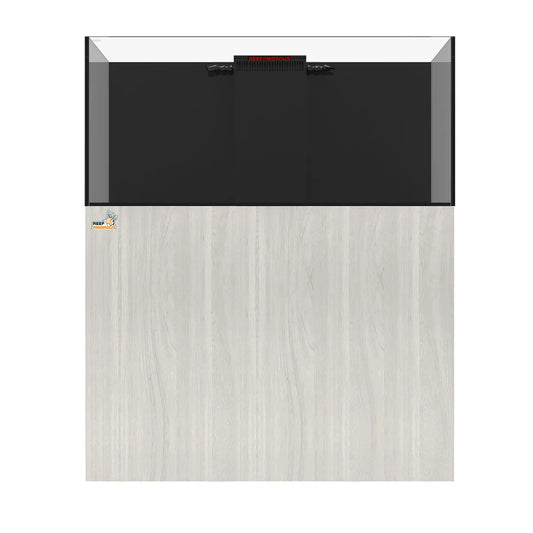
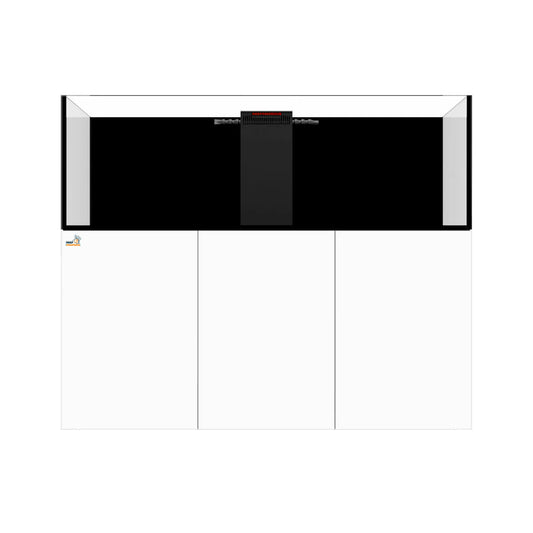
    Reef Pro Aquarium 530 L The most loved aquarium in the industry makes you fall in love again with aquatics. Utilizing the best in class features and size range. Acrylic Overflow Overflow boxes are constructed entirely of Acrylic with laser-etched weir teeth. Dual Adjustable Nozzle Features dual adjustable return nozzles for precise water agitation. Plumbing Our engineers have designed the REEF with a ready to assemble plumbing kit that provides easy installation without any gluing required. Self-Leveling Mat Includes a pre-seated, self-leveling foam mat, which keeps your aquarium level on uneven surfaces and reduces tension on the glass. Sump Filter Our REEF systems shine above the rest with our thoughtfully designed, sized and placed sump system. TECHNICAL SPECIFICATION MODEL Reef 530 Ultra-Clear™ Glass ✓ Glass Thickness 12 mm Black ِAcrylic Overflow ✓ Aquarium Aquarium Length 160 cm Aquarium Width 60 cm Aquarium Height 60 cm Aquarium Water Volume 360 L Sump Sump Length 100 cm Sump Width 50 cm Sump Height 40 cm Hose Connection 20mm Dual Directional Nozzle ✓ Leveling Mat Included ✓ Cabinet (Optional) CA160 Cabinet Height 90 cm

    Sold Out

    1,400.000 JD 1,200.000 JD

  • Sale -9% Reef Pro 270 Aquarium ( 90 cm ) Reef Pro 270 Aquarium ( 90 cm )

    ReefAmorous Reef Pro 270 Aquarium ( 90 cm )

    Sold Out

    Reef Pro Aquarium 270L The most loved aquarium in the industry makes you fall in love again with aquatics. Utilizing the best in class features and size range. Acrylic Overflow Overflow boxes are constructed entirely of Acrylic with laser-etched weir teeth. Dual Adjustable Nozzle Features dual adjustable return nozzles for precise water agitation. Plumbing Our engineers have designed the REEF with a ready to assemble plumbing kit that provides easy installation without any gluing required. Self-Leveling Mat Includes a pre-seated, self-leveling foam mat, which keeps your aquarium level on uneven surfaces and reduces tension on the glass. Sump Filter Our REEF systems shine above the rest with our thoughtfully designed, sized and placed sump system. TECHNICAL SPECIFICATION MODEL Reef 270 Ultra-Clear™ Glass ✓ Glass Thickness 12 mm Black ِAcrylic Overflow ✓ Aquarium Aquarium Length 90 cm Aquarium Width 60 cm Aquarium Height 55 cm Aquarium Water Volume 270 L Sump Sump Length 80 cm Sump Width 50 cm Sump Height 40 cm Hose Connection 20mm Dual Directional Nozzle ✓ Leveling Mat Included ✓ Cabinet (Optional) CA90 Cabinet Height 90 cm

    Sold Out

    600.000 JD 549.000 JD


You have seen 24 out of 32 products

Reefamorous

Reefamorous – Passion for the Reef Begins Here

Reefamorous is a dedicated brand in the marine aquarium and coral reef industry, focused on providing high-quality products that help hobbyists and professionals build and maintain healthy, stable reef systems.

We believe that a successful marine aquarium depends on reliable equipment and attention to detail, which is why we carefully select products that cover all essential reef-keeping needs.

Login

Forgot your password?

Don't have an account yet?
Create account