Marine Fish for Beginners

50 products

  • Orange Spotted Goby

    - Orange Spotted Goby

    Sold Out

    The Orange Spotted Goby, also known as the Spotted Prawn Goby or Orange Spotted Shrimp Goby, was first discovered in the Western Pacific in 1938. Its body is white with orange spots outlined in brown. It has the ability to form symbiotic partnerships with nearly blind alpheid shrimp. It provides a watchful eye while the shrimp digs a burrow for them to share. It is best suited for aquariums that are 10 gallons or larger which have adequate hiding places along with ample swimming space. The aquarium should have a tight-fitting lid to prevent it from jumping out. The Orange Spotted Goby adapts well to reef aquariums, although it does pose a possible threat to small, delicate ornamental shrimp. It prefers a bed of fine sand and loose coral rubble to sift through. It is possible for the Orange Spotted Goby to spawn successfully in an aquarium. Its diet should consist of a variety of fresh or frozen mysis shrimp, vitamin-enriched brine shrimp, and table shrimp. It should be fed at least twice per day.

    Sold Out

    10.000 JD

  • Orange Butterflyfish

    - Orange Butterflyfish

    Sold Out

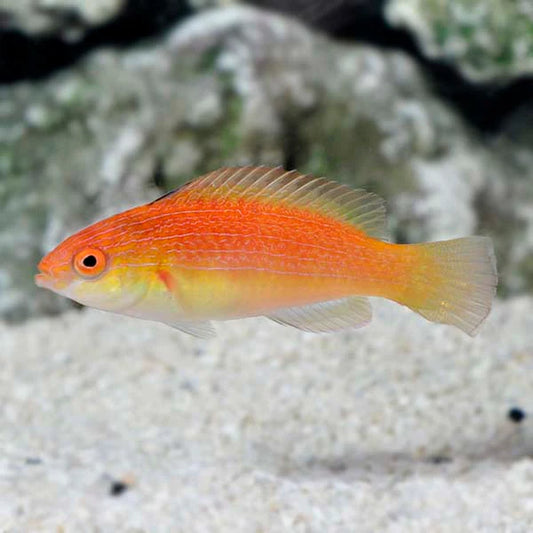
    The Orange Butterflyfish (Chaetodon kleinii), also known as Klein’s Butterflyfish, is a hardy and attractive marine fish featuring a warm orange to yellow body with subtle vertical markings. It is one of the more adaptable butterflyfish species, making it a popular choice for experienced reef aquarists. Native to the Indo-Pacific region, this fish is commonly found around coral reefs, lagoons, and rocky areas where it actively forages for food. Key Features: Attractive orange-yellow coloration One of the hardier butterflyfish species Active and elegant swimmer Suitable for experienced marine aquarists Feeding: Omnivorous with strong preference for meaty foods Feeds on sponges, algae, worms, and plankton in the wild Accepts frozen foods, mysis shrimp, brine shrimp, and marine pellets Requires varied diet for long-term health Care Requirements: Minimum tank size: 250L+ Stable, mature marine aquarium Plenty of live rock for grazing and shelter Sensitive to sudden water parameter changes Compatibility: Not Reef safe May nip at soft corals, LPS, and sessile invertebrates Better suited for fish-only or carefully selected reef systems Peaceful but can be opportunistic feeder Pro Tips: Best kept in well-established tanks only Feed multiple times daily for best health Avoid housing with delicate corals or small invertebrates Provide plenty of natural grazing surfaces

    Sold Out

    25.000 JD

  • Multicolor Lubbock's Fairy Wrasse

    - Multicolor Lubbock's Fairy Wrasse

    Sold Out

    The Multicolor Lubbock’s Fairy Wrasse (Cirrhilabrus lubbocki) is a stunning and highly sought-after marine fish known for its vibrant mix of colors that can include shades of pink, orange, purple, and blue. Males are especially striking and often display enhanced coloration during courtship or social interactions. Native to the Indo-Pacific region, this wrasse is commonly found in coral reef slopes and lagoon environments where it actively swims in the water column. Key Features: Brilliant multicolor body with shifting hues Peaceful and active swimmer Hardy for a fairy wrasse species Excellent addition to colorful reef tanks Feeding: Carnivorous species Feeds on zooplankton, mysis shrimp, brine shrimp, and frozen foods Accepts high-quality marine pellets Requires frequent small feedings Care Requirements: Minimum tank size: 150L+ Secure lid required (excellent jumper) Plenty of swimming space and live rock Best in peaceful, well-established reef aquariums Compatibility: Fully reef safe Safe with corals and invertebrates Peaceful toward most tank mates May be shy initially until acclimated Pro Tips: Keep in a calm community reef tank Feed multiple times daily for best coloration Can be kept in groups in larger systems (one male per group) Provide rock structures for resting and security

    Sold Out

    25.000 JD

  • McCosker's Flasher Wrasse

    - McCosker's Flasher Wrasse

    Sold Out

    The McCosker’s Flasher Wrasse (Paracheilinus mccoskeri) is one of the most visually impressive reef fish, famous for the male’s dramatic “flashing” displays where it rapidly shows off its bright red, orange, and blue coloration. This behavior is used for courtship and social interaction, making it a fascinating fish to observe. Native to the Indo-Pacific region, this wrasse is commonly found in reef slopes and lagoon environments, where it actively swims in the water column. Key Features: Stunning flashing color displays in males Peaceful and highly active swimmer One of the most popular flasher wrasses in the hobby Adds constant movement and color to reef tanks Feeding: Carnivorous species Feeds on zooplankton, mysis shrimp, brine shrimp, and frozen foods Accepts high-quality marine pellets Requires frequent small feedings Care Requirements: Minimum tank size: 120–150L+ Secure lid required (strong jumper) Open swimming space with live rock for shelter Best in peaceful, mature reef aquariums Compatibility: Fully reef safe Safe with corals and invertebrates Peaceful toward most tank mates May be shy at first until fully acclimated Pro Tips: Keep in calm community reef setups Feed small portions multiple times daily Can be kept in harems (1 male + females) in larger tanks Provide shaded resting areas among rockwork

    Sold Out

    20.000 JD

  • Longspine Cardinalfish

    - Longspine Cardinalfish

    Sold Out

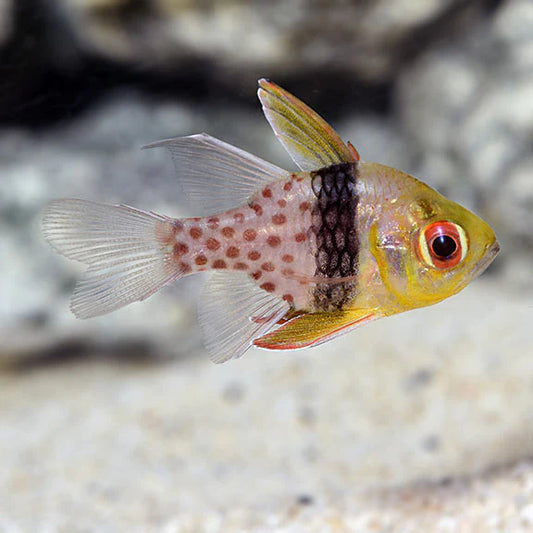
    The Longspine Cardinalfish (Zoramia leptacantha) is a peaceful and attractive marine fish known for its slender body, subtle silver coloration, and distinctive elongated spines. Its calm nature and schooling behavior make it an excellent addition to reef aquariums. Native to the Indo-Pacific region, this species is typically found in sheltered reef areas and lagoons, often swimming in loose groups among branching corals and sheltered rockwork. Key Features: Peaceful schooling marine fish Slim body with elegant long fin spines Excellent for community reef aquariums Hardy and beginner-friendly once established Feeding: Carnivorous species Feeds on zooplankton, mysis shrimp, brine shrimp, and frozen foods Accepts high-quality marine pellets Prefers small, frequent feedings Care Requirements: Minimum tank size: 100L+ Best kept in groups (schooling species) Provide caves, branching rock, or coral structures Stable, mature reef aquarium recommended Compatibility: Fully reef safe Safe with corals and invertebrates Very peaceful toward other tank mates Should not be kept alone (stressed if solitary) Pro Tips: Keep in groups of 5 or more for natural behavior Feed multiple small meals daily Provide low-stress environment with hiding areas Ideal for peaceful community reef setups

    Sold Out

    8.000 JD

  • Labout's Fairy Wrasse

    - Labout's Fairy Wrasse

    Sold Out

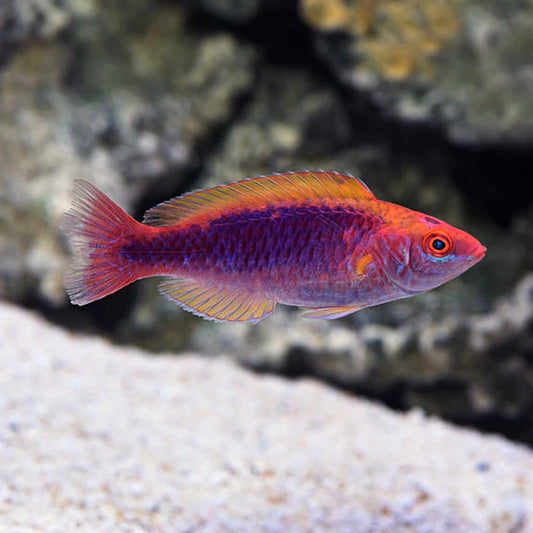
    The Labout’s Fairy Wrasse (Cirrhilabrus laboutei) is one of the most visually striking reef fish available, famous for its brilliant gradient coloration that transitions from deep blue and purple tones to bright orange and yellow. This species is highly prized in the marine aquarium hobby for its constant activity and vivid display. Native to the Indo-Pacific region, it inhabits coral reef slopes and lagoon environments, where it gracefully swims in the water column. Key Features: Stunning multicolor gradient (blue, purple, orange, yellow) Peaceful and highly active swimmer One of the most desirable fairy wrasses Excellent centerpiece fish for reef aquariums Feeding: Carnivorous species Feeds on zooplankton, mysis shrimp, brine shrimp, and frozen marine foods Accepts high-quality pellets Requires frequent small feedings Care Requirements: Minimum tank size: 150L+ Secure lid required (excellent jumper) Open swimming space with live rock Best in peaceful, stable reef systems Compatibility: Fully reef safe Safe with corals and invertebrates Peaceful toward most tank mates May be shy during initial acclimation Pro Tips: Keep in calm reef community tanks Feed multiple times daily for best coloration Can be kept in harems in larger aquariums (one male + females) Provide rockwork for resting and security

    Sold Out

    35.000 JD

  • Banggai Cardinalfish

    - Banggai Cardinalfish

    Sold Out

    The Banggai Cardinalfish (Pterapogon kauderni) is one of the most iconic and popular marine aquarium fish, known for its striking black vertical bands, silver body, and elongated fins. Its calm behavior and unique appearance make it a favorite among reef keepers. Native to the Banggai Islands in Indonesia, this species is often found in small groups among sea urchins, branching corals, and sheltered reef areas. Key Features: Distinctive black stripes with silver body Peaceful and slow-moving species Excellent for nano and reef aquariums Can be bred in captivity Feeding: Carnivorous species Feeds on mysis shrimp, brine shrimp, plankton, and frozen marine foods May require target feeding at first Accepts pellets once trained Care Requirements: Minimum tank size: 80–100L Best kept in pairs or small groups Provide rockwork, sea urchins, or shelter structures Stable, calm aquarium environment Compatibility: Fully reef safe Safe with corals and invertebrates Peaceful but may be outcompeted by aggressive fish Avoid fast or boisterous tank mates Pro Tips: Keep in bonded pairs or small groups for best behavior Provide multiple feeding stations in community tanks Ideal for peaceful reef aquariums One of the best beginner-friendly marine fish

    Sold Out

    8.000 JD

  • Hooded Fairy Wrasse Hooded Fairy Wrasse

    - Hooded Fairy Wrasse

    Sold Out

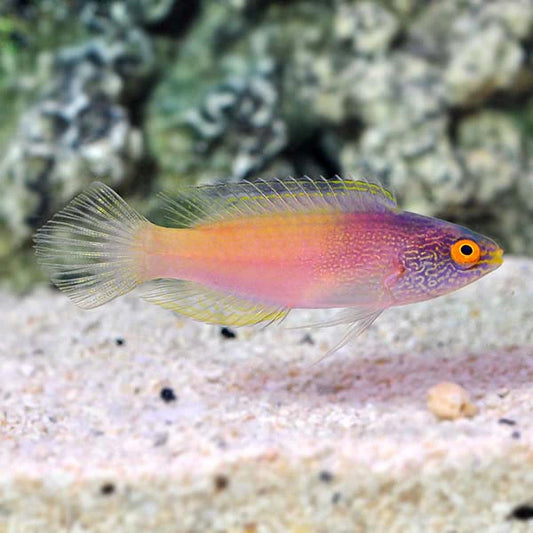
    Don't miss your chance to procure one of the newest and breathtaking additions to the aquarium hobby, the Hooded Fairy Wrasse. First described in 2003, Cirrhilabrus bathyphilus is currently one of the most highly sought after deep-water wrasse in its genus. Also recognized as the Coral Sea Wrasse, the Hooded Fairy Wrasse has a distinctive pattern of colors ranging from rose, pink, orange and yellow with purple-black edging on its dorsal and tail fins. The male and female of this species are very similarly colored, but when courting, the male will display increased color intensity. Colors may vary depending on the fish's mood. The Hooded Fairy Wrasse is a very peaceful, active fish that will bring both color and activity to a fish-only or reef aquarium of 70 gallons or larger. It will not bother any corals or invertebrates making them a perfect fish for the reef aquarium. A single male can be kept with a group of females that are introduced prior to or at the same time as the male. This wrasse likes to jump, so a tight-fitting canopy is recommended. When first introduced into the aquarium, live brine shrimp or frozen mysis should be used to entice this fish to eat. Meals should consist of a variety of enriched frozen brine shrimp, frozen mysis and other marine meats.

    Sold Out

    35.000 JD

  • Golden Rhomboidalis Wrasse Golden Rhomboidalis Wrasse

    - Golden Rhomboidalis Wrasse

    Sold Out

    The Golden Rhomboidalis Wrasse, also known as the Diamond-tail Fairy Wrasse, originates solely from the Marshall Islands. In nature, they occur close to the substrate within the sand and rubble zones of the reef. They are gold in color with a vibrant blue head. Their entire body is marked with a maze-like series of lines, and their tale is diamond in shape. This is one of the truly beautiful and unfortunately rare species in the industry. The Golden Rhomboidalis Wrasse will thrive in either a fish-only or reef aquarium of 90 gallons or larger. It needs a shaded area away from the bright lights. They will not bother corals or invertebrates, making them an ideal fish for the reef aquarium. These wrasse like to jump, so a tight fitting canopy is recommended. The Golden Rhomboidalis Wrasse diet should include vitamin enriched frozen mysis shrimp, vitamin enriched frozen brine shrimp, and other meaty foods along with a high quality marine flake and marine pellet food.

    Sold Out

    200.000 JD

  • Gold Stripe Maroon Clownfish

    - Gold Stripe Maroon Clownfish

    Sold Out

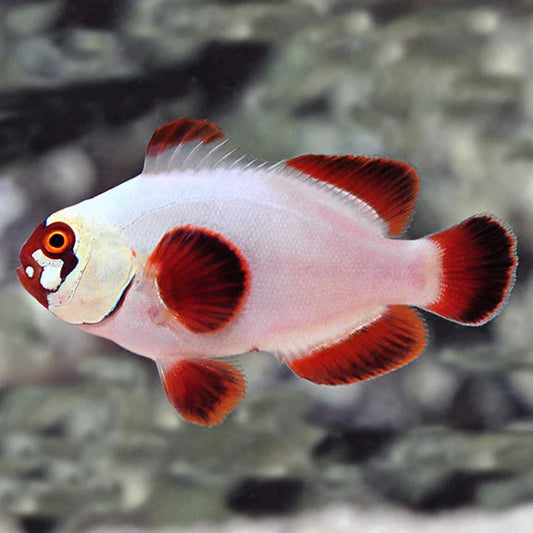
    This Gold Stripe Maroon Clownfish is a perfect addition to your reef aquarium. Normally, Maroon Clownfish vary in color from bright red to dark maroon, with three narrow white stripes. The broodstock was found in the area of Sumatra. The gold color of the stripes typically does not develop until the fish are about 9-12 months old. Fish are shipped at about 6-7 months, so they are showing the juvenile white stripes. They will develop the gold color in time, starting with the head stripe. These very popular fish are easy to keep in aquariums, although they do not get along with each other. Unless a hobbyist can get a mated pair, it is best to keep them one to a tank. It has been observed that the gold stripe variety seems a little less aggressive than the White Striped variety. This is one of the largest clownfish species; adult females can attain a size of over 6 inches.This is a very long-lived fish; we have had pairs that spawned for more than 35 years. The Gold Stripe Maroon Clownfish diet consists of almost any meaty food items and herbivore preparations. Do not move the Maroon Clownfish with a net as its cheek spines will become entangled. Use a specimen container if capture is necessary.

    Sold Out

    30.000 JD

  • Foxface Lo

    - Foxface Lo

    Sold Out

    The Foxface Lo, also known as the Foxface Rabbitfish, has a very unique body color. It has a mottled yellow-brown body with a dark chest. The face is very light in color and speckled on the lower half. They are a very hardy fish, and are great additions to the newly-established tank. It may reside in a 125 gallon or larger aquarium. It is a very peaceful species except when housed with other rabbitfish. The Foxface Lo may be housed with more aggressive fish. Its predators will tend to leave it alone because of its venomous dorsal spines. Rabbitfish are generally reef-safe if they are well fed. If not, it is possible for them to nip at and consume some species of LPS and soft corals. The Foxface Lo diet consists of a variety of fresh vegetables and undesirable species of algae. It does nip and possibly eat some soft and hard coral polyps.

    Sold Out

    45.000 JD

  • Clown Goby - Green

    - Clown Goby - Green

    Sold Out

    The Green Clown Goby, also known as the Earspot Coral Goby, is common within the reefs of the Indo Pacific, found usually among soft and hard coral colonies. They are a small stocky shaped fish with a very large head for their size. There are many different color variations, and this species is a yellow to greenish-tan color with orange vertical stripes on its head. They are a peaceful fish that makes a wonderful addition to a reef aquarium containing colonies of polyp corals, as they enjoy swimming and hiding amongst the polyps. However, they may nip at the polyps of SPS corals. It requires a 10 gallon or larger aquarium preferably with branching coral. It will rarely become aggressive towards other fish, but will fight with its own kind in smaller tanks. Therefore, it is best if it is kept with other docile species. It is common for clown gobies to spawn in an aquarium. Caution should be exercised if the aquarium contains Acropora sp. or similar SPS corals. They will lay their eggs on the underside of the coral's branch, which will cause tissue recession in that area of the coral. However, under good conditions, the coral will regenerate the lost tissue. The Green Clown Goby's diet should consist of a variety of brine shrimp, frozen mysis shrimp, table shrimp, and frozen food preparations for carnivores.

    Sold Out

    5.000 JD

  • Chalk Bass

    - Chalk Bass

    Sold Out

    The Chalk Bass, from the Caribbean, is one of the smaller bass within this family, and is a great fish for beginners. The body is orange in color with a purple mid-section. Electric blue vertical bands, which add to their appeal, accentuate these fish. A 30-gallon aquarium, with plenty of live rock for hiding, is ideal for the Chalk bass. They are not aggressive towards other fish, and multiple specimens can be added to the aquarium, as long as it is at the same time. They will not pick at corals or sessile invertebrates, and are a great fish for the reef aquarium. Larger specimens may attack small shrimps, especially those within the Periclimenes genus. An extremely hardy fish, the Chalk Bass requires a diet consisting of a variety of chopped meaty items, vitamin enriched brine and mysis shrimp and flake foods.

    Sold Out

    40.000 JD

  • Carpenter's Flasher Wrasse

    - Carpenter's Flasher Wrasse

    Sold Out

    The Carpenter's Flasher Wrasse, also known as the Carpenter's Wrasse, or Redfin Flasher Wrasse, is orange with blue vertical stripes as a juvenile. As the fish matures and becomes an adult, the coloration becomes yellow with a series of broken blue horizontal stripes. The dorsal fin features three elongated rays and is red in color accented with yellows and blues. The colors of the adult males intensify when in courtship, whereas the females coloration and overall appearance are more subdued. The females also do not feature the large dorsal and anal fins. The Carpenter's Flasher Wrasse requires a 55 gallon or larger aquarium with a tight-fitting lid since it is a jumper. A grouping is acceptable and often recommended, since the females will encourage the male to perform colorful displays. The females should be introduced into the tank first. It is often harassed by other fish so the Carpenter's Flasher Wrasse should be the first species introduced into the aquarium. It is best to keep it with peaceful tank mates. The Carpenter's Flasher Wrasse diet should include vitamin enriched frozen mysis shrimp, vitamin enriched frozen brine shrimp, and other meaty foods along with a high quality marine flake and marine pellet food.

    Sold Out

    25.000 JD

  • Mocha Storm Clownfish - Captive-Bred

    - Mocha Storm Clownfish - Captive-Bred

    Sold Out

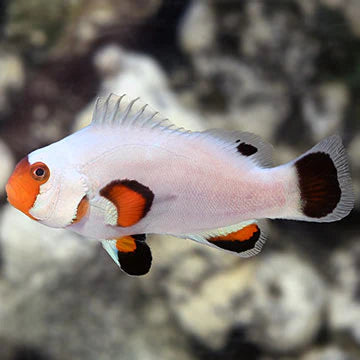
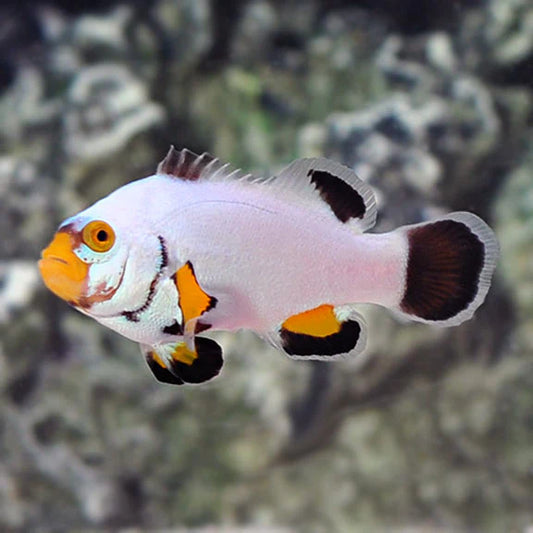
    The Captive-Bred Mocha Storm Ocellaris Clownfish is a distinct designer clownfish that derives its lineage from a mutation that appeared during the selective breeding process. The Captive-Bred Mocha Storm Ocellaris Clownfish demonstrates an exaggerated white body pattern with an almost entirely white face with black eyes. The random blotchy patterning of the Captive-Bred Mocha Storm Ocellaris Clownfish sports a lovely orange-brown coloration reminiscent of freshly-brewed sun tea or coffee that is beautifully highlighted by the milk-white coloration. The Mocha Storm Ocellaris Clownfish does best, housed in an aquarium of at least 20 gallons or larger with plenty of live rock. It may form a symbiotic relationship with the following species of anemones; Carpet (Stichodactyla sp.), Sebae (Heteractis crispa), Bulb (Entacmaea quadricolor), or Ritteri (Heteractis magnifica) Anemones. Though the Mocha Storm Ocellaris Clownfish does not require an anemone to thrive, if you choose to house an anemone, always be sure that your aquarium and lighting system will support the needs of the host anemone before incorporating one into the aquarium. Captive-Bred Clownfish like the Mocha Storm Ocellaris Clownfish have advantages over wild-harvested species. For one, Captive-Bred Clownfish are very hardy and more accustomed to conditions found in home aquariums. Hence, the Mocha Storm Ocellaris Clownfish makes a great choice for novices and seasoned aquarists alike. The Mocha Storm Ocellaris Clownfish can be kept with a variety of other captive-bred clownfish, if introduced into the aquarium at the same time. The Mocha Storm Ocellaris Clownfish, like several other captive-bred clownfish, can be bred in the home aquarium with relative ease and is one of the most common "starter" fish for saltwater breeders. The female will be the larger of the pair, and the two fish will usually stay close to each other in the aquarium. The Mocha Storm Ocellaris Clownfish is an egg layer and will typically deposit the eggs on a flat surface or within the proximity of the base of the host anemone and defend the eggs from other tank mates. The eggs will normally hatch in 6-11 days depending on the temperature. The fry must be reared in a separate aquarium on a diet of rotifers and eventually baby brine shrimp. The Mocha Storm Ocellaris Clownfish is an omnivore, requiring both meaty foods as well as some greens in their diet. A high-quality marine flake food, rich in spirulina algae, as well as freeze-dried and frozen foods are readily accepted.

    Sold Out

    55.000 JD

  • Mocha Ocellaris Clownfish - Captive-Bred

    - Mocha Ocellaris Clownfish - Captive-Bred

    Sold Out

    The Mocha Clownfish is very attractive clownfish with its dark orange coloration and contrasting white bands. The Mocha Clownfish makes a great addition to any aquarium at an affordable price point. This captive-bred clownfish grows to a maximum size of 3 inches in the aquarium, and may be kept singly or in groups. Captive-Bred Ocellaris Clownfish like the Mocha Clownfish have advantages over wild-harvested species. For one, Captive-Bred Ocellaris Clownfish are very hardy and more accustomed to conditions found in home aquariums. Thus, making Mocha Halloween Clownfish a great choice for novices and seasoned aquarists alike. The Mocha Clownfish can be kept with a variety of other captive-bred clownfish, if introduced into the aquarium at the same time. The Mocha Clownfish like many other captive-bred ocellaris clownfish are easy to breed in the home aquarium. The females will be the largest of the pair, and the two fish will usually stay close to each other in the aquarium. The Mocha Clownfish is an egg layer and will typically deposit the eggs on a flat surface, and defend the eggs from other tank mates. The eggs will normally hatch in 6-11 days depending on the temperature. The fry must be reared in a separate aquarium on a diet of rotifers and eventually baby brine shrimp. The captive-bred Mocha Clownfish is an omnivore, requiring both meaty foods as well as some herbivore fare in their diet. A high quality marine flake food, rich in spirulina algae, as well as freeze-dried and frozen foods are readily accepted.

    Sold Out

    25.000 JD

  • Lightning Maroon Clownfish - Captive-Bred

    - Lightning Maroon Clownfish - Captive-Bred

    Sold Out

    The Captive-Bred Lightning Maroon Clownfish have extraordinary one of a kind “Lightning bolt” like patterns, no two individuals look the same. As these fish mature their coloration and patterns will intensify, become darker and may change. Maroon clowns are well known for their intense coloration and oversized fins as well as their confident disposition. An adult sized Lightning Maroon with fully mature coloration is a remarkable centerpiece fish for any home aquarium. When pairing this species, it's typically best to have a dramatic difference in size between the individuals. Captive-bred clownfish are very hardy and durable fish making them a perfect addition for the novice or seasoned aquarist. The Lightning Maroon Clownfish is a good candidate for a reef aquarium. In general, Maroon Clownfish are the most territorial of all clownfish species. Maroon Clownfish are very sensitive to elevated levels of copper, and should never be exposed to levels near or above .15. Captive bred clownfish are easy to breed in the home aquarium. The females will be the largest of the pair, and two fish will usually stay close to each other in the aquarium. These fish are egg layers and will deposit the eggs on a flat surface, and defend the eggs from other tank mates. The eggs will normally hatch in 8-11 days depending on the temperature. The fry must be reared in a separate aquarium on a diet of rotifers then baby brine shrimp. The Lightning Maroon Clownfish diet consists of meaty items such as frozen shrimp and herbivore preparations. Do not move the Maroon Clownfish with a net as its cheek spines will become entangled. Use a specimen container if capture is necessary. The Lightning Maroon Clownfish diet consists of almost any meaty food items and herbivore preparations.

    Sold Out

    45.000 JD

  • Black Ice Clownfish - Captive-Bred

    - Black Ice Clownfish - Captive-Bred

    Sold Out

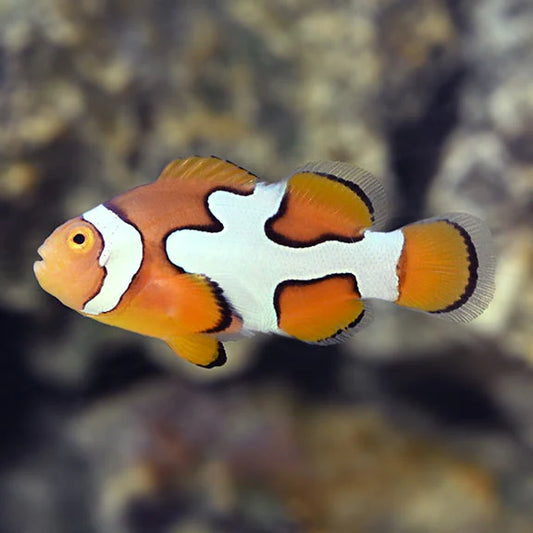
    The Captive-Bred Black Ice Clownfish is a cross between a Black Ocellaris and a Snowflake. These beautiful fish were the preliminary results of efforts to produce a Black Ocellaris with Snowflake patterns. This first generation still exhibits the yellow orange coloration of the normal Snowflake - however, it has ultra-intense black markings around the irregular white bars. This member of the Pomacentridae family is an excellent addition to almost any saltwater aquarium system. captive-bred-fish have a unique advantage over wild-harvested species, as they are very hardy and more accustomed to conditions found in home aquariums. Therefore, it makes a great choice for novices and seasoned aquarists alike. The Captive-Bred Black Ice Clownfish is easy to breed in the home aquarium. The females will be the largest of the pair and the two fish will usually stay close to each other in the aquarium. Clownfish are egg layers and will deposit the eggs on a flat surface and defend the eggs from other tank mates. The eggs will normally hatch in 8-11 days depending on the water temperature. The fry must be reared in a separate aquarium on a diet of rotifers followed by baby brine shrimp.

    Sold Out

    55.000 JD

  • Green Reef Chromis

    - Green Reef Chromis

    In Stock

    The Blue Green Reef Chromis is easy to care for, beautiful, and peaceful. In fact, Chromis viridis is one of the preferred marine reef fish amongst aquarists, regardless of their experience level. This member of the Pomacentridae family is most recognizable by its gorgeous light blue dorsal side that slowly fades into a majestic pale green belly. The Blue Green Reef Chromis is desirable not only for its beauty, but also for its peaceful demeanor (despite its designation as a true damselfish) and ability to be kept with almost all other community fish, invertebrates, and corals. Native to reefs ranging from mid-depth to shallow lagoons of the Indo-Pacific and South Pacific, wild specimens prefer to school in large shoals amongst branching corals like Acropora. In the home aquarium, the Blue Green Reef Chromis does best in similar environments and will actively swim at all levels of the aquarium water column. In fact, a small school of Blue Green Reef Chromis comprised of at least six individuals adds a dazzling and dramatic shimmer of beauty to almost any well-established reef system. Overall, the Blue Green Reef Chromis is very hardy and can live between 8 to 15 years in aquariums with excellent water quality. For best care, feed several times throughout the day with a varied diet of meaty foods, herbivore flakes, and frozen preparations. Vitamin-enriched foods may also help to preserve body colorations. Some aquarists have successfully bred the Blue Green Reef Chromis in the home aquarium. Interestingly, the body color of mature males, ready to nest, changes to a muted yellow color. However, breeding success requires perfect water parameters in only the largest of non-predatory aquarium systems.

    In Stock

    4.000 JD

  • Blue Sapphire Damselfish

    - Blue Sapphire Damselfish

    Sold Out

    The Blue Sapphire Damselfish originates from Indonesia, and is a brilliant blue coloration with black outlined fins. This species can quickly turn completely black when stressed which allows them to evade predators. Like many of the other damselfish within the Chrysiptera genus, it can become aggressive towards slower moving tank mates. Be sure the aquarium has plenty of live rock for territories and hiding. The Blue Sapphire Damselfish is hardy and is a good fish for beginners. They also make an ideal companion fish for a saltwater aquarium of over 30 gallons, and are safe with corals and invertebrates. As the fish matures it may become aggressive, causing problems with the selection of other species of fish added to the aquarium. If keeping with other damselfish, provide plenty of live rock with multiple hiding places to break up territories and decrease aggression. The Blue Sapphire Damselfish's diet should consist of quality flake foods, frozen meaty foods such as brine or mysis shrimp and occasionally dried seaweed offered on a feeding clip.

    Sold Out

    5.000 JD

  • Blue Damselfish

    - Blue Damselfish

    In Stock

    The Blue Damselfish is probably the best selling marine fish in the United States. Beginning hobbyists relish its hardiness and small size, while advanced aquarists praise the color and activity this member of the Pomacentridae family brings to the aquarium. Female Blue Damselfish are completely blue. Males, on the other hand, have an orange tail and are commonly called the Orangetail Blue Damselfish or Blue Devil Damselfish. Native to reefs across the Indo-Pacific, Chrysiptera cyanea is usually busy defending a small territory. Interestingly, the Blue Damselfish has the ability to hide in a hole or crevice and darken to an almost black color. This usually happens when it is threatened. After the perceived threat is gone, the Blue Damselfish will return to its electric blue color in a matter of seconds. The Blue Damselfish is somewhat aggressive, so its housing should be large enough to easily accommodate multiple specimens. It is a good fish for beginners and makes an ideal companion fish for saltwater aquariums of over 30 gallons. The Blue Damselfish is also a great choice for reef aquariums with invertebrates. As the Blue Damselfish matures, it may demonstrate pronounced territorial behavior towards future additions to the aquarium. If keeping the Blue Damselfish with other damselfish, provide multiple hiding places to break up territories and decrease aggression The diet of the Blue Damselfish should consist of flaked and frozen foods, and herbivore preparations.

    In Stock

    10.000 JD

  • Blue and Gold Damselfish

    - Blue and Gold Damselfish

    Sold Out

    The Blue and Gold Damselfish is two-tone in color with electric blue primarily on the top portion and bright yellow on the bottom and posterior portion. There is a considerable species variation in the amount of yellow on the body of the fish. A favorite of reef hobbyists, the Blue and Gold Damsel requires a 30 gallon or larger aquarium with numerous hiding places. It can be confrontational towards its tank mates. The diet should consist of a variety of meaty foods, herbivore preparations, and flaked foods.

    Sold Out

    6.000 JD

  • Black Cap Basslet

    - Black Cap Basslet

    Sold Out

    An excellent choice for a reef aquarium, the Black Cap Basslet is a threat to only the smallest invertebrates such as Copepods, Isopods, or Amphipods. Provide at least a 30 gallon tank with rock caves to hide in. Black Cap Basslets can become territorial once established, so they should not be kept with other basslets. Because they tend to be deep-water dwellers, they do better in an aquarium with slightly subdued lighting. Black Cap Basslets will do well on a diet of meaty foods including marine fish, crustacean flesh, mysis shrimp, and quality frozen preparations.

    Sold Out

    100.000 JD

  • Black & White Chromis

    - Black & White Chromis

    In Stock

    The Black & White Chromis range from the Christmas Island and northwestern Australia to the French Polynesian and Line Islands. These fishes are primarily black with the caudal peduncle and caudal fin being white. These fish are one of the more peaceful of all the damselfish species, and make a hardy addition to both reef and fish only aquariums. This species does well alone in small aquariums of at least 30 gallons or more. When trying to maintain a group of these fishes it is ideal to ensure they have adequate space in an aquarium at least four feet in length. The Black & White Chromis feeds on a varied diet of meaty foods such as enriched frozen brine and small mysis shrimp, herbivore preparations, and marine flaked foods.

    In Stock

    6.000 JD


You have seen 48 out of 50 products

Marine fish for beginners are species that are hardy, easy to care for, and well-suited to new saltwater aquariums. These fish are more tolerant of minor fluctuations in water conditions, making them ideal for hobbyists starting their reef aquarium journey.

At Reefamorous, we offer a selection of beginner-friendly marine fish that are known for their resilience, peaceful nature, and adaptability to aquarium life. These fish are perfect for building confidence while learning the basics of marine aquarium care.

Popular beginner marine fish include clownfish, damselfish, firefish, gobies, and blennies. These species are generally easy to feed, adapt quickly to prepared foods, and are less aggressive compared to more advanced species.

Beginner fish provide several advantages, including ease of care, higher survival rates, and compatibility with a wide range of tank setups. They are also a great choice for establishing a stable biological system in a new aquarium.

When choosing marine fish for beginners, consider tank size, compatibility between species, and avoid overstocking. Starting with a small number of fish allows the aquarium to stabilize and reduces stress on the system.

Basic care requirements include maintaining stable salinity between 1.023 and 1.026, monitoring water parameters regularly, providing a balanced diet, and performing routine water changes.

Login

Forgot your password?

Don't have an account yet?
Create account