Marine Inverts

30 products

  • Peppermint Shrimp

    - Peppermint Shrimp

    In Stock

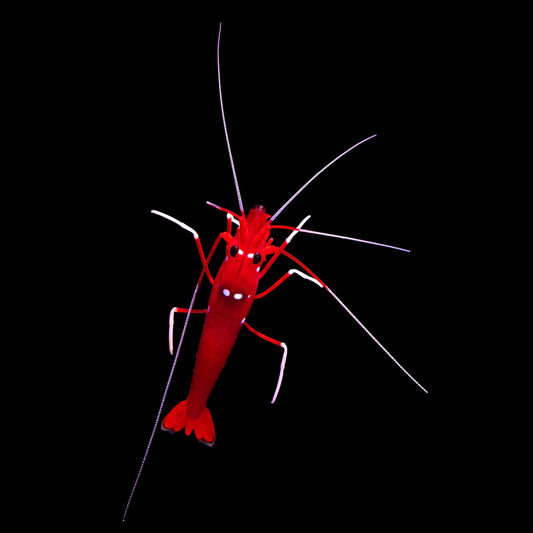
    The Peppermint Shrimp is best known for its natural ability to manage nuisance Aiptasia, or glass anemones. Keep in mind that some individual Peppermint Shrimp are better at managing aiptasia while others may not be interested in aiptasia at all. Though considered part of the "cleaner" grouping of shrimp, Lysmata wurdemanni is more of a scavenger. The Peppermint Shrimp picks its way around your aquarium and live rock to consume detritus, uneaten food, and decomposing organic material. This ornamental member of the Hippolytidae family is brightly colored with a clear or creamy white body striped with several thin and distinct longitudinal red bands. Also known as the Veined or Caribbean Cleaner Shrimp, the Peppermint Shrimp is sometimes confused with its Pacific cousin, Rhynchocinetes durbanensis. However, that shrimp has a pointed nose and inter-spaced white stripes over its body. In the wild, Peppermint Shrimp are usually found in the vertical shafts of the reef. Some even take up residence in the core of pipe sponges. The Peppermint Shrimp does best in home aquariums with live rock, ample places to hide, as well as open areas to scavenge. Peppermint Shrimp are very social and peaceful towards most reef inhabitants. Like other invertebrates, the Peppermint Shrimp cannot tolerate copper-based medications or high nitrate levels. It also requires supplemental iodine to encourage proper molting of its carapace. In addition to what it obtains from scavenging, the diet of the Peppermint Shrimp should consist of most types of prepared foods and the occasional pieces of fresh fish. The Peppermint Shrimp has been successfully bred by commercial fish farms, and can be bred in the home aquarium. Rearing the larvae requires specialized feeds and care outside of the display aquarium. The Western Atlantic Peppermint Shrimp complex Lysmata wurdemanni has been reclassified in 2006 by Andrew L. Rhyne and Junda Lin based on their morphology and color pattern. In general, peppermint shrimp from different regions can easily be identified to species level by their color patterns. Our peppermint shrimp are from either the Florida Keys or the Gulf of Mexico and are most often Lysmata boggessi, a species proven to consume Aiptaisa (Rhyne et al. 2004). We occasionally receive other species from the Lysmata wurdemanni complex. We have consulted with Dr. Rhyne and he has confirmed that all species of peppermint shrimp he has tested in the laboratory consume Aiptasia. Differences in exact collection location often dictates what species we have in stock. The exact species that will be shipped to your door is one of the following listed below. The exact species you receive will vary based on the time of year, weather conditions, freight space, and inventory levels. All of the following species make ideal scavengers and prey on the pest anemone Aiptasia pallida.

    In Stock

    25.000 JD

  • Red Tip Hermit Crab Red Tip Hermit Crab

    - Red Tip Hermit Crab

    In Stock

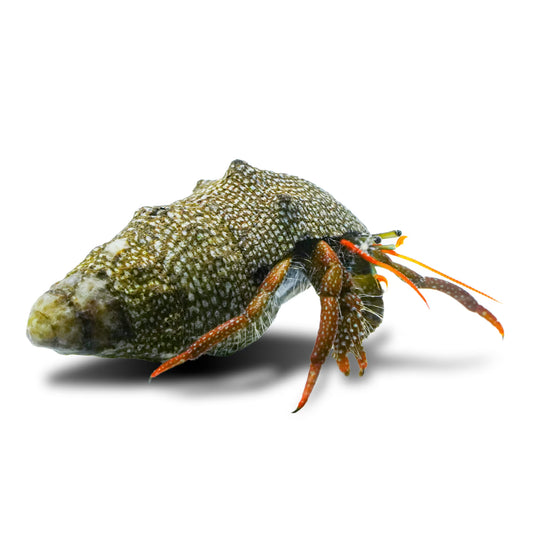
    The Dwarf Red Tip Hermit Crab is a highly active and efficient scavenger, making it an excellent addition to any marine or reef aquarium cleanup crew. Closely related to the Blue Leg Hermit Crab, this small omnivore constantly explores live rock and sand beds, reaching tight spaces to consume algae, detritus, and leftover food. Also known as the Red Tip Hermit Crab, this species is easily recognized by its bright red legs and face. It belongs to a group often called “equal-handed hermit crabs,” as both claws are similar in size and function. Native to the coastal waters of Mexico, this hardy invertebrate thrives in well-established reef or fish-only systems with sandy substrates, where it actively forages and helps maintain a clean and balanced environment. Benefits in the Aquarium: Excellent algae and detritus cleaner Helps aerate and stir the sand bed Supports beneficial bacterial growth Reaches tight spaces other cleanup crew cannot Habitat & Care: The Red Tip Hermit Crab lives in empty snail shells of various sizes, so it is important to provide extra empty shells to support its growth and natural behavior. It should be kept in a mature aquarium with stable conditions and plenty of live rock and algae for grazing. If natural food sources are limited, dried seaweed or algae-based foods can be offered as a supplement. Important Care Notes: Acclimate slowly to avoid pH shock Keep only in copper-free systems Avoid predatory tank mates Ensure a stable, reef-safe environment

    In Stock

    3.000 JD

  • Blue Leg Hermit Crab in Jordan

    - Blue Leg Hermit Crab

    In Stock

    The Blue Leg Hermit Crab is one of the most popular and effective members of any reef aquarium clean-up crew. Known for its striking blue legs and active behavior, this small hermit crab plays an important role in maintaining a clean and balanced marine environment. Blue Leg Hermit Crabs are excellent scavengers that feed on algae, uneaten food, and detritus, helping reduce waste buildup and prevent nuisance algae growth. They are reef-safe and suitable for most marine aquariums, including nano and large reef systems. Key Benefits Controls algae growth in reef tanks Consumes leftover food and waste Reef-safe with corals and most tank mates Active and interesting behavior Care Requirements Tank Type: Marine / Reef Aquarium Temperament: Peaceful (may fight for shells) Diet: Algae, detritus, leftover food Minimum Tank Size: 10 gallons Special Note: Provide extra empty shells to prevent aggression In Jordan, reef hobbyists commonly add Blue Leg Hermit Crabs as part of a balanced clean-up crew to maintain water quality and reduce manual cleaning. At ReefAmorous, we offer healthy Blue Leg Hermit Crabs with guidance on acclimation and care to ensure success in your reef aquarium.

    In Stock

    3.000 JD

  • New Ultra Rock Flower Anemone

    - Ultra Rock Flower Anemone

    Sold Out

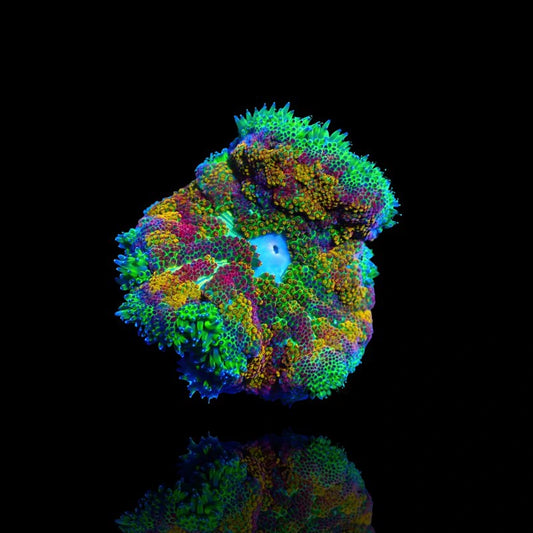
    The Rock Flower Anemone, also known as the Rock Anemone, is a member of the Phymanthidae family. Originating from the Caribbean, these anemones are found in a wide array of colors, with the oral disc often being a different color than the rest of the anemone. The oral disc lacks tentacles, and the tentacles are often beaded in appearance. The Flower Anemone can live singly or in groups. They prefer to live on shaded, vertical rock walls, or within the substrate. They will bury most of their body in the sand, with only the oral disc and tentacles showing. These are fairly hardy anemones that will adapt to a wide variety of lighting conditions. These anemones tend not to wander about the aquarium and are a great addition to a reef aquarium. The Flower Anemone is a carnivore and requires meaty foods to survive. Offer mussels and freshly chopped fish meat, as well as high quality frozen foods. Adding iodine and trace elements to the aquarium will help the Flower Anemone thrive.

    Sold Out

    90.000 JD

  • New Premium Rock Flower Anemone

    - Premium Rock Flower Anemone

    Sold Out

    The Rock Flower Anemone, also known as the Rock Anemone, is a member of the Phymanthidae family. Originating from the Caribbean, these anemones are found in a wide array of colors, with the oral disc often being a different color than the rest of the anemone. The oral disc lacks tentacles, and the tentacles are often beaded in appearance. The Flower Anemone can live singly or in groups. They prefer to live on shaded, vertical rock walls, or within the substrate. They will bury most of their body in the sand, with only the oral disc and tentacles showing. These are fairly hardy anemones that will adapt to a wide variety of lighting conditions. These anemones tend not to wander about the aquarium and are a great addition to a reef aquarium. The Flower Anemone is a carnivore and requires meaty foods to survive. Offer mussels and freshly chopped fish meat, as well as high quality frozen foods. Adding iodine and trace elements to the aquarium will help the Flower Anemone thrive.

    Sold Out

    75.000 JD

  • New Green Rock Flower Anemone

    - Green Rock Flower Anemone

    Sold Out

    The Rock Flower Anemone, also known as the Rock Anemone, is a member of the Phymanthidae family. Originating from the Caribbean, these anemones are found in a wide array of colors, with the oral disc often being a different color than the rest of the anemone. The oral disc lacks tentacles, and the tentacles are often beaded in appearance. The Flower Anemone can live singly or in groups. They prefer to live on shaded, vertical rock walls, or within the substrate. They will bury most of their body in the sand, with only the oral disc and tentacles showing. These are fairly hardy anemones that will adapt to a wide variety of lighting conditions. These anemones tend not to wander about the aquarium and are a great addition to a reef aquarium. The Flower Anemone is a carnivore and requires meaty foods to survive. Offer mussels and freshly chopped fish meat, as well as high quality frozen foods. Adding iodine and trace elements to the aquarium will help the Flower Anemone thrive.

    Sold Out

    55.000 JD

  • New Metallic Green Haddon's Carpet Anemone

    - Metallic Green Haddon's Carpet Anemone

    Sold Out

    The Haddon's Carpet Anemone lives singly, in the shallow waters of the Indo Pacific and Red Sea. Found outside of the reef it resides in soft muddy or sandy substrate and can attain a size of up to 3 feet in diameter. This colorful Anemone is also referred to as Haddon’s Anemone, Saddle Anemone, Saddle Carpet Anemone, or Saddleback Anemone. Haddon's Carpet Anemone have short, blunt tentacles with a very potent sting, and can be distinguished from their close relatives Stichodactyla gigantea and Stichodactyla mertensii by the lack of any coloration, spots or markings on the underside of the anemone and down its column. This anemone serves as a "host" for many types of Clownfish in the wild including: Amphiprion clarkii, A. sebae, A. akindynos, A. chrysogaster, A. chrysopterus, and A. polymnus. In the home aquarium, they can also serve as host for Amphiprion ocellaris, A. percula, and A. allardi. The Haddon's Carpet Anemone requires a tank with strong lighting and good water movement. The aquarium should have a variety of sandy and rocky locations as this animal oftentimes can move about and seek refuge in a place it prefers. This species of Haddon's Carpet Anemone prefers to bury its foot into the sandy bottom, and will oftentimes attach itself to the bottom of the aquarium glass, where its column is completely buried in the sand for protection. When first introducing this anemone into the display, it is best to try and dig out an area of the sand bed where you prefer it will reside, while decreasing the flow rate during this time so that its not blown around the display. Doing so will allow the anemone time to settle in and bury its foot completely into the sand bed. Once in place, carefully move some sandy substrate around the column and increase the flow rate back to the normal output. The Haddon's Carpet Anemone has a very potent sting and may harm corals and other anemones as it moves about the aquarium. It is not compatible with other anemones within a 12" diameter, so monitor it when it is first introduced into the tank. This species of Carpet Anemone can eat fish in the display aquarium so use caution when housing a Carpet Anemone in with fish other than clownfish. When healthy, this anemone is very sticky to the touch, and when they grasp something (or someone), it is very difficult to convince it to let go without damaging the animal. It is also one of the few anemones that can cause a severe reaction in humans, so keeping one requires care in handling. Although one of the easiest “Carpet Anemones” to care for this animal is still challenging, and is best left to the seasoned veteran aquarists. For proper care, a fully established aquarium, with perfect water chemistry, adequate flow and strong illumination, along with weekly or even daily feeding is needed. Ideal foods consist of chunks of fresh fish, uncooked shrimp, and other meaty marine foods.

    Sold Out

    75.000 JD

  • New Blue Haddon's Carpet Anemone

    - Blue Haddon's Carpet Anemone

    Sold Out

    The Haddon's Carpet Anemone lives singly, in the shallow waters of the Indo Pacific and Red Sea. Found outside of the reef it resides in soft muddy or sandy substrate and can attain a size of up to 3 feet in diameter. This colorful Anemone is also referred to as Haddon’s Anemone, Saddle Anemone, Saddle Carpet Anemone, or Saddleback Anemone. Haddon's Carpet Anemone have short, blunt tentacles with a very potent sting, and can be distinguished from their close relatives Stichodactyla gigantea and Stichodactyla mertensii by the lack of any coloration, spots or markings on the underside of the anemone and down its column. This anemone serves as a "host" for many types of Clownfish in the wild including: Amphiprion clarkii, A. sebae, A. akindynos, A. chrysogaster, A. chrysopterus, and A. polymnus. In the home aquarium, they can also serve as host for Amphiprion ocellaris, A. percula, and A. allardi. The Haddon's Carpet Anemone requires a tank with strong lighting and good water movement. The aquarium should have a variety of sandy and rocky locations as this animal oftentimes can move about and seek refuge in a place it prefers. This species of Carpet Anemone prefers to bury its foot into the sandy bottom, and will oftentimes attach itself to the bottom of the aquarium glass, where its column is completely buried in the sand for protection. When first introducing this anemone into the display, it is best to try and dig out an area of the sand bed where you prefer it will reside, while decreasing the flow rate during this time so that its not blown around the display. Doing so will allow the anemone time to settle in and bury its foot completely into the sand bed. Once in place, carefully move some sandy substrate around the column and increase the flow rate back to the normal output. The Haddon's Carpet Anemone has a very potent sting and may harm corals and other anemones as it moves about the aquarium. It is not compatible with other anemones within a 12" diameter, so monitor it when it is first introduced into the tank. This species of Carpet Anemone can eat fish in the display aquarium so use caution when housing a Carpet Anemone in with fish other than clownfish. When healthy, this anemone is very sticky to the touch, and when they grasp something (or someone), it is very difficult to convince it to let go without damaging the animal. It is also one of the few anemones that can cause a severe reaction in humans, so keeping one requires care in handling. Although one of the easiest “Carpet Anemones” to care for this animal is still challenging, and is best left to the seasoned veteran aquarists. For proper care, a fully established aquarium, with perfect water chemistry, adequate flow and strong illumination, along with weekly or even daily feeding is needed. Ideal foods consist of chunks of fresh fish, uncooked shrimp, and other meaty marine foods.

    Sold Out

    100.000 JD

  • New Rainbow Red Haddon's Carpet Anemone

    - Rainbow Red Haddon's Carpet Anemone

    Sold Out

    The Haddon's Carpet Anemone lives singly, in the shallow waters of the Indo Pacific and Red Sea. Found outside of the reef it resides in soft muddy or sandy substrate and can attain a size of up to 3 feet in diameter. This colorful Anemone is also referred to as Haddon’s Anemone, Saddle Anemone, Saddle Carpet Anemone, or Saddleback Anemone. Haddon's Carpet Anemone have short, blunt tentacles with a very potent sting, and can be distinguished from their close relatives Stichodactyla gigantea and Stichodactyla mertensii by the lack of any coloration, spots or markings on the underside of the anemone and down its column. This anemone serves as a "host" for many types of Clownfish in the wild including: Amphiprion clarkii, A. sebae, A. akindynos, A. chrysogaster, A. chrysopterus, and A. polymnus. In the home aquarium, they can also serve as host for Amphiprion ocellaris, A. percula, and A. allardi. The Haddon's Carpet Anemone requires a tank with strong lighting and good water movement. The aquarium should have a variety of sandy and rocky locations as this animal oftentimes can move about and seek refuge in a place it prefers. This species of Haddon's Carpet Anemone prefers to bury its foot into the sandy bottom, and will oftentimes attach itself to the bottom of the aquarium glass, where its column is completely buried in the sand for protection. When first introducing this anemone into the display, it is best to try and dig out an area of the sand bed where you prefer it will reside, while decreasing the flow rate during this time so that its not blown around the display. Doing so will allow the anemone time to settle in and bury its foot completely into the sand bed. Once in place, carefully move some sandy substrate around the column and increase the flow rate back to the normal output. The Haddon's Carpet Anemone has a very potent sting and may harm corals and other anemones as it moves about the aquarium. It is not compatible with other anemones within a 12" diameter, so monitor it when it is first introduced into the tank. This species of Carpet Anemone can eat fish in the display aquarium so use caution when housing a Carpet Anemone in with fish other than clownfish. When healthy, this anemone is very sticky to the touch, and when they grasp something (or someone), it is very difficult to convince it to let go without damaging the animal. It is also one of the few anemones that can cause a severe reaction in humans, so keeping one requires care in handling. Although one of the easiest “Carpet Anemones” to care for this animal is still challenging, and is best left to the seasoned veteran aquarists. For proper care, a fully established aquarium, with perfect water chemistry, adequate flow and strong illumination, along with weekly or even daily feeding is needed. Ideal foods consist of chunks of fresh fish, uncooked shrimp, and other meaty marine foods.

    Sold Out

    200.000 JD

  • New Red Haddon's Carpet Anemone

    - Red Haddon's Carpet Anemone

    Sold Out

    The Haddon's Carpet Anemone lives singly, in the shallow waters of the Indo Pacific and Red Sea. Found outside of the reef it resides in soft muddy or sandy substrate and can attain a size of up to 3 feet in diameter. This colorful Anemone is also referred to as Haddon’s Anemone, Saddle Anemone, Saddle Carpet Anemone, or Saddleback Anemone. Haddon's Carpet Anemone have short, blunt tentacles with a very potent sting, and can be distinguished from their close relatives Stichodactyla gigantea and Stichodactyla mertensii by the lack of any coloration, spots or markings on the underside of the anemone and down its column. This anemone serves as a "host" for many types of Clownfish in the wild including: Amphiprion clarkii, A. sebae, A. akindynos, A. chrysogaster, A. chrysopterus, and A. polymnus. In the home aquarium, they can also serve as host for Amphiprion ocellaris, A. percula, and A. allardi. The Haddon's Carpet Anemone requires a tank with strong lighting and good water movement. The aquarium should have a variety of sandy and rocky locations as this animal oftentimes can move about and seek refuge in a place it prefers. This species of Haddon's Carpet Anemone prefers to bury its foot into the sandy bottom, and will oftentimes attach itself to the bottom of the aquarium glass, where its column is completely buried in the sand for protection. When first introducing this anemone into the display, it is best to try and dig out an area of the sand bed where you prefer it will reside, while decreasing the flow rate during this time so that its not blown around the display. Doing so will allow the anemone time to settle in and bury its foot completely into the sand bed. Once in place, carefully move some sandy substrate around the column and increase the flow rate back to the normal output. The Haddon's Carpet Anemone has a very potent sting and may harm corals and other anemones as it moves about the aquarium. It is not compatible with other anemones within a 12" diameter, so monitor it when it is first introduced into the tank. This species of Carpet Anemone can eat fish in the display aquarium so use caution when housing a Carpet Anemone in with fish other than clownfish. When healthy, this anemone is very sticky to the touch, and when they grasp something (or someone), it is very difficult to convince it to let go without damaging the animal. It is also one of the few anemones that can cause a severe reaction in humans, so keeping one requires care in handling. Although one of the easiest “Carpet Anemones” to care for this animal is still challenging, and is best left to the seasoned veteran aquarists. For proper care, a fully established aquarium, with perfect water chemistry, adequate flow and strong illumination, along with weekly or even daily feeding is needed. Ideal foods consist of chunks of fresh fish, uncooked shrimp, and other meaty marine foods.

    Sold Out

    150.000 JD

  • New Green Haddon's Carpet Anemone

    - Green Haddon's Carpet Anemone

    Sold Out

    The Haddon's Carpet Anemone lives singly, in the shallow waters of the Indo Pacific and Red Sea. Found outside of the reef it resides in soft muddy or sandy substrate and can attain a size of up to 3 feet in diameter. This colorful Anemone is also referred to as Haddon’s Anemone, Saddle Anemone, Saddle Carpet Anemone, or Saddleback Anemone. Haddon's Carpet Anemone have short, blunt tentacles with a very potent sting, and can be distinguished from their close relatives Stichodactyla gigantea and Stichodactyla mertensii by the lack of any coloration, spots or markings on the underside of the anemone and down its column. This anemone serves as a "host" for many types of Clownfish in the wild including: Amphiprion clarkii, A. sebae, A. akindynos, A. chrysogaster, A. chrysopterus, and A. polymnus. In the home aquarium, they can also serve as host for Amphiprion ocellaris, A. percula, and A. allardi. The Haddon's Carpet Anemone requires a tank with strong lighting and good water movement. The aquarium should have a variety of sandy and rocky locations as this animal oftentimes can move about and seek refuge in a place it prefers. This species of Haddon's Carpet Anemone prefers to bury its foot into the sandy bottom, and will oftentimes attach itself to the bottom of the aquarium glass, where its column is completely buried in the sand for protection. When first introducing this anemone into the display, it is best to try and dig out an area of the sand bed where you prefer it will reside, while decreasing the flow rate during this time so that its not blown around the display. Doing so will allow the anemone time to settle in and bury its foot completely into the sand bed. Once in place, carefully move some sandy substrate around the column and increase the flow rate back to the normal output. The Haddon's Carpet Anemone has a very potent sting and may harm corals and other anemones as it moves about the aquarium. It is not compatible with other anemones within a 12" diameter, so monitor it when it is first introduced into the tank. This species of Carpet Anemone can eat fish in the display aquarium so use caution when housing a Carpet Anemone in with fish other than clownfish. When healthy, this anemone is very sticky to the touch, and when they grasp something (or someone), it is very difficult to convince it to let go without damaging the animal. It is also one of the few anemones that can cause a severe reaction in humans, so keeping one requires care in handling. Although one of the easiest “Carpet Anemones” to care for this animal is still challenging, and is best left to the seasoned veteran aquarists. For proper care, a fully established aquarium, with perfect water chemistry, adequate flow and strong illumination, along with weekly or even daily feeding is needed. Ideal foods consist of chunks of fresh fish, uncooked shrimp, and other meaty marine foods.

    Sold Out

    55.000 JD

  • New Green Bubble Tip Anemone

    - Green Bubble Tip Anemone

    Sold Out

    The Bubble Tip Anemone is one of the most beautiful ornamental anemones for the home reef. When housed beneath intense aquarium lighting, Entacmaea quadricolor develops a unique bulb tip at the end of its tentacles. When hungry, this member of the Actiniidae family will stretch its sweeper tentacles to grab food from the water column. After feeding, the tentacles then shorten again and take on their bulbous appearance. Though often referred to as the Four-Colored Anemone, coloration can vary greatly from one individual to the next. Red variations may be referred to as Rose Anemones. Generally, Bubble Tip Anemones from Fiji and Tonga are shaded in soft browns, tans, or maroon, though an occasional green specimen is found. By contrast, the Bulb Anemones from Sri Lanka are typically green in color with a deep maroon base. The Bubble Tip Anemone is found in oceans around the world. The Bulb Anemone attaches its pedal disc deep within dead coral amongst rubble or on solid, living reefs. In the home aquarium, the Bubble Tip Anemone requires similar habitat and positioned amongst deeply creviced live rock or branchy corals placed in sandy substrate. Most Bulb Anemones prefer to find their own place to settle and may move about your aquarium until a suitable location is found. For best care, the Bubble Tip Anemone requires strong lighting in aquariums of at least 30 gallons. Under ideal conditions, it can grow up to 1-ft in diameter. However, most typically remain compact in size when kept under bright lighting. If the lighting is insufficient, the Bubble Tip Anemone will expand its body to make the most of the available light. It should be kept with a Clownfish for best care. At times, the tentacles of the Bubble Tip Anemone may appear stringy; this may be due to insufficient light or the need for food. Its diet should include chopped fish, shrimp, or worms if a clownfish is not present. Handle this invertebrate, and all Anemones, with care. The Bubble Tip Anemone can sting other anemones and corals that infringe on its territory.

    Sold Out

    50.000 JD

  • New Grade B Rose Bubble Tip Anemone

    - Grade B Rose Bubble Tip Anemone

    Sold Out

    The Grade B Rose Bubble Tip Anemone is an exceptional color variety of the Bubble Tip Anemone also known as the Four-colored, Bulb Tentacle, Bulb Tip, or Bubble Tip Anemone. The Grade B Rose Bubble Tip Anemone sports an eye-catching combination of red, pink, and green coloration that gives it a fuller, "3-dimensional" appearance sure to make an impressive presentation in your marine aquarium landscape. As its name implies the Grade B Rose Bubble Tip Anemone possesses tentacles with enlarged, bubble-like tips that provides additional visual interest to this colorful anemone. In the wild, Bubble Tip Anemones are typically found in coral rubble, or in solid reefs with their pedal disc attached deep within these rocky structures. When hungry, the Bubble Tip Anemone stretches its tentacles to increase its chances of capturing a meal. When satiated and content, the tentacles shorten and return to its bulbous shape. For best care, the Grade B Rose Bubble Tip Anemone should be housed in a large, established aquarium system with high water quality achieved through strong filtration and efficient protein skimming. Employ powerheads or wavemakers to provide moderate or medium water movement. An aquarium of at least 30 gallons in size is essential as the Grade B Rose Bubble Tip Anemone can grow up to 12" across in diameter. Consider a larger, more spacious system if you are planning to house the Grade B Rose Bubble Tip Anemone with fish or in a mixed reef system. The Grade B Rose Bubble Tip Anemone hosts photosynthetic, symbiotic zooxanthellae algae within its body. Therefore, moderate to high lighting conditions achieved by T-5 fluorescent, powerful LED, or more intense metal halide light fixtures is a must to maintain continued health, bright coloration and its bulbous tips. Under intense lighting conditions, the Grade B Rose Bubble Tip Anemone will typically remain compact, maintaining its bulbous tips. However, if the lighting is insufficient, the Grade B Rose Bubble Tip Anemone will expand its entire body, stretching out to make the most of the available light. At times, the tentacles may appear stringy; this may be due to insufficient light or the need for food. Use gloves and handle this invertebrate, and all Anemones, with care. They can sting other anemones, as well as corals. The diet of the Grade B Rose Bubble Tip Anemone should include chopped fish, shrimp, worms or other meaty items.

    Sold Out

    75.000 JD

  • New Grade A Rose Bubble Tip Anemone

    - Grade A Rose Bubble Tip Anemone

    Sold Out

    The Grade B Rose Bubble Tip Anemone is an exceptional color variety of the Bubble Tip Anemone also known as the Four-colored, Bulb Tentacle, Bulb Tip, or Bubble Tip Anemone. The Grade B Rose Bubble Tip Anemone sports an eye-catching combination of red, pink, and green coloration that gives it a fuller, "3-dimensional" appearance sure to make an impressive presentation in your marine aquarium landscape. As its name implies the Grade B Rose Bubble Tip Anemone possesses tentacles with enlarged, bubble-like tips that provides additional visual interest to this colorful anemone. In the wild, Bubble Tip Anemones are typically found in coral rubble, or in solid reefs with their pedal disc attached deep within these rocky structures. When hungry, the Bubble Tip Anemone stretches its tentacles to increase its chances of capturing a meal. When satiated and content, the tentacles shorten and return to its bulbous shape. For best care, the Grade B Rose Bubble Tip Anemone should be housed in a large, established aquarium system with high water quality achieved through strong filtration and efficient protein skimming. Employ powerheads or wavemakers to provide moderate or medium water movement. An aquarium of at least 30 gallons in size is essential as the Grade B Rose Bubble Tip Anemone can grow up to 12" across in diameter. Consider a larger, more spacious system if you are planning to house the Grade B Rose Bubble Tip Anemone with fish or in a mixed reef system. The Grade B Rose Bubble Tip Anemone hosts photosynthetic, symbiotic zooxanthellae algae within its body. Therefore, moderate to high lighting conditions achieved by T-5 fluorescent, powerful LED, or more intense metal halide light fixtures is a must to maintain continued health, bright coloration and its bulbous tips. Under intense lighting conditions, the Grade B Rose Bubble Tip Anemone will typically remain compact, maintaining its bulbous tips. However, if the lighting is insufficient, the Grade B Rose Bubble Tip Anemone will expand its entire body, stretching out to make the most of the available light. At times, the tentacles may appear stringy; this may be due to insufficient light or the need for food. Use gloves and handle this invertebrate, and all Anemones, with care. They can sting other anemones, as well as corals. The diet of the Grade B Rose Bubble Tip Anemone should include chopped fish, shrimp, worms or other meaty items.

    Sold Out

    90.000 JD

  • Spiny Star Astraea

    - Spiny Star Astraea

    In Stock

    The Spiny Star Astraea Snail has a unique shell and a ravenous appetite for algae. Unlike many bottom dwellers that are dressed in drab colors to better camouflage themselves against the sand bottoms, Astraea phoebia boasts a pyramid-shape shell with beautiful, green, yellow, and tan coloration. The Spiny Star Astraea boasts pronounced projections on their shells creating a sculptured spiral star shape that is sure to dazzle the eye. Though interesting to observe in your home aquarium, the Spiny Star Astraea Snail serves a greater function of cleaning algae-covered live rock. It is very adept at keeping your aquarium clean. In fact, this small herbivore prefers to feed on nuisance hair algae, as well as cyanobacteria and diatoms. Some aquarists also report that the Spiny Star Astraea Snail actually consumes the entire hair algae structure, which helps prevent immediate further algae growth. The Spiny Star Astraea prefers established aquariums with ample hiding places and sufficient room to roam. In addition to eating algae off of your live rock, this member of the Astraeinae family will also clean your aquarium glass. However, the Spiny Star Astraea Snail is not known to be a climber like other smaller-shelled snail species. Care needs to be taken to observe the daily activities of this hungry snail since it has difficulty righting itself if it falls or is knocked upside down. Like other invertebrates, the Spiny Star Astraea Snail is sensitive to high nitrate levels and will not tolerate copper-based medications. The Spiny Star Astraea Snail requires a gradual acclimation period, preferably the drip acclimation method (often over two hours), since it cannot tolerate even minute changes in water parameters. If sufficient food levels are not present, supplement the diet with blanched spinach or lettuce and vegetable-based tablet foods.

    In Stock

    3.000 JD

  • Sexy Anemone Shrimp

    - Sexy Anemone Shrimp

    Sold Out

    The Sexy Anemone Shrimp is named for its unusual body movements. When walking, Thor amboinensis sways its abdomen back and forth with exotic flair. In addition to this fascinating behavior, the Sexy Anemone Shrimp is also uniquely dressed in a reddish brown body dotted with brilliant white spots. These characteristics make the Sexy Anemone Shrimps an enchanting aquarium addition. Native to the reefs of the Indo-Pacific, this member of the Hippolytidae family is usually found amongst the tentacles of an anemone. In the home aquarium, however, the Sexy Anemone Shrimp is often found perched on a coral frag or outcropping of live rock. Most are equally fearless as they are beautiful and will scavenge in any area of the aquarium in search of meaty foods. For best care, the Sexy Anemone Shrimp should be kept in small groups and fed a varied diet of plankton and flaked, frozen, and meaty foods. It is peaceful towards members of its own species and other tankmates. The Sexy Anemone Shrimp should not be housed in aquariums with predatory fish that might attack these small shrimp. Interestingly, the Sexy Anemone Shrimp is a relatively fast grower and will molt about once a month. However, most Sexy Anemone Shrimp will grow only to a maximum size of around 1-1/2". Although very hardy, it requires a slow acclimation process to avoid any salinity and/or pH shock. Like other invertebrates, the Sexy Anemone Shrimp cannot tolerate high nitrate or copper levels. To promote proper molting, sufficient iodine levels must be maintained.

    Sold Out

    25.000 JD

  • Sand Sifting Sea Star

    - Sand Sifting Sea Star

    In Stock

    The Sand Sifting Sea Star, at first glance, seems to be drably colored like most bottom dwellers. But closer inspection reveals a striking beauty and serenity to the alternating bands of brown and beige that dress this invertebrate's thick, spine-covered arms. Like other starfish, Astropecten polycanthus efficiently consumes mass amounts of detritus and uneaten foods. This nocturnally active member of the Astropectinidae family can move large amounts of sand as it burrows into the substrate in its search for food. This peaceful omnivore will effectively clean even the largest home aquarium of detritus and left over food. Like other starfish, the Sand Sifting Sea Star will also consume small invertebrates, including shrimp, urchins, mollusks, bivalves, or other small sea stars. As such, the Sand Sifting Sea Star should be actively fed a varied diet consisting of natural food sources, especially in well-established marine aquariums. Otherwise, this voracious feeder will quickly clean your aquarium of detritus and then burrow into your substrate, starve, and eventually begin to decay. To foster its feeding habits, the Sand Sifting Sea Star should be kept in aquariums with large, deep sand bottoms of several inches in depth. Since it is slower moving than most fish, the Sand Sifting Sea Star should not be housed with natural predators, including Puffers. Like other invertebrates, the Sand Sifting Sea Star is very intolerant of sudden changes in oxygen levels, salinity, and pH and cannot tolerate copper-based medications. To successfully acclimate new specimens to your aquarium, use the drip acclimation method and never expose the Sand Sifting Sea Star to air while handling. Breeding in the home aquarium is extremely difficult with no distinguishing characteristics to help differentiate between males and females.

    In Stock

    10.000 JD

  • Tiger Cowrie

    - Tiger Cowrie

    Sold Out

    The Tiger Cowrie has an egg-shaped, spotted, glossy shell and is in high demand for the rock aquarium. It differs in color depending upon geographical location. While it does not have an operculum to shut when it retracts its mantle into its shell, the opening is lined with "threatening" tooth-like structures. Normally, the mantle will completely cover its shell unless it feels threatened. This helps it keep its lustrous white and brown mottled coloration, while its mantle will appear like a fingerprint of black and gray, with many short papillae over the surface. In the wild, it can be found under rocks or resting on soft corals during the day, foraging for food mostly at night. The Tiger Cowrie prefers a rock aquarium with hiding places. While small, it will eat some algae and scavenge for scraps, but as an adult, it will eat some anemones, sponges, and soft corals, and is best housed with starfish, sea urchins, and tubeworms in the reef aquarium. Do not house it with Condylactis sp. It needs low nitrate levels and will not tolerate copper-based medications. The diet of a large Tiger Cowrie should be supplemented with pieces of fish and mussel.

    Sold Out

    10.000 JD

  • Clown Mantis Shrimp

    - Clown Mantis Shrimp

    Sold Out

    The Clown Mantis Shrimp, also referred to as the Peacock Mantis Shrimp, is included in the Smashing Mantis Shrimp group. They are very interesting shrimp that resemble the praying mantis insect. They have large colorful eyes that are either blue or green rimmed and their bodies exhibit many bright colors. The main part of the body is green with red outlines on the shell. These are extremely aggressive shrimp that should be housed alone in a species aquarium. The Clown Mantis Shrimp should be housed in an aquarium that is devoted to this species. Only one shrimp should be kept in the aquarium. They have very quick claws that they use to break the shell of crustaceans and crabs. They should not be housed with fish or other invertebrates, unless they are very large, and caution should still be exercised. A sandy bottom with plenty of rubble and at least one piece of live rock should be provided for these shrimp to create a cave. The diet of a Clown Mantis Shrimp should include live feeder fish, crabs and frozen meaty foods such as fish, scallop and shrimp.

    Sold Out

    35.000 JD

  • Camel Shrimp

    - Camel Shrimp

    Sold Out

    The Camel Shrimp is also known as the Hinge-beak Shrimp, Dancing Shrimp, or Candy Shrimp. It is distinguished by a moveable rostrum (beak) that is usually angled upwards. The Camel Shrimp has a variable pattern of red and white stripes on its body. The males of its species tend to have larger chelipeds (claws) than the females. It prefers to congregate with other shrimp of its kind in rock crevasses, under overhangs, or in the coral rubble. It especially needs hiding places when it is molting. It usually tolerates other shrimp, but may nip at colonial anemones, disc anemones, and soft leather corals. It generally leaves bubble coral and stinging anemones alone. The Camel Shrimp will accept brine shrimp, frozen or freeze-dried plankton, and flaked food.

    Sold Out

    20.000 JD

  • Bumble Bee Snail

    - Bumble Bee Snail

    In Stock

    The tiny Bumble Bee Snail benefits most marine reef aquariums in big ways. Heralded for their small size and beautiful coloration, Pusiostoma mendicaria can get into small crevices and tight locations between rockwork. Here, they clean away detritus, including uneaten meaty foods and decomposing organisms. This tiny member of the Buccinidae family also burrows into your sand bed, consumes sand-dwelling worms, and helps aerate your substrate. Plus, with its striking black shell, striped in elegant white to yellow bands, the Bumble Bee Snail is indeed beautiful to observe. For best care, offer ample hiding places with large areas to roam. The Bumble Bee Snail prefers to consume foods off of live rock and deep sand beds where it can forage for food undisturbed. Like other invertebrates, the Bumble Bee Snail is sensitive to copper-based medications, high nitrate levels, and even the slightest fluctuation in water parameters. Though peaceful, keep in mind that the Bumble Bee Snail is a carnivore. If there is insufficient food, the Bumble Bee Snail may feed on other snails in your aquarium or indiscriminately consume polychaetes whether beneficial or the more troublesome bristleworm. In well-established systems, most Bumble Bee Snails do not require supplemental feeding. However, if sufficient food sources are unavailable, supplement their diet with offerings of meaty foods, including finely chopped brine or mysis shrimp and frozen meaty foods. The Bumble Bee Snail is extremely difficult to breed in the aquarium, partly because there are no distinguishing characteristics between Bumble Bee Snail sexes.

    In Stock

    1.500 JD

  • Yellow Banded Coral Shrimp

    - Yellow Banded Coral Shrimp

    Sold Out

    The Yellow Banded Coral Shrimp, also known as the Caribbean Boxing Shrimp, has a yellow body and legs, while the chelae and abdomen have red and sometimes white and red bands. Members of the Stenopodidae are called "Boxing Shrimp" because of the large pinchers on their third set of legs. They often hold these pinchers erect, giving the appearance of a boxer ready to fight. Sufficient room should be provided in the tank to allow the Yellow Banded Coral Shrimp to move with its long antennae. The Yellow Banded Coral Shrimp must be kept singly, or as a true mated pair, being intolerant of others of the same species. It may also harass other smaller shrimp of different species. It is relatively hardy, but must be acclimated slowly to avoid any salinity and/or pH shock. It is intolerant of high nitrates or copper levels, but iodine levels in the water must be correct to promote proper molting. Breeding the Yellow Banded Coral Shrimp is usually not successful. Larvae are generally destroyed by filtration and skimming. In the wild, the Yellow Banded Coral Shrimp feeds on parasites, dead tissue removed from fish, and other tiny organisms. In the home aquarium, it will accept most flaked and frozen foods, plankton, and meaty items. Banded Coral Shrimp are also effective bristleworm hunters in the reef aquarium, helping to keep the population of these pests under control.

    Sold Out

    20.000 JD

  • Gold Banded Coral Shrimp

    - Gold Banded Coral Shrimp

    Sold Out

    The Gold Banded Coral Shrimp has a yellow body, white chelae, and a red and white banded abdomen. Members of the Stenopodidae family are called "Boxing Shrimp" because of their large pinchers on their third set of legs. They often hold these pinchers erect, giving the appearance of a boxer ready to fight. Sufficient room should be provided in the tank to allow the Gold Banded Coral Shrimp to move without its long antennae touching neighboring corals or anemones. The Gold Banded Coral Shrimp must be kept singly, or as a true mated pair, being intolerant of others of the same species. It may also harass other smaller shrimp of different species. It is relatively hardy, but must be acclimated slowly using the Drip Method to avoid any salinity and/or pH shock. It is intolerant of high nitrates or copper levels, but iodine levels in the water must be correct to promote proper molting. Breeding the Gold Banded Coral Shrimp is usually not successful. Larvae are generally destroyed by filtration and skimming. In the wild, the Gold Banded Coral Shrimp feeds on parasites, dead tissue removed from fish, and other tiny organisms. In the home aquarium, it will accept most flaked and frozen foods, plankton, and meaty items. Banded Coral Shrimp are also effective bristleworm hunters in the reef aquarium, helping to keep the population of these pests under control.

    Sold Out

    25.000 JD

  • Blue Banded Coral Shrimp

    - Blue Banded Coral Shrimp

    Sold Out

    The Blue Banded Coral Shrimp, also known as the Blue Coral or Blue Boxing Shrimp, has a blue body, while the chelae and abdomen have red and sometimes white and red bands. These shrimp are ideal for any size invertebrate or reef aquarium, and will perform a cleaning function picking parasites and dead tissue from fish. Banded Coral Shrimp are also effective bristleworm hunters in the reef aquarium, helping to keep the population of these pests under control. The Blue Banded Coral Shrimp should be kept singly in smaller aquariums. It is relatively hardy, but must be acclimated slowly to avoid any salinity and/or pH shock. It is intolerant of high nitrates or copper levels, and iodine levels in the water must be correct to promote proper molting. Breeding the Blue Banded Coral Shrimp is usually not successful. Larvae are generally destroyed by filtration and skimming. In the wild, the Blue Banded Coral Shrimp feeds on parasites, dead tissue removed from fish, and other tiny organisms. In the home aquarium, it will accept most flaked and frozen foods, plankton, and meaty items.

    Sold Out

    25.000 JD


You have seen 24 out of 30 products

Marine invertebrates are an essential part of any saltwater aquarium, especially reef tanks. These organisms include shrimp, crabs, snails, starfish, and other reef-safe species that contribute to the health, cleanliness, and balance of your aquarium.

At Reefamorous, we offer a wide selection of marine invertebrates suitable for reef aquariums, including clean-up crew species that help control algae, detritus, and waste buildup.

Popular marine invertebrates include cleaner shrimp, peppermint shrimp, hermit crabs, turbo snails, nassarius snails, and starfish. Each plays a unique role in maintaining a healthy aquarium ecosystem.

Marine invertebrates provide several benefits, including natural algae control, removal of leftover food and organic waste, improved water quality, and added diversity and movement in the tank.

These inverts are especially important in reef tanks where maintaining stable and clean conditions is critical for coral health.

When selecting marine invertebrates, consider compatibility with fish and corals, tank size, and specific roles such as algae control or sand cleaning. Some species are more sensitive and require stable water conditions.

To ensure their health, maintain stable salinity between 1.023 and 1.026, avoid sudden parameter changes, and provide a suitable environment with proper hiding places and substrate where needed.

Login

Forgot your password?

Don't have an account yet?
Create account