Marine Fish

200 products

  • Sale -20% Ocellaris Clownfish - Captive-Bred

    - Ocellaris Clownfish - Captive-Bred

    1 review

    In Stock

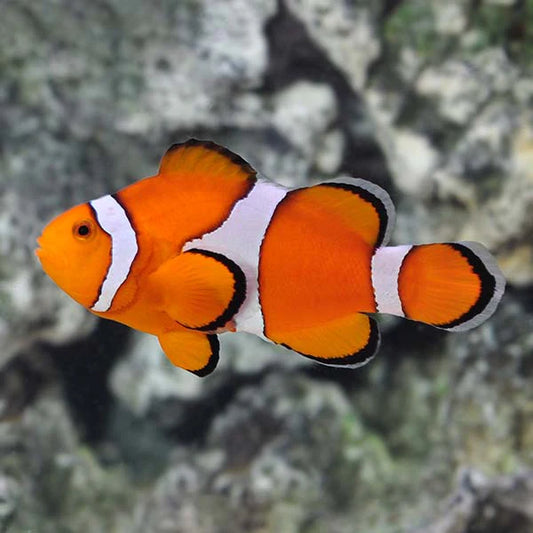
    The Ocellaris Clownfish may be one of the aquarium industry's most popular marine fish. Its beautiful orange body dressed with white bands outlined in black instantly distinguishes the Ocellaris Clownfish. The Ocellaris Misbar have broken bars or bars that do not connect around the entire body. The Extreme Misbars have very few bars and could be only on one side of the fish's body.   The Ocellaris Clownfish has other unique advantages over wild-harvested species. For one, the Ocellaris Clownfish is very hardy and more accustomed to conditions found in home aquariums. Therefore, it makes a great choice for novices and seasoned aquarists alike. Ocellaris Clownfish can also be kept with a variety of other clownfish, if introduced into the aquarium at the same time. The Ocellaris Clownfish is also easy to breed in the home aquarium. The females will be the largest of the pair and the two fish will usually stay close to each other in the aquarium. The Ocellaris Clownfish is an egg layer and will deposit the eggs on a flat surface and defend the eggs from other tankmates. The eggs will normally hatch in 6-11 days depending on the water temperature. The fry must be reared in a separate aquarium on a diet of rotifers followed by baby brine shrimp. This Clownfish is an aggressive eater. It will accept most meaty foods and frozen herbivore preparations. 

    In Stock

    10.000 JD 8.000 JD

  • New Yellowtail Black Blenny

    - Yellowtail Black Blenny

    Sold Out

    The Yellowtail Black Blenny, also known as the Flametail Blenny, is striking in appearance with its bold blocks of black and yellow coloration. At first glance, this handsome blenny can be easily misidentified as the popular and similarly colored Bicolor Blenny (Ecsenius bicolor). Upon closer inspection, the observant hobbyist will notice evident differences in appearance and behavior. The Yellowtail Black Blenny is more elegant in appearance with “softer” features with a rounded head as opposed the blunted, blockier shaped head of the Bicolor Blenny. Also, the Yellowtail Black Blenny lacks the antennae-like cirri found between the higher set eyes of the Bicolor Blenny. However, the most distinct difference between these two fish is the shape of the caudal (tail) fin. The Yellowtail Black Blenny has a rounded caudal fin while the Bicolor Blenny sports a more angular, truncate fin. The Yellowtail Black Blenny requires a 30-gallon or larger aquarium with ample rockwork to thrive. It will occupy most of its time amid crevices and rocks on the bottom of its environment, occasionally darting onto higher rockwork for perching and foraging. The Yellowtail Black exhibits great personality and is normally peaceful towards other tank members, but have been known to pick at other blennies, smaller gobies, dartfish and other similar shaped fish. The Yellowtail Black Blenny should be fed a well balance diet of carnivorous foods along with a selection of foods designed for herbivores.

    Sold Out

    10.000 JD

  • New Yellow Eye Combtooth Blenny

    - Yellow Eye Combtooth Blenny

    Sold Out

    The Yellow Eye Combtooth Blenny belongs to a group of popular marine fish instantly recognizable for their personality and comical expression. Though the Yellow Eye Combtooth Blenny is available infrequently in the aquarium trade, it is sure to win the heart of any hobbyist with its expressive eyes and unique coloration. True to its namesake, the Yellow Eye Combtooth Blenny features a distinct yellow ring around its very large eyes and sports cryptic coloration to disrupt its form. The counter shading follows neatly along its lateral line where the dorsal half is a deeper sienna brown coloration while the ventral half is a much lighter flesh tone. Shades of blue including an electric blue band beneath its eyes create a mask-like effect to further help conceal it from would be predators. The Yellow Eye Combtooth Blenny needs a tank of at least 10 gallons with plenty of scattered live rock for perching and hiding. The Yellow Eye Combtooth Blenny is generally peaceful, but may become territorial towards others within the same genus. Blennies normally make a good addition to reef aquariums, but use caution in smaller set ups, or with smaller fleshy corals, as some individuals have been known to pick at the mantles of clams, and at fleshy large polyp stony corals when underfed. The diet of the Yellow Eye Combtooth Blenny should include vegetable matter, including frozen and dried foods containing marine and blue-green algae. It will also feed on (and help control) algae growing in the aquarium.

    Sold Out

    15.000 JD

  • New Two Spot Bimaculatus Blenny

    - Two Spot Bimaculatus Blenny

    Sold Out

    The Two Spot Bimaculatus Blenny originates within the reefs surrounding Cebu. They are a small blenny with very large eyes, and small mouth giving these fish a very comical look. A black band covers the top half of the eyes and body aiding them in blending into their surroundings. They receive their name from the two prominent black spots on their stomach area. The Two Spot Bimaculatus Blennies are a great addition to any reef or peaceful fish only aquarium, large or small. Generally found amid crevices and rocks on the bottom of its environment, the Two Spot Bimaculatus Blenny needs a tank of at least 10 gallons with plenty of live rock for grazing and hiding. They should not be housed with aggressive species that may intimidate these fish into hiding. They are generally peaceful towards con specifics and may be added to the aquarium in numbers at the same time The diet of the Two Spot Bimaculatus Blenny should include vegetable matter, including frozen and dried foods containing marine and blue-green algae. It will also feed on (and help control) algae growing in the aquarium.

    Sold Out

    10.000 JD

  • New Tail Spot Blenny

    - Tail Spot Blenny

    Sold Out

    The Tail Spot Blenny's defining feature is the dark spot at the base of its tail. A black and yellow band runs below each eye, aiding them in blending into their surroundings. They are a smaller blenny with very large eyes, and small mouth giving these fish a very comical look. Generally found amid crevices and rocks on the bottom of its environment, the Tail Spot Blenny needs a tank of at least 10 gallons with plenty of live rock for grazing, perching and hiding. They should not be housed with aggressive species that may intimidate these fish into hiding. The diet of the Tail Spot Blenny should include vegetable matter, including frozen and dried foods containing marine and blue-green algae. It will also feed on (and help control) algae growing in the aquarium.

    Sold Out

    15.000 JD

  • New Striped Blenny

    - Striped Blenny

    Sold Out

    The Striped Blenny is also referred to as Gammistes Blenny, Striped Fang Blenny, or Striped Poison-Fang Blenny. It has alternating black and yellow stripes that run the entire length of the body. It tends to do well in an aquarium if housed in a 30 gallon or larger aquarium with live rock. The live rock provides places to hunt and feed on small crustaceans as well as places to hide. It is not usually aggressive unless the tank mates appear to have a similar shape as it does. Its fangs are more of a defense mechanism used for biting an aggressive fish back. The Striped Blenny diet consists of chopped crustaceans, vitamin-enriched brine shrimp, and frozen food preparations for herbivores.

    Sold Out

    15.000 JD

  • New Starry Blenny

    - Starry Blenny

    Sold Out

    The Starry Blenny is also referred to as Snowflake Blenny. Its body is a mottled dark brown with white dots and its pectoral and tail fins are yellow. A well-established 30 gallon or larger aquarium with multiple swimming levels and plenty of rock is a suitable environment. It is not usually aggressive unless the tank mates appear to have a similar shape as it does. It is best to house singly unless kept in a larger tank and the two are a mated pair. It tends to perch and hop from rock to rock looking for microalgae to graze on. The Starry Blenny does best in well-established aquariums with large amounts of natural algae to feed on. The diet can be supplemented with vegetable matter, Spirulina, and herbivore preparations.

    Sold Out

    15.000 JD

  • New Smith's Blenny

    - Smith's Blenny

    Sold Out

    The Smith's Blenny is also referred to as White's Blenny, Smith's Blenny, White Blenny or Disco Blenny. Its body is mostly blue with a black stripe which starts at the chin and runs through the eyes and down the dorsal fin. It tends to do well in an aquarium if provided with live rock in a 10 gallon or larger aquarium. The live rock provides places to hunt and feed on small crustaceans as well as places to hide. It is not usually aggressive unless the tank mates appear to have a similar shape as it does. Its fangs are more of a defense mechanism used for biting an aggressive fish back. The Smith's Blenny diet consists of chopped crustaceans, vitamin-enriched brine shrimp, and frozen food preparations for herbivores.

    Sold Out

    12.000 JD

  • New Segmented Sailfin Blenny

    - Segmented Sailfin Blenny

    Sold Out

    The Segmented Sailfin Blenny is also referred to as the Segmented Blenny. Its body is vertically striped, or segmented with alternating bands of yellow and reddish tan. This blenny shows tons of personality in the aquarium and is a great addition for the novice to experienced aquarist. A well-established 30 gallon or larger aquarium with multiple swimming levels and plenty of rock is a suitable environment. The Segmented Blenny is not usually aggressive unless the tank mates appear to have a similar shape as it does. It is best to house singly unless kept in a larger tank and the two are a mated pair. It tends to perch and hop from rock to rock looking for microalgae to graze on.   The Segmented Blenny is a perfect candidate for the reef aquarium and is considered reef safe but may nip at the polyps or bases of Acropora sp. and other SPS corals. If the SPS dominated aquarium is not heavily stocked with mature colonies these fish may damage Acropora sp. and Montipora sp. in these displays. The Segmented Sailfin Blenny does best in well-established aquariums with large amounts of natural algae to feed on. The diet can be supplemented with vegetable matter, Spirulina, and herbivore preparations.

    Sold Out

    30.000 JD

  • New Red Lip Blenny

    - Red Lip Blenny

    Sold Out

    The Red Lip Blenny, also known as the Horse Face Blenny, originates in the Caribbean Ocean. Its body is a blended black and red with yellow markings camouflaging the body and fins. The head of this fish carries 4 small branching horns, and the nose is very blunt, which gives this species a unique horse-like appearance. A well-established 30-gallon or larger aquarium with multiple swimming levels and plenty of rock is a suitable environment. It is not usually aggressive unless the tank mates appear to have a similar shape as it does. It is best to house singly unless kept in a larger tank and the two are a mated pair. It tends to perch and hop from rock to rock looking for microalgae to graze on. It is known to nip at small-polyped stony coral and clam mantles. The Horseface Blenny does best in well-established aquariums with large amounts of natural algae to feed on. The diet can be supplemented with vegetable matter, Spirulina, and herbivore preparations.

    Sold Out

    35.000 JD

  • New Panamic Barnacle Blenny

    - Panamic Barnacle Blenny

    Sold Out

    The Panamic Barnacle Blenny which is also known as the Hancock’s Blenny, generally seen from El Salvador to Panama as well as south to Ecuador. Its color is a mottled black, white and red covering the body and fins. This fish is similar to the Mexican Barnacle Blenny but has a large dark brown to charcoal spot behind its eye. The Panamic Barnacle Blenny also has red lips, a red iris and red on the front of its dorsal fin. A well-established 10 gallon or larger aquarium with multiple hiding places and plenty of rock is a suitable environment. The Panamic Barnacle Blenny is a very entertaining fish, as they race as fast and furious as they can to snatch food from the water column while trying not to be eaten by the other fish. The body of this fish is seldom seen as they will take up residence in a small crevice in the rocks. They are a very attentive fish constantly watching about the aquarium waiting for a meal to come their way. The Panamic Barnacle Blenny does best in well-established aquariums with large numbers of crevices in the rocks in which it can hide. The diet should include meaty items such as finely chopped crustacean flesh, vitamin enriched frozen brine and mysis shrimp.

    Sold Out

    35.000 JD

  • New Orangethroat Pikeblenny

    - Orangethroat Pikeblenny

    Sold Out

    The Orangethroat Pikeblenny is a fascinating fish with unique traits sure to captivate any marine aquarist. Most notable is the distinct eel-like body that gives the Orangethroat Pikeblenny an immediate sense of mystery. The elongated serpentine body is accentuated by a tapered snout featuring a long, slit-like mouth that extends behind the eyes. It is easy to see why this ornate fish belongs to the group of Chaenopsids collectively called "pike blennies." Thanks to its relative small size, the Orangethroat Pikeblenny makes an intriguing choice for nano style marine aquariums. The Orangethroat Pikeblenny exhibits distinct sexual dichromatism. In other words, male and female Orangethroat Pikeblennies have marked differences in their coloration and patterning. Male Orangethroat Pikeblennies sport more robust coloration while females display a mottled palate of subdued earth-tones with an effervescent speckling of pearl-like dots. Both male and female Orangethroat Pikeblennies exhibit an orange stripe that follows the profile of the "throat" and "neck" region like a chin strap. This namesake coloration is vivid and pronounced in males and contrasts brilliantly against their dark espresso brown body color. The sail-like dorsal fin of the male Orangethroat Pikeblenny is put to dramatic effect during courting and territorial displays. The male Orangethroat Pikeblennies are known to engage in flamboyant displays ranging from tail-standing, contortions, flaring and mouth gaping for a colorful and energetic show. Originating from the reef rubble zone, the Orangethroat Pikeblenny feels at home in aquariums with similar environmental features. The simulated reef rubble zone can include varied topography ranging from open sand and rubble flats of varied coarseness and depth to a network of small and mid-size live rock piled to create a honeycomb of tunnels. It is reputed that the Orangethroat Pikeblenny inhabits empty worm tubes in the wild. To best recreate this, consider using PVC or flexible vinyl tubing up to 1/2" in diameter as a sensible substitute. While relatively peaceful towards other fish, the Orangethroat Pikeblenny will jealously defend its territory. The diet of the Orangethroat Pikeblenny in the wild primarily consists of small crustaceans and small fish. In the aquarium, it should be fed mysis shrimp, vitamin-enriched brine shrimp, frozen preparations and other meaty items.

    Sold Out

    40.000 JD

  • New Orange Spotted Blenny

    - Orange Spotted Blenny

    Sold Out

    The Orange Spotted Blenny is also known as the Redspotted Blenny or Red-spotted Rockskipper. It has a red and white body with orange to reddish spots along the side of its body. It will do well in a 30 gallon or larger aquarium in a well-established reef system with plenty of rock work. Keep only one per tank unless you have a mated pair. It may nip at stony coral polyps or clam mantles but is not bothered by other tank mates unless predatory. It is considered a hardy fish in an aquarium if given a crop of natural microalgae to feed on. The Orange Spotted Blenny will want to eat microalgae growing fresh within the tank. A diet providing marine and blue-green algae (Spirulina) will help the Orange Spotted Blenny thrive, along with other vegetable matter including frozen and dried foods for herbivores.

    Sold Out

    35.000 JD

  • New One Spot Blenny

    - One Spot Blenny

    Sold Out

    The One Spot Blenny is also referred to as the Big Spot or Triplespot Blenny. Its body is a mottled green and dark brown with white spots. The belly is a light tan to cream color and the dorsal fin has accents of yellow and red. A well-established 30 gallon or larger aquarium with multiple swimming levels and plenty of rock is a suitable environment. The One Spot Blenny is not usually aggressive unless tank mates appear to have a similar shape as it does. It is best to house singly unless kept in a larger tank and the two are a mated pair. It tends to perch and hop from rock to rock looking for microalgae to graze on. The One Spot Blenny does best in well-established aquariums with large amounts of natural algae to feed on. The diet can be supplemented with vegetable matter, Spirulina, and herbivore preparations.

    Sold Out

    20.000 JD

  • New Molly Miller Blenny

    - Molly Miller Blenny

    Sold Out

    The Molly Miller Blenny, also known as the Combtooth Blenny, originates in the Caribbean Ocean. Its color is a mottled tan, white and black covering the body and fins. The head of this fish is covered with short hair-like appendages and has two very large eyes. A well-established 30-gallon or larger aquarium with multiple hiding places and plenty of live rock is a suitable environment. The live rock provides places to hunt and feed on small crustaceans and algae as well as places to hide. It is not usually aggressive unless the tank mates appear to have a similar shape as it does. The diet should include meaty items such as finely chopped crustacean flesh, vitamin enriched frozen brine and mysis shrimp. If insufficient algae is present in the aquarium, the diet should be supplemented with a quality dried seaweed.

    Sold Out

    35.000 JD

  • New Midas Blenny

    - Midas Blenny

    Sold Out

    The Midas Blenny is an excellent candidate for a reef tank. It is a beautiful, deep golden-yellow with a shadow of blue under the chin and bright, blue-rimmed eyes. When swimming, the motion they use is very eel-like. This blenny will appreciate a minimum tank of 30 gallons or larger with numerous rocks on which to perch. Sometimes, the Midas Blenny will vex small planktivores and has been known to nip at firefish and gobies. Larger tanks are advantageous as many of the Midas Blenny's aggressive behavior traits seem to relate to a confining tank situation. Unlike most blennies, the Midas Blenny requires a meaty diet including finely chopped crustacean flesh, mysis and vitamin-enriched brine shrimp, along with frozen herbivorous preparations, micro and blue-green algae.

    Sold Out

    50.000 JD

  • New Mexican Barnacle Blenny

    - Mexican Barnacle Blenny

    Sold Out

    The Mexican Barnacle Blenny which is also known as the Tube Blenny, originates along the southern half of the Gulf of California and the mainland Pacific Coast of Mexico. Its color is a mottled black, white and red covering the body and fins. The Mexican Barnacle Blenny can be differentiated from the Panamic Barnacle Blenny by looking at the dorsal fin which will have pink/red or orange coloration on the first third of its dorsal fin and the base of the dorsal fin will have a black spot or band which is absent in the Panamic Barnacle Blenny. A well-established 10 gallon or larger aquarium with multiple hiding places and plenty of rock is a suitable environment. The Mexican Barnacle Blenny is a very entertaining fish, as they race as fast and furious as they can to snatch food from the water column while trying not to be eaten by the other fish. The body of this fish is seldom seen as they will take up residence in a small crevice in the rocks. They are a very attentive fish constantly watching about the aquarium waiting for a meal to come their way. The Mexican Barnacle Blenny does best in well-established aquariums with large numbers of crevices in the rocks in which it can hide. The diet should include meaty items such as finely chopped crustacean flesh, vitamin enriched frozen brine and mysis shrimp.

    Sold Out

    20.000 JD

  • New Lizard Blenny

    - Lizard Blenny

    Sold Out

    The Lizard Blenny may also be known as the Yellowbar Sandperch and originates within the rubble zones of the reefs in the Indo-Pacific. They have an elongated body that is barred in black and gray, and the back of the fish is mottled also in black and gray. Their mouth is relatively large for their size, and they may cause a threat to small crustaceans in the marine aquarium. These fish are very hardy and do not require a large aquarium. A well-established 30-gallon or larger aquarium with plenty of live rock is a suitable environment. It is not usually aggressive towards other fish, unless the tank mates appear to have a similar shape as it does. It is best to house singly unless kept in a larger aquarium and the two are a mated pair. They are carnivores with relatively large mouths and may become opportunistic and feed upon small decorative shrimp. The Lizard Blenny is a great jumper, making a tight fitting canopy a must. The Lizard Blenny does best in an aquarium with large amounts of mature live rock that it can graze upon. The diet should consist of meaty items including vitamin enriched brine and mysis shrimp, chopped fresh seafood, and a quality flake food.

    Sold Out

    10.000 JD

  • New Linear Blenny

    - Linear Blenny

    Sold Out

    The Linear Blenny is also known as the Lined Blenny. The lower half is white and the upper half is brown to black in coloration. They are a smaller blenny. Their very large eyes and small mouth give these fish a very comical look. Linear Blennies are a great addition to any reef or peaceful fish-only aquarium, large or small. Generally found amid crevices and rocks on the bottom of its environment, the Linear Blenny needs a tank of at least 30 gallons with plenty of live rock for grazing, perching, and hiding. They should not be housed with aggressive species that may intimidate these fish into hiding. The Linear Blenny is a perfect candidate for the reef aquarium and is considered reef safe but may nip at the polyps or bases of Acropora sp. and other SPS corals. If the SPS dominated aquarium is not heavily stocked with mature colonies these fish may damage Acropora sp. and Montipora sp. in these displays. The diet of the Linear Blenny should include vegetable matter, including frozen and dried foods containing marine and blue-green algae. It will also feed on (and help control) algae growing in the aquarium.

    Sold Out

    25.000 JD

  • New Leopard Blenny

    - Leopard Blenny

    Sold Out

    The Leopard Blenny Exallias brevis has a large oblong shaped body with a long dorsal fin that tapers down to its smaller caudal tail. This marine fish goes by a number of different names including Pink Spotted Blenny, Short Bodied Blenny, Leopard Rockskipper, Shortbodied Blenny, Sailfin Blenny, and Honeycomb Blenny. It has an unusual look, from the cirri at the bottom of its head to the tentacle located above each eye. Half of its body is white and the other half is orange, and there are small brown spots appearing across its entire body and fins. In the aquarium, this marine fish requires plenty of places to hide, like in live rock, and a large area in which to swim. It has an ungainly swim pattern and at times appears to ‘walk’ along the substrate. This member of the Blenniidae family is not reef safe and requires the care of an expert aquarist to keep it fed. Part of the Toothcomb Blenny group, it has teeth that are configured in a way that allows it to efficiently eat live stony coral polyps. It also uses these teeth to scrape algae off dead corals. Some aquarists try to entice this Blenny to eat occasional frozen or flake herbivore food, finely chopped crustacean flesh, and brine and Mysis shrimp. But if unsuccessful, the aquarist should be prepared to provide stony coral polyps throughout its life.

    Sold Out

    30.000 JD

  • New Horned Blenny

    - Horned Blenny

    Sold Out

    The Horned Blenny originates in the Caribbean Ocean. Its body is a mottled tan with darker spots adorning the body and fins. The head of this fish carries 2 large branching horns which gives this species a unique look that adds to its equally unique personality. A well-established 30-gallon or larger aquarium with multiple swimming levels and plenty of rock is a suitable environment. It is not usually aggressive unless the tank mates appear to have a similar shape as it does. It is best to house singly unless kept in a larger tank and the two are a mated pair. It tends to perch and hop from rock to rock looking for microalgae to graze on. It is known to nip at small-polyped stony coral and clam mantles. The Horned Blenny does best in well-established aquariums with large amounts of natural algae to feed on. The diet can be supplemented with vegetable matter, Spirulina, and herbivore preparations.

    Sold Out

    30.000 JD

  • New Harptail Blenny

    - Harptail Blenny

    Sold Out

    The Harptail Blenny is an excellent candidate for a reef tank. It is a beautiful, deep golden-yellow with a shadow of green above the eye running under a jet-black dorsal fin. This Harptail Blenny will appreciate a minimum tank of 30 gallons or larger with live rock. This species will graze on the numerous crustaceans found inside live rock. Harptail Blennies are passive fish rarely bothering other tankmates. This species has the ability to bite the inside of a predator's mouth with its venomous fangs when ingested. The predator will then spit the small fish out of its mouth with no harm done to the blenny. The Harptail Blenny should be fed a well balance diet of carnivorous foods along with a selection of foods designed for herbivores. These fish should be offered small quantities of food several times per day.

    Sold Out

    20.000 JD

  • New Green Canary Blenny

    - Green Canary Blenny

    Sold Out

    Similar in appearance to Meiacanthus oualanensis, the breathtaking Green Canary Blenny (Meiacanthus tongaensis) features a bright green head with a black stripe running down its dorsal fin. Even more fascinating to watch is its ability to "hover" in the water while it swims, moving around the reef aquarium from quick darts to sudden stops with grace and style. Males are generally larger than females and experience a succession of color changes when breeding. This blenny needs a minimum tank of 30 gallons with live rock for hunting and grazing in order to thrive. It is best to keep only one per tank unless a breeding pair is maintained. If attacked by other fish, the Green Canary Blenny will retaliate by biting the inside of the mouth of the attacker. The Green Canary Blenny is considered venomous and should be kept only with caution around children having tank access since it may perceive fingers as an attacker and deliver a similarly painful bite. These fishes only use their bite when ingested by large fishes, as they will bite the inside of the fishes mouth so they are not consumed. The diet of the Canary Blenny should consist of finely chopped crustacean flesh, mysis and vitamin-enriched brine shrimp as well as frozen herbivore preparations.

    Sold Out

    20.000 JD

  • New Forktail Blenny

    - Forktail Blenny

    Sold Out

    The Forktail Blenny, also known as the Lyretail Fang Blenny or Yellowtail Fang Blenny, has a caudal fin that resembles a fork, with two long exterior spines and five much shorter middle spines. The body is a pale blue that runs like watercolor into a bluish-yellow at the tail. Males are generally larger than females and experience a succession of color changes when breeding. The Forktail Blenny needs a minimum tank of 30 gallons with live rock for hunting and grazing. It is best to keep only one per tank unless a breeding pair is maintained. The Forktail Blenny is considered venomous and should be kept only with caution around children having tank access since it may perceive fingers as an attacker and deliver a similarly painful bite. The diet should consist of finely chopped crustacean flesh, mysis and vitamin-enriched brine shrimp, as well as frozen herbivore preparations.

    Sold Out

    15.000 JD


You have seen 24 out of 200 products

Buy Marine Fish Online in Jordan | Saltwater Fish for Reef Aquariums

Marine Fish for Reef, Saltwater Aquariums

Marine fish are among the most vibrant and fascinating species in the aquarium hobby. From colorful reef-safe fish to hardy beginner species, saltwater fish bring life, movement, and personality to any marine aquarium.

At Reefamorous, we offer a wide selection of marine fish suitable for reef tanks, fish-only systems, and advanced aquascapes, carefully selected to ensure compatibility, health, and long-term success.

Popular Types of Marine Fish

  • Clownfish
  • Tangs
  • Angelfish
  • Gobies & Blennies
  • Wrasses

Each species offers unique behaviors, colors, and benefits for your aquarium ecosystem.


Login

Forgot your password?

Don't have an account yet?
Create account